Skip the research trap. Get your compost tumblers in 60 seconds.
We scored 250+ compost tumblers across 5 dimensions — answer 5 quick questions and we'll match you to YOUR best pick.
Powered by DecisionScore™
Each product is evaluated across 18 weighted criteria — covering performance, value, build quality, and real-world usability. Your quiz answers re-weight the criteria to match what matters most to you, so two people can get different #1 picks from the same data.
See the DecisionScore methodology →- 2×18.5-gallon dual-chamber rotating composter
- Aeration system with ventilation holes for faster decomposition
- Side locking system keeps chambers secure during rotation
Find your perfect compost tumblers
5 quick questions. No quiz-takes-10-minutes trap. A personalized match from 25 scored picks — with clear reasoning for every recommendation.
What is the chamber type of the compost tumbler?
The chamber type affects how you manage your composting process. Dual chambers allow for continuous composting by filling one side while the other side cures, whereas single chambers are simpler but may require more time to complete a composting cycle.
- Dual-chamber tumblers let you fill one side while the other cures, providing a steady compost supply.
- Single-chamber models are simpler and take up less space, but you’ll have to wait for each batch to finish.
- If you’re unsure, dual-chamber is the safest bet for most households wanting continuous composting.
As an Amazon Associate and affiliate partner we earn from qualifying purchases. Links on this page may earn us a commission at no extra cost to you. Full disclosure
Not ready for the quiz? Here are our overall top picks
These are our top-rated picks overall. For a recommendation matched to YOUR specific needs,
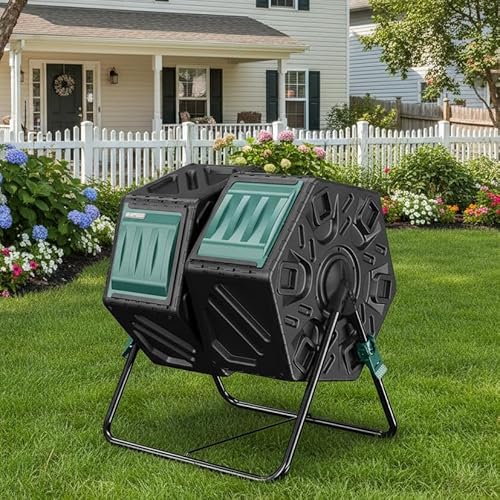
East Oak Dual Chamber Outdoor Compost Tumbler, 2×18.5 Gallon Compost Bin,
2×18.5-gallon dual-chamber rotating composter
View Today's Price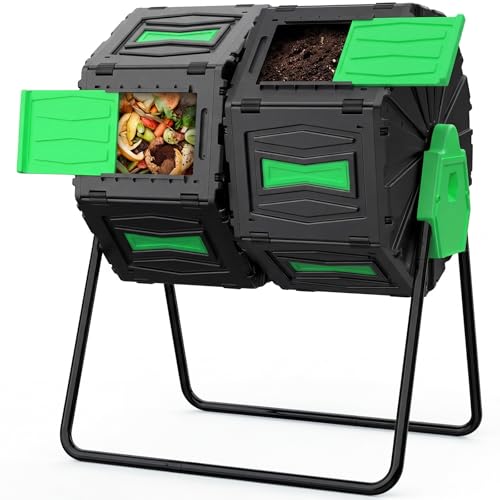
GasXcel Compost Tumbler, 45-Gal Dual Chamber Compost Bins, BPA-Free Tumbling
45-gallon dual-chamber BPA-free tumbling composter
View Today's Price
Maygrove Outdoor Compost Bin 53 Gallon, Dual Chamber Large Compost Tumbler for
53-gallon large dual-chamber composter for heavy-use gardens
View Today's PriceHow to Choose the Right Compost Tumblers
Choosing the right compost tumbler depends on capacity, chamber configuration, build quality, and your available space—trade-offs that shift with household size, climate, and composting frequency. A feature perfect for a family garden can be overkill for a small patio, while a compact bin may frustrate a large household. Our recommendation engine evaluates your unique needs across five dimensions and matches you to the ideal compost tumbler in under 60 seconds.
About this guide
Compost Tumblers
Why Compost Tumbler Shopping Is Trickier Than It Looks
Most people underestimate how much nuance goes into choosing compost tumblers in 2026. The first big trade-off with compost tumblers is capacity: a family of four needs a minimum of 37 gallons for continuous composting, but many buyers grab a 21-gallon compost tumbler and end up frustrated by constant overflow. Price tiers for compost tumblers matter, too—budget compost tumblers under $110 often use thin, brittle plastic that cracks in winter, while mid-range ($110–$175) and premium ($175–$300) compost tumblers like the FCMP IM4000 or Lifetime 60021 offer UV-protected resins and sturdier frames. Dual-chamber compost tumblers dominate for good reason: they let you fill one side while the other cures, so you’re never stuck waiting for a batch to finish. Yet, many buyers pick single-chamber compost tumblers thinking they’re simpler, only to realize they can’t keep up with kitchen scraps. Even small details on compost tumblers, like loading door size, aeration vent placement, and the type of turning mechanism (crank vs. spin), can make or break your experience. Most people get tripped up by underestimating their waste output, ignoring frame materials, or believing “easy assembly” claims that rarely pan out for compost tumblers.
What Actually Sets Compost Tumblers Apart
The real differences between compost tumblers come down to chamber configuration, material quality, and the turning system. Dual-chamber compost tumblers like the FCMP IM4000 (37 gallons, $170) are the gold standard for continuous composting—skip single-chamber compost tumblers unless you have minimal waste or space. UV-inhibited, BPA-free recycled plastic is a must for longevity in compost tumblers; cheap plastics warp or crack in sun and cold. Galvanized steel frames, as seen on the Lifetime 60021 compost tumbler, resist rust better than powder-coated steel, which can corrode after a few wet seasons. The turning mechanism on compost tumblers is more important than most realize: gear-driven cranks make rotating a full compost tumbler effortless, while standard spin-on-frame compost tumblers can become a chore as you add weight. Models like the Miracle-Gro Dual Chamber compost tumbler offer wide sliding doors for easy loading, but some budget compost tumblers have frustratingly small hatches. Don’t get distracted by digital thermometers or “accelerator” bundles unless you’re chasing sub-4-week compost cycles—core build and usability matter far more for most compost tumbler users.
How to Choose: Interacting Decision Factors
Capacity, chamber type, and build materials all interact in ways that catch compost tumbler buyers off guard. For example, a dual-chamber compost tumbler is only worthwhile if each side is big enough for your weekly waste—two 18-gallon compost tumbler chambers won’t cut it for a family. If you’re composting on a patio or in an apartment, compact rolling compost tumblers like the FCMP ground-roll are ideal, but you’ll sacrifice batch size and may need to empty your compost tumbler more often. Eco-conscious buyers should prioritize compost tumblers using 100% recycled resin, but be aware that some “eco” compost tumbler plastics lack UV inhibitors and degrade faster outdoors. Your budget directly constrains which compost tumbler features are realistic: under $110, expect basic plastic and minimal warranty; in the $160–$200 sweet spot, you get robust frames and continuous composting from quality compost tumblers. The quiz weighs your chamber preference, capacity needs, sustainability priorities, turning mechanism, and budget for compost tumblers. Beyond that, think about your climate (cold winters crack cheap compost tumbler plastic), available space, and how much effort you’re willing to put into turning and assembly. The right compost tumbler choice balances all these factors—not just one spec.
Buyer's guide
How to choose
1Core Performance Criteria
- Aim for dual-chamber models like the FCMP IM4000 if you want continuous composting and a steady supply of finished material every few weeks.
- A minimum 37-gallon capacity is essential for families of four; smaller bins under 25 gallons suit solo composters or apartment dwellers best.
- UV-inhibited, BPA-free recycled plastic resists cracking and fading, especially in climates with harsh sun or freezing winters.
- Look for wide loading doors and deep aeration fins, as these speed up decomposition and make adding or removing compost much easier.
- Odor control depends on tight seals and well-designed venting—models with leaky gaskets or poor airflow attract pests and slow breakdown.
- Premium tumblers with gear-driven cranks require less effort to turn, which is a significant upgrade when bins are full and heavy.
2Build Quality and Durability
- Galvanized steel frames, like those on the Lifetime 60021, last longer and resist rust better than powder-coated alternatives in rainy climates.
- Canadian-made tumblers such as the FCMP IM4000 use thicker, recycled resin that withstands temperature swings and repeated handling year-round.
- Avoid models under $110 if you need all-weather durability—thin plastic bodies often crack within two winters or warp in direct sunlight.
- Check for reinforced hinges and solid axle mounts, as these are common failure points on cheaper tumblers after a season or two of use.
- UV protection is not just a marketing term; it’s crucial for preventing brittleness and fading, especially if your tumbler sits in full sun.
- Inspect warranty terms—some brands void coverage for rust or cracking, so read the fine print before you buy.
3Value Analysis
- The $160–$200 range is the current sweet spot for dual-chamber models with robust frames and reliable seals, per 2026 expert reviews.
- Budget picks under $110 may seem tempting, but often sacrifice material thickness and longevity, costing more in replacements over time.
- Premium models above $250 add extras like digital thermometers or compost accelerators, but these features rarely justify the price for most users.
- Look for bundles that include compost accelerators if you want faster results, but don’t overpay—most users see only a 20% speed boost.
- Mid-range tumblers like the FCMP IM4000 deliver 80% decomposition in 6 weeks, outperforming both cheap and overpriced models in real-world tests.
- Factor in assembly time and complexity—models with vague instructions or misaligned panels may require two people and extra tools.
4Use-Case Fit
- Dual-chamber tumblers are best for gardeners who want a continuous supply of compost without downtime between batches.
- Single-chamber designs, like the Lifetime 60021, work well for large, infrequent batches but can leave you waiting weeks for new compost.
- Compact rolling models suit patios and small spaces but require more frequent emptying and offer less overall capacity.
- Families producing over 10 pounds of scraps weekly should avoid anything under 37 gallons to prevent constant overfilling and frustration.
- Eco-focused buyers should seek tumblers made from 100% post-consumer recycled resin, such as those from FCMP, for maximum sustainability.
- If you have mobility issues or limited strength, prioritize gear-driven or crank models, as standard spin designs can be hard to turn when full.
5Common Mistakes to Avoid
- Underestimating capacity needs leads to overflow—always match bin size to your household’s weekly waste output, not just available space.
- Believing “easy assembly” claims without checking reviews; many models require two hours and a second person for proper setup.
- Ignoring frame material—galvanized steel lasts longer than powder-coated or painted frames, especially in wet or coastal climates.
- Overlooking the importance of UV protection, which prevents plastic cracking and fading after just one or two seasons outdoors.
- Skipping warranty details—rust or cracking often voids coverage, so check what’s actually included before you buy.
- Choosing based on price alone; ultra-cheap models frequently fail in cold or sunny climates, costing more in the long run.
6Maintenance and Longevity
- Regularly check and reseal gaskets to prevent leachate leaks, which attract pests and can cause rust on metal frames.
- Lubricate turning mechanisms and hinges every few months, especially on crank or gear-driven models, to ensure smooth operation.
- Store tumblers out of direct sun or extreme cold when possible, as even UV-protected plastics last longer with some shelter.
- Clean out finished compost promptly—letting material sit too long can cause odors, mold, and make turning much harder.
- Tighten all bolts and inspect frame joints seasonally, as vibration and weather can loosen connections over time.
- Replace worn or cracked parts promptly; many brands offer replacement panels, doors, or seals to extend your tumbler’s lifespan.
FAQ
Frequently asked questions
Is a dual-chamber compost tumbler really worth the extra cost?
In 2026, dual-chamber compost tumblers like the FCMP IM4000 are absolutely worth the extra $30–$50 for most users. They let you fill one side while the other cures, ensuring a steady supply of finished compost without downtime. This continuous cycling is a significant upgrade for anyone composting kitchen scraps weekly. Single-chamber models are fine for occasional use, but if you want efficiency and convenience, dual chambers are the clear winner.
How does the FCMP IM4000 compare to the Lifetime 60021 for family use?
The FCMP IM4000 (37 gallons, dual chamber) is ideal for continuous composting in mid-sized households, offering 100% recycled resin and Canadian build quality. The Lifetime 60021 (75 gallons, single chamber) suits large families or avid gardeners needing big batch capacity. The FCMP is easier to manage for weekly scraps, while the Lifetime excels for infrequent, high-volume loads. Choose based on how often you want finished compost and your available space.
What capacity compost tumbler do I need for a small patio or apartment?
For patios or apartments, a compact tumbler in the 18–21 gallon range is usually best. Models like the FCMP ground-roll design tuck into tight spaces and handle 1–2 people’s weekly waste. Larger bins will be cumbersome and may not fit, while smaller ones require more frequent emptying. Always measure your space and consider how much kitchen and green waste you generate before choosing a size.
Are compost tumblers made from recycled plastic as durable as those using virgin materials?
High-quality recycled plastic, like the 100% post-consumer resin used in the FCMP IM4000, is just as durable as virgin plastic when UV inhibitors are included. In fact, top brands in 2026 have perfected recycled blends that resist cracking and fading. Avoid budget models that skip UV protection, as these are prone to brittleness. Always check for BPA-free, UV-inhibited construction for maximum longevity outdoors.
What’s the real difference between a crank-turn and a spin-on-frame tumbler?
Crank-turn or gear-driven tumblers, found on some premium models, require much less effort to rotate—especially when fully loaded. Standard spin-on-frame designs rely on handholds and can become difficult to turn as compost accumulates. If you have mobility concerns or anticipate heavy loads, paying extra for a crank mechanism is worthwhile. For most users, a well-designed spin model is fine, but the difference is noticeable with larger capacities.
How do I prevent leaks and pest problems with my compost tumbler?
Choose a model with tight seals, quality gaskets, and well-designed venting. Leaks often occur at poorly sealed doors or around the axis. Silicone sealant can fix minor gaps. Keep your tumbler balanced and on level ground to avoid spills. Regularly check for cracks or worn seals, and empty finished compost promptly to avoid attracting pests. Models with enclosed designs, like the FCMP IM4000, excel at keeping rodents out.
Is it worth paying extra for a compost accelerator bundle?
Compost accelerator bundles, such as the FCMP IM4000 + GREEN PIG, can speed up decomposition by about 20%, reducing cycle time to as little as 4 weeks. However, the benefit is most noticeable in cooler climates or with tough-to-break-down materials. If you want the fastest possible results and don’t mind spending an extra $20–$30, it’s a worthwhile upgrade. Otherwise, regular turning and balanced input will suffice for most users.
Best Compost Tumblers By Category
Related Guides
Best Chainsaws for Every Task
Matched to your cutting tasks, power preference, handling comfort, and budget—find the right chainsaw for your yard, firewood, or storm cleanup.
Electric Lawn Mowers
Matched to your yard size, runtime, storage, and battery platform—find the electric mower that truly fits your mowing style.
Pressure Washers
Cleaning job type, power source, portability, and session length—get matched to the pressure washer that actually fits your needs.
Rainwater Harvesting Systems
Capacity, installation style, aesthetics, and budget—matched to your actual roof, garden, and overflow needs.