Skip the research trap. Get your compact murphy beds in 60 seconds.
We scored 400+ compact murphy beds across 5 dimensions — answer 5 quick questions and we'll match you to YOUR best pick.

Powered by DecisionScore™
Each product is evaluated across 18 weighted criteria — covering performance, value, build quality, and real-world usability. Your quiz answers re-weight the criteria to match what matters most to you, so two people can get different #1 picks from the same data.
See the DecisionScore methodology →- Supports up to 800 lbs with solid wood frame
- Orientation: Cabinet Chest with desk
- Desk feature for added functionality
Find your perfect compact murphy beds
5 quick questions. No quiz-takes-10-minutes trap. A personalized match from 39 scored picks — with clear reasoning for every recommendation.
What type of Murphy bed are you looking for?
Murphy beds come in various styles, such as wall beds, cabinet beds, and chest beds. Wall beds are mounted to the wall and fold down, while cabinet and chest beds are freestanding and can offer additional storage or functionality. Choosing the right type can impact space utilization and room aesthetics.
- Vertical beds fold down from the wall and need tall ceilings.
- Cabinet or chest beds sit on the floor and require no wall mounting.
- Sofa combos add daytime seating but take up more floor space.
As an Amazon Associate and affiliate partner we earn from qualifying purchases. Links on this page may earn us a commission at no extra cost to you. Full disclosure
Not ready for the quiz? Here are our overall top picks
These are our top-rated picks overall. For a recommendation matched to YOUR specific needs,
AFI, Raleigh Modern Queen Solid Wood Murphy Bed Chest with 6" Mattress, Storage
Supports up to 800 lbs with solid wood frame
View Today's Price
Oakland Living Easy-Lift Full Murphy Wall Bed in Natural Brown Wood Grain with
Supports up to 1000 lbs with MDF frame
View Today's Price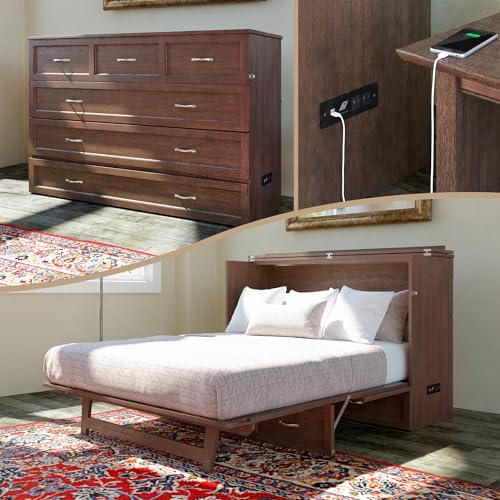
AFI Deerfield Murphy Bed Chest with Charging Station, Queen, Burnt Amber
Supports up to 1000 lbs with solid wood frame
View Today's PriceHow to Choose the Right Compact Murphy Beds
Choosing the right compact Murphy bed depends on room dimensions, mattress compatibility, installation complexity, and your preferred features—trade-offs that shift based on your space, budget, and daily needs. A feature that’s perfect for a studio apartment might be a dealbreaker for a guest room or rental. Our recommendation engine evaluates your specific setup across 15+ dimensions and matches you to the right Murphy bed in under 60 seconds.
About this guide
Compact Murphy Beds
Why Picking the Right Murphy Bed Is Tricky
Choosing compact Murphy beds in 2026 is more nuanced than most buyers realize. The first major trade-off with compact Murphy beds is configuration: vertical wall beds maximize sleeping comfort but demand tall ceilings and wall anchoring, while horizontal or cabinet chest styles of compact Murphy beds fit low-ceiling rooms and avoid permanent installation—crucial for renters. Price tiers for compact Murphy beds are stark: $900 models like the Latitude Run Westfield offer basic frames, while $1,400–$1,700 Bestar Universal compact Murphy beds add storage and 10-year warranties. Many shoppers underestimate mattress compatibility—most compact Murphy beds require a mattress under 10 inches thick, and pairing a heavy hybrid can strain the mechanism or prevent smooth folding. Weight capacity for compact Murphy beds varies wildly, from 400 lbs on basic engineered wood frames to 2,000 lbs for reinforced metal/wood combos. Buyers often forget to check if a mattress is included with compact Murphy beds, leading to surprise costs. Finally, installation can be a dealbreaker: some compact Murphy beds are DIY-friendly cabinets, but wall beds often need professional mounting, especially in older homes with unpredictable stud spacing. Ignoring these details leads to frustration, wasted money, and compact Murphy beds that never get used.
What Actually Sets Compact Murphy Beds Apart
The real differentiators among compact Murphy beds are format, build quality, and integrated features—not just aesthetics. Skip cabinet chest compact Murphy beds unless you truly need a freestanding, no-wall-mount solution; they’re bulkier but ideal for rentals. Vertical wall compact Murphy beds like the Bestar Pur Queen maximize comfort and sleeping space but require solid wall anchoring and at least 14 inches of ceiling clearance when open. Storage integration is a significant upgrade: Bestar’s Universal Collection of compact Murphy beds adds drawers and shelves, making it the top pick for home offices or guest rooms that double as storage. Don’t overpay for built-in USB ports or LED lighting on compact Murphy beds unless you’ll actually use them—clip-on accessories are a cheaper upgrade. Material matters more than most think: solid hardwood and reinforced metal frames (supporting up to 2,000 lbs) on compact Murphy beds last longer and resist sagging, while budget engineered wood compact Murphy beds (<$900) are prone to wobble and wear. Mattress pairing is critical: foam or hybrid mattresses under 10 inches, like Tuft & Needle or Novilla, prevent mechanism strain and sagging in compact Murphy beds. Focus on these specs, not just style, when comparing compact Murphy beds.
How to Decide: Matching Features, Space, and Budget
Your room size, ceiling height, and installation willingness all interact to determine which compact Murphy beds format is realistic. For example, a vertical wall compact Murphy bed is only viable if you have both wall space and at least 14 inches of clearance above the open bed—otherwise, a horizontal or chest compact Murphy bed is smarter. Budget is the next constraint: under $900, expect minimal storage and basic engineered wood in compact Murphy beds; $1,200–$1,700 unlocks storage, solid warranties, and better aesthetics from brands like Bestar and Latitude Run. Mattress size isn’t just about comfort—it affects wall width and folding mechanism stress in compact Murphy beds. If you want a queen bed but only have 70 inches of wall space, you’ll need a horizontal or cabinet compact Murphy bed design. Our quiz evaluates your space, style, feature priorities, and installation comfort to match you to the right compact Murphy bed. Remember: installation complexity and mattress compatibility can make or break your experience with compact Murphy beds, so don’t ignore these in pursuit of style or price alone. Always measure twice, check weight limits, and prioritize features you’ll use daily in compact Murphy beds.
Buyer's guide
How to choose
1Core Performance Criteria
- Always verify the bed’s weight capacity—look for at least 400 lbs for basic use, but up to 2,000 lbs for reinforced metal and hardwood frames.
- Choose a Murphy bed that accommodates a mattress no thicker than 10 inches; thicker mattresses can jam the mechanism or prevent full closure.
- Prioritize models with smooth, counterbalanced mechanisms for easy lifting and lowering, especially if you’ll use the bed daily or have limited strength.
- Check that the bed’s footprint when open fits your room—vertical beds need more ceiling height, while horizontal or chest beds work in tighter spaces.
- Look for integrated safety features like locking legs or latches, especially if children or pets will be around the bed when it’s stowed or in use.
- If you’ll share the bed, prioritize models compatible with motion-isolating foam or hybrid mattresses to minimize partner disturbance in small rooms.
2Build Quality and Durability
- Solid hardwood and reinforced metal frames, like those on Bestar and Atlantic Furniture models, resist sagging and last longer than engineered wood alone.
- Avoid beds under $900 that use only particleboard or basic MDF, as these are prone to wobbling and visible wear after a year or two of use.
- Check for a minimum 5-year warranty; Bestar offers a 10-year warranty on some models, which signals confidence in hardware and frame durability.
- Inspect hardware—robust hinges and counterbalance springs are essential for smooth, safe operation and longevity, especially if the bed will be used nightly.
- Choose finishes that resist scratches and fingerprints if you expect heavy use, particularly in guest rooms or home offices with frequent transformation.
- If possible, opt for beds with replaceable or upgradeable hardware, so you’re not stuck if a mechanism wears out after years of folding and unfolding.
3Value Analysis and Price Tiers
- The value sweet spot is $1,000–$1,400, where you’ll get storage, solid warranties, and sturdy frames—avoid models under $900 unless it’s for rare guest use.
- Don’t overpay for built-in USB ports or LED lighting; these features add $100+ but can be replicated with $20 clip-on accessories for most users.
- Storage-integrated beds, like the Bestar Universal Collection, justify higher prices if you need shelving or drawers for linens, books, or office supplies.
- Pairing a Murphy bed with a lightweight foam mattress under $500, such as Novilla or Tuft & Needle, maximizes comfort without stressing the mechanism.
- Beware of 'sales' on premium models—2026 pricing trends show stable year-round prices, so shop based on features and build, not artificial discounts.
- Factor in installation costs; professional wall mounting can add $200–$400, so DIY-friendly cabinet beds may offer better value for renters or frequent movers.
4Use-Case Fit and Room Compatibility
- Vertical wall beds are best for rooms with at least 14 inches of ceiling clearance and permanent wall anchoring, ideal for owners not planning to move soon.
- Horizontal fold-out or chest beds are the top choice for low-ceiling rooms, basements, or spaces with limited wall width—perfect for studios or small guest rooms.
- If you need a home office by day, prioritize beds with built-in desks or storage; Bestar and Latitude Run offer models that transform seamlessly between uses.
- Cabinet and chest Murphy beds require the least installation and can be moved easily, making them ideal for renters or anyone who can’t drill into walls.
- For daily sleeping, choose a model with a robust frame and smooth mechanism, as frequent folding stresses hardware more than occasional guest use.
- Always measure both wall width and open bed footprint—queen beds typically need at least 65–70 inches of wall, while twins can fit in under 50 inches.
5Common Mistakes and Pitfalls
- Many buyers ignore mattress thickness limits—exceeding 10 inches can jam the bed or prevent it from closing, leading to costly returns or modifications.
- Failing to check ceiling height and wall stud spacing before purchase results in beds that can’t be installed or opened fully in the intended room.
- Choosing a heavy hybrid or innerspring mattress can strain the lifting mechanism, causing premature sagging or hardware failure within a year.
- Overlooking the need for professional installation with wall beds often leads to unsafe setups, especially in older homes with unpredictable wall construction.
- Assuming all Murphy beds include a mattress is a common error—most require a separate purchase, adding $300–$800 to your total cost.
- Skipping safety features like locking legs or latches can create hazards for kids and pets, especially in multi-use rooms where the bed is stowed daily.
6Maintenance and Longevity
- Regularly inspect hardware—tighten bolts and lubricate hinges or springs every six months, especially if the bed is folded up and down daily.
- Use only mattresses recommended by the manufacturer; too much weight or thickness accelerates wear on the frame and folding mechanism.
- Clean surfaces with a damp cloth and avoid harsh chemicals that can damage finishes, particularly on engineered wood or painted metal beds.
- If your Murphy bed has a locking mechanism, test it monthly to ensure it still engages securely and doesn’t loosen over time.
- Replace worn or sagging slats promptly to prevent mattress damage and maintain sleeping comfort, especially in beds used as a primary bed.
- Store bedding and linens separately when the bed is folded to avoid compressing the mattress and creating permanent indentations or odors.
FAQ
Frequently asked questions
Is it worth paying extra for a Murphy bed with built-in storage or a desk?
If you’re outfitting a home office or guest room that doubles as a workspace, integrated storage or a desk is absolutely worth the premium. Models like the Bestar Universal Collection offer shelves and drawers that save you from buying additional furniture, making the higher $1,400–$1,700 price tag justifiable. For occasional guest use, you can skip these features and save several hundred dollars—just ensure you have alternative storage solutions.
How does Bestar compare to Latitude Run for compact Murphy beds?
Bestar is known for robust build quality, 10-year warranties, and integrated storage options, making it a top pick for long-term use and daily folding. Latitude Run, on the other hand, offers more affordable, low-profile designs like the Westfield, which are ideal for studios or occasional guests but may use more engineered wood and offer shorter warranties. If durability and storage matter, Bestar is the better investment; for budget and simplicity, Latitude Run excels.
What mattress thickness and type is best for Murphy beds?
Stick to mattresses under 10 inches thick to ensure smooth operation—thicker mattresses can jam the folding mechanism or prevent the bed from closing. Lightweight foam or hybrid mattresses, such as Tuft & Needle or Novilla, are ideal because they’re easier to lift and minimize strain on the frame. Avoid heavy innerspring mattresses, as they can cause sagging and hardware wear over time, especially in daily-use setups.
Do I need professional installation for a Murphy bed?
Professional installation is highly recommended for vertical wall beds and larger horizontal models, especially if your walls are old or have unpredictable stud spacing. Cabinet or chest beds, like those from Night & Day Furniture, often require only basic assembly and no wall anchoring, making them suitable for DIYers or renters. Improper installation can lead to safety risks, so factor in $200–$400 for pro help if you’re unsure.
What’s the best value price range for a Murphy bed in 2026?
The sweet spot for value is $1,000–$1,400. In this range, you’ll find beds with solid hardwood or reinforced metal frames, integrated storage, and warranties of five years or more. Going below $900 often means sacrificing durability and storage, while spending over $1,700 rarely adds meaningful performance unless you need premium finishes or custom features. Shop by features, not just price tags.
Can I use my existing mattress with a Murphy bed?
Only if your mattress is under 10 inches thick and weighs less than 80 pounds. Many standard mattresses, especially pillow-tops or hybrids, exceed these limits and can jam the mechanism or cause sagging. Check your bed’s specs and consider a lightweight foam or hybrid mattress for best results. Some Murphy beds, like those from Bestar, specify compatible mattress types in their manuals—always verify before purchase.
Are Murphy beds comfortable enough for nightly use?
Yes, provided you pair the frame with a quality foam or hybrid mattress that fits the thickness and weight guidelines. Models with solid slat or platform bases, like Bestar and Atlantic Furniture, offer better support than wire mesh or basic slats. Avoid ultra-thin mattresses, as they can feel firm and unsupportive. For nightly use, invest in a bed with a robust frame and smooth mechanism to ensure comfort and longevity.
Best Compact Murphy Beds By Category
Related Guides
Alarm Clocks
Matched to your sleep style, wake-up difficulty, power source, and must-have features—get the alarm clock that actually works for you.
Bar Carts
Style, storage, material, and budget—get matched to the bar cart that fits your space and entertaining style perfectly.
Bidet Toilet Seats
Comfort, hygiene, controls, and installation—get matched to the bidet seat that fits your home, habits, and budget.
Blackout Blinds
Room use, blackout level, window size, color, and budget—get matched to the right blackout blind for your space.
Blackout Curtains
Window size, blackout level, hanging style, and color—matched to your sleep, decor, and energy-saving goals.