Skip the research trap. Get your cookware sets in 60 seconds.
We scored 250+ cookware sets across 5 dimensions — answer 5 quick questions and we'll match you to YOUR best pick.

Powered by DecisionScore™
Each product is evaluated across 18 weighted criteria — covering performance, value, build quality, and real-world usability. Your quiz answers re-weight the criteria to match what matters most to you, so two people can get different #1 picks from the same data.
See the DecisionScore methodology →- 21-piece PFAS and PTFE free ceramic nonstick set
- Induction compatible
- Detachable handles available for space saving
Find your perfect cookware sets
5 quick questions. No quiz-takes-10-minutes trap. A personalized match from 23 scored picks — with clear reasoning for every recommendation.
What material do you prefer for your cookware set?
The material of your cookware affects heat distribution, durability, and maintenance. Stainless steel is durable and non-reactive, nonstick is easy to clean, and ceramic is eco-friendly and non-toxic.
- Stainless steel lasts decades and handles high heat, but is heavier and requires more cleaning effort than nonstick or ceramic.
- Nonstick is ideal for eggs and easy cleanup, but coatings wear out after 2-3 years of daily use.
- Ceramic is PFAS-free and eco-friendly, but its coating wears faster and needs gentle hand-washing to last.
As an Amazon Associate and affiliate partner we earn from qualifying purchases. Links on this page may earn us a commission at no extra cost to you. Full disclosure
Not ready for the quiz? Here are our overall top picks
These are our top-rated picks overall. For a recommendation matched to YOUR specific needs,
CAROTE 21pcs Cookware Set Nonstick Pots and Pans Set, Ceramic Cookware Set
21-piece PFAS and PTFE free ceramic nonstick set
View Today's Price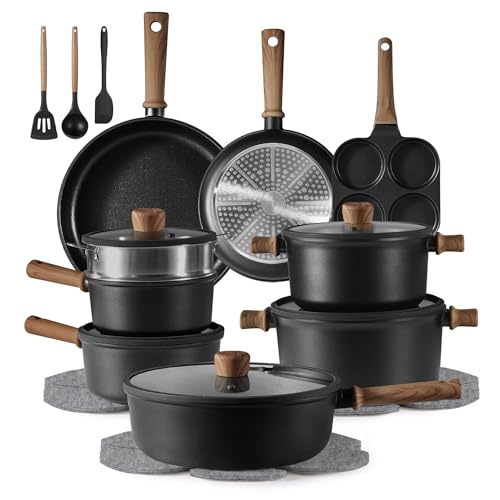
CAROTE 24Pcs Nonstick Kitchen Titanium Cookware Sets, Non stick Pots and Pans
24-piece comprehensive nonstick cookware set in black
View Today's Price
T-fal Signature Nonstick 12 Piece Cookware Set, Oven Safe Up to 350°F,
12-piece beige nonstick set with ProGlide coating
View Today's PriceHow to Choose the Right Cookware Sets
Choosing the right cookware set depends on material, induction compatibility, oven safety, piece count, and special features—trade-offs that shift based on your stove type, storage space, and cooking habits. A feature that’s perfect for daily eggs may be wrong for high-heat roasting or induction use. Our recommendation engine evaluates your specific needs across five dimensions and matches you to the right cookware set in under 60 seconds.
About this guide
Cookware Sets
Why Picking the Right Cookware Set Is Trickier Than It Looks
Buying cookware sets in 2026 is a balancing act that trips up even experienced cooks. The cookware sets market stretches from $50 nonstick sets like T-fal and CAROTE—great for eggs but prone to wear—to $200+ premium cookware sets with tri-ply stainless steel from Tramontina or Cuisinart MultiClad Pro. Most shoppers focus on piece count or flashy features in cookware sets, but miss the real trade-offs: thin-bottom cookware sets warp and scorch, while heavy-duty stainless cookware sets can be unwieldy for daily use. Induction compatibility is a deal-breaker for modern kitchens, yet many budget cookware sets skip magnetic bases entirely. Oven safety is another minefield—basic nonstick cookware sets max out at 350°F, but serious roasting needs 500°F stainless cookware sets. Many buyers grab oversized 14-piece cookware sets, only to realize they use half the pieces. Others chase dishwasher-safe claims, not knowing hand-washing is critical for nonstick cookware sets longevity. The biggest mistake? Assuming price always equals performance—Consumer Reports found $150 Tramontina cookware sets rival All-Clad cookware sets at four times the price. In short, the right cookware set is about matching specs and trade-offs to your real cooking habits, not just chasing the highest price or piece count in cookware sets.
What Actually Sets Cookware Sets Apart in 2026
Material and construction are the true dividing lines in cookware sets. Stainless steel cookware sets, like Tramontina Tri-Ply or Cuisinart MultiClad Pro, deliver unbeatable durability and oven safety up to 500°F, but require more elbow grease to keep clean and are heavier than most realize. Nonstick cookware sets from T-fal and Circulon excel at easy cleanup and daily egg duty, but their coatings degrade after 2-3 years—plan for eventual replacement of these cookware sets. Ceramic cookware sets, such as GreenPan, offer PFAS-free peace of mind and even heating, but their coatings wear faster than advertised, especially if you use metal utensils or the dishwasher on these cookware sets. Induction compatibility is non-negotiable for induction cooktops; skip any cookware sets without a magnetic base if you have one. Handle design is a sleeper issue: loose rivets or poorly balanced cookware sets drive you crazy after a few months. Don’t chase high piece counts—an 8-piece cookware set of quality pans beats a 14-piece cookware set of filler. If you sear meats or roast at high heat, stainless cookware sets are a must; for quick weeknight meals, nonstick cookware sets win. Dishwasher safe is nice, but hand-washing extends the life of nonstick and ceramic cookware sets far more than most expect.
How to Choose: Key Decision Factors and Interactions
Your stove type, oven habits, and cooking style all interact to determine the right cookware set. Induction cooktops demand magnetic steel bases—many budget cookware sets lack this, so always check before buying cookware sets. If you roast or broil above 400°F, only stainless steel or high-end ceramic cookware sets rated to 500°F will survive. For daily eggs or pancakes, nonstick cookware sets are worth the trade-off in longevity, but plan for a 2-3 year replacement cycle for these cookware sets. Piece count is a trap: most home cooks use 3-5 pans regularly, so prioritize core pieces in cookware sets over marketing fluff. Handle comfort and balance matter more than you think—heavy All-Clad-style cookware sets can be tiring, especially for seniors or small kitchens. Our quiz weighs your material preference, induction needs, oven use, desired cookware set size, and special features like detachable or stay-cool handles. To get the best fit, focus on how these cookware set factors overlap: for example, induction-ready nonstick cookware sets with stay-cool handles are rare and usually cost more. Don’t get swayed by brand alone—Tramontina and Circulon cookware sets offer near-premium performance at half the price. Think about your real cooking patterns, not just what looks good in a cookware sets catalog.
Buyer's guide
How to choose
1Core Performance Criteria
- Prioritize tri-ply or clad stainless steel construction for even heating—Tramontina and Cuisinart MultiClad Pro consistently outperform cheaper, thin-bottom sets.
- Nonstick coatings from T-fal and Circulon excel at eggs and pancakes, but expect performance to drop after 2-3 years of regular use.
- Ceramic coatings, like those on GreenPan, offer PFAS-free cooking but require gentle handling and hand-washing to avoid premature wear.
- Induction compatibility is essential if you have an induction cooktop; always check for a magnetic base before purchasing any set.
- Oven safety ratings vary: basic nonstick maxes out at 350°F, while premium stainless steel handles up to 500°F for high-heat roasting.
- Handle comfort and balance impact daily usability—loose rivets or poorly designed grips can make even the best pan frustrating to use.
2Build Quality and Durability
- Stainless steel sets like Tramontina Tri-Ply last decades with proper care, making them a long-term investment for frequent cooks.
- Nonstick sets under $100 often develop scratches or lose coating within two years, so plan for regular replacement if used daily.
- Ceramic cookware wears faster than stainless or classic nonstick; avoid metal utensils and always hand-wash to extend its life.
- Heavyweight pans (like All-Clad D5) offer better heat retention but may be cumbersome for daily use or for those with limited strength.
- Riveted handles are more durable than spot-welded ones, but check for tightness—loose rivets are a common complaint in budget sets.
- Glass lids are convenient but prone to chipping; metal lids are more durable but can get hotter and require potholders.
3Value Analysis
- The sweet spot for value is $150-250 for an 8-12 piece set—Tramontina and Circulon deliver near-premium results at this price.
- Budget sets under $100, like T-fal, offer convenience but sacrifice longevity and even heating compared to mid-range options.
- Premium sets above $500, such as Hestan NanoBond, provide incremental improvements in aesthetics and materials, but not proportional cooking performance.
- Nonstick sets typically cost 30-40% less than equivalent stainless steel, but require more frequent replacement due to coating wear.
- Piece count is not a value metric—an 8-piece set of quality pans beats a 14-piece set filled with rarely-used extras.
- Look for sets that include essential lids and core pans; avoid sets padded with utensils or specialty items you’ll never use.
4Use-Case Fit
- If you cook eggs or pancakes daily, nonstick is the most practical—T-fal and Ninja Foodi NeverStick excel in this role.
- For searing meats or high-heat oven work, stainless steel like Tramontina Tri-Ply or All-Clad D5 is the clear winner.
- Induction cooktops require magnetic bases—always verify compatibility, as many budget ceramic and nonstick sets won’t work.
- If you have limited storage, opt for compact 8-10 piece sets or those with detachable handles for easier stacking.
- Busy households benefit from dishwasher-safe sets, but hand-washing nonstick and ceramic extends their usable life significantly.
- Lightweight pans are easier for seniors or those with grip issues, but may heat less evenly than heavier, multi-ply options.
5Common Mistakes to Avoid
- Don’t assume a higher price always means better performance—Consumer Reports found $150 Tramontina sets rival $800 All-Clad in most kitchens.
- Avoid thin-bottom sets unless you only make eggs; they warp easily and create hot spots that ruin delicate sauces.
- Don’t buy oversized sets with 14+ pieces unless you’ll actually use every item—most home cooks rotate through just 3-5 pans.
- Neglecting to check induction compatibility leads to expensive returns; always confirm before buying if you have an induction cooktop.
- Dishwasher-safe claims are tempting, but frequent machine washing shortens the life of nonstick and ceramic coatings.
- Ignoring handle comfort is a recipe for regret—test grip and balance before committing, especially with heavier stainless steel sets.
6Maintenance and Longevity
- Hand-wash nonstick and ceramic cookware to maximize coating life; even 'dishwasher safe' sets degrade faster with machine washing.
- Stainless steel tolerates abrasive cleaning and lasts decades, but may discolor—Bar Keepers Friend or vinegar restores shine easily.
- Nonstick coatings typically last 2-3 years with daily use; plan for regular replacement rather than expecting decade-long performance.
- Ceramic coatings require gentle sponges and no metal utensils to avoid chipping or dulling the surface prematurely.
- Check rivets and handles regularly—tighten or replace loose hardware to prevent dangerous accidents in busy kitchens.
- Store pans with soft separators or towels to prevent scratching, especially with ceramic or nonstick finishes.
FAQ
Frequently asked questions
Is it worth paying extra for stainless steel cookware sets over nonstick?
Stainless steel sets like Tramontina Tri-Ply or Cuisinart MultiClad Pro cost more upfront ($100-$250), but they last decades and handle high-heat searing and oven use up to 500°F. Nonstick sets, such as T-fal, are easier for eggs and cleanup but typically last only 2-3 years before the coating degrades. If you value durability and versatility, stainless is worth the investment; if you prioritize convenience and easy cleanup, nonstick is a better value for everyday use.
How does Tramontina compare to All-Clad for stainless steel cookware?
Tramontina Tri-Ply Clad offers performance that rivals All-Clad D3 and D5 in most home kitchens, with even heating and sturdy construction at a fraction of the price ($150 vs. $800+). All-Clad has slightly better heat distribution and prestige, but Consumer Reports and Good Housekeeping found the difference negligible for typical home use. Unless you need the absolute best or care about brand status, Tramontina delivers outstanding value and longevity.
What oven-safe temperature should I look for in a cookware set?
For maximum versatility, choose cookware rated to at least 450°F—this covers most roasting and broiling needs. Stainless steel sets like Tramontina and Cuisinart MultiClad Pro are safe up to 500°F, while most nonstick sets, such as T-fal, max out at 350°F. If you only bake or do low-heat oven work, nonstick is fine, but for high-heat applications, stainless is essential to avoid warping and coating breakdown.
Are ceramic cookware sets like GreenPan really safer and longer-lasting?
Ceramic sets from GreenPan are PFAS-free, making them a safer choice for those avoiding traditional nonstick chemicals. However, their coatings wear faster than stainless or classic nonstick, especially if you use metal utensils or dishwashers. Expect 2-4 years of good performance with careful hand-washing and gentle tools. For longevity and high-heat tolerance, stainless steel still outlasts ceramic, but ceramic is a great choice for low-oil, eco-conscious cooking.
What’s the best cookware set for induction cooktops?
Induction cooktops require cookware with a magnetic steel base. Stainless steel sets like Tramontina Tri-Ply and Cuisinart MultiClad Pro are fully induction compatible and perform exceptionally well. Many budget nonstick or ceramic sets are not induction-ready, so always check product specs before buying. If you need nonstick for induction, look for lines like Ninja Foodi NeverStick Premium, which specifically advertise induction compatibility.
How many pieces should my cookware set have for a small kitchen?
For most small kitchens, an 8- to 10-piece set is ideal. Focus on essentials: two saucepans, a skillet or two, a stockpot, and matching lids. Avoid oversized 14-piece sets, which often include filler items you’ll rarely use. Compact sets from T-fal or Tramontina offer all the basics without crowding your cabinets, making them perfect for apartments or limited storage spaces.
Do detachable handles or stay-cool handles make a real difference?
Detachable handles are a significant upgrade for small kitchens or RVs, making storage much easier and saving drawer space. Stay-cool handles, found on many Tramontina and Circulon sets, prevent burns during stovetop use—especially valuable for busy households. If you regularly move pans from stove to oven, these features are worth paying extra for, as they add convenience and safety to your daily cooking routine.
Best Cookware Sets By Category
Related Guides
Air Fryers
Matched to your kitchen space, batch size, cooking style, and must-have features—get an air fryer that truly fits your needs.
Bar Tools
Skill level, tool type, finish, budget, and how you’ll use your bar tools—get matched to the right set for your home bar.
Beginner Espresso Machines
Skill level, hands-on control, milk frothing, and kitchen space—get matched to the perfect beginner espresso machine for your daily ritual.
Best Bread Machines for Home Bakers
Loaf size, bread style, add-ins, and control—get matched to the bread machine that fits your kitchen and baking goals.
Breakfast Cookware
Matches your breakfast routine, kitchen setup, budget, and health priorities to the perfect pan, griddle, or appliance.