Skip the research trap. Get your camping lanterns in 60 seconds.
We scored 400+ camping lanterns across 5 dimensions — answer 5 quick questions and we'll match you to YOUR best pick.

Powered by DecisionScore™
Each product is evaluated across 18 weighted criteria — covering performance, value, build quality, and real-world usability. Your quiz answers re-weight the criteria to match what matters most to you, so two people can get different #1 picks from the same data.
See the DecisionScore methodology →- 150 lumens with dimmable TriplePower LED
- Frosted globe for even, ambient light distribution
- Collapsible double-hook hang loop
Find your perfect camping lanterns
5 quick questions. No quiz-takes-10-minutes trap. A personalized match from 40 scored picks — with clear reasoning for every recommendation.
What is your preferred power source for the camping lantern?
The power source of a camping lantern is crucial as it determines the lantern's runtime and convenience. Battery-powered lanterns are easy to replace but may incur ongoing costs. Rechargeable lanterns are eco-friendly and cost-effective in the long run but require access to a power source for recharging. Solar-powered lanterns are sustainable and ideal for long trips but depend on sunlight availability.
- Battery-powered lanterns are easy to find and swap, but can get expensive over many trips.
- Rechargeable lanterns reduce waste and long-term cost, but require access to USB or solar charging.
- Solar-powered lanterns are best for multi-day trips with reliable sunlight, but charge slowly in cloudy conditions.
As an Amazon Associate and affiliate partner we earn from qualifying purchases. Links on this page may earn us a commission at no extra cost to you. Full disclosure
Not ready for the quiz? Here are our overall top picks
These are our top-rated picks overall. For a recommendation matched to YOUR specific needs,
BLACK DIAMOND Moji Lantern | 150 Lumens | Batteries Not Included | Dimmable,
150 lumens with dimmable TriplePower LED
View Today's Price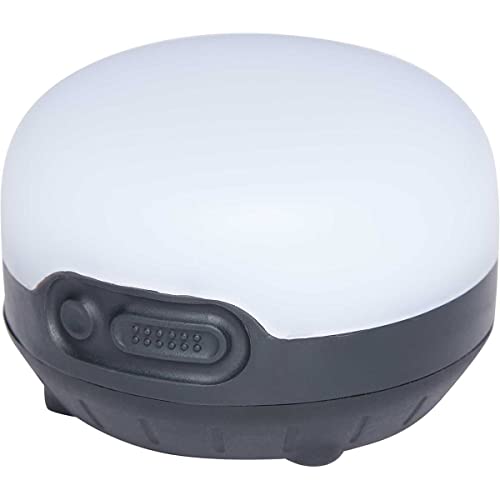
BLACK DIAMOND Moji R+ Rechargeable Lantern | Micro-USB Charging | 200 Lumens |
100 lumens with TriplePower LED
View Today's Price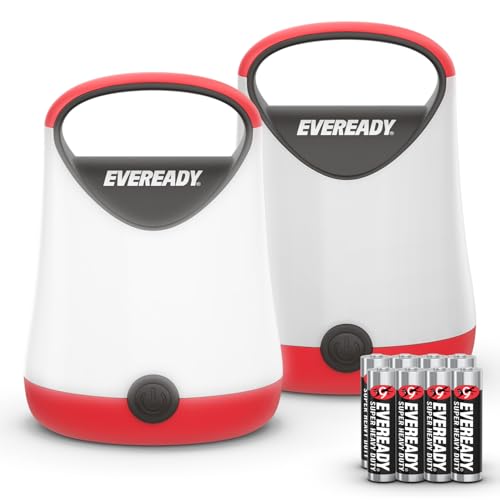
Eveready LED Camping Lantern X-250 (2-Pack), Super Bright Tent Lights, Rugged
How to Choose the Right Camping Lanterns
Choosing the right camping lantern depends on power source, weight, brightness, and weatherproofing—factors that shift based on your trip type and group size. A feature that’s perfect for solo backpacking can be a liability for family car camping, and vice versa. Generic top-10 lists miss these critical interactions, leading to mismatches. Our recommendation engine evaluates your specific needs across 15+ dimensions and matches you to the right lantern in under 60 seconds.
About this guide
Camping Lanterns
Why Camping Lantern Choices Are Surprisingly Complex
Picking camping lanterns in 2026 is a balancing act that trips up even seasoned campers. The price spectrum for camping lanterns is wild: you’ll see $15 Vont LED camping lanterns with 140 lumens—just enough for tent reading—next to $80 Goal Zero Lighthouse 600 camping lanterns boasting 600 lumens, USB charging, and solar panels. Most buyers fixate on maximum brightness or battery life, but miss the real trade-offs that define the best camping lanterns. For example, AA or D-cell battery camping lanterns like the UST 60-Day Lantern offer swappable power anywhere but rack up costs over time and add weight. Rechargeable USB camping lanterns such as the Black Diamond Apollo ($40) save money if you camp often, but you’ll need charging access. Solar camping lanterns are tempting for week-long trips, but only if you’re guaranteed sun. Water resistance is another minefield: IPX4 means splash-proof, but only IPX7 camping lanterns survive a dunking. Many buyers also underestimate how much weight matters—ultralight backpackers need sub-6-ounce camping lanterns, while car campers can lug 18-ounce behemoths. Ignore the marketing hype about color modes unless you truly need red night vision or SOS on your camping lantern. Focus instead on lumens, runtime, and waterproofing when comparing camping lanterns.
What Actually Sets Camping Lanterns Apart
The real differentiators in camping lanterns for 2026 are power source, brightness-to-runtime ratio, and ruggedness. Don’t get distracted by gimmicky features—skip color cycling unless you’re after ambiance in your camping lanterns. Brands like BioLite and Goal Zero lead with hybrid power (USB and solar) camping lanterns, while Lepro and Eveready dominate the budget D-cell camping lanterns segment. Lumens matter, but so does how far that light actually reaches; many 1000-lumen camping lanterns (Lepro, Lichamp) test out at 600-700 real lumens. For most campers, 400-1000 lumens is the sweet spot for camping lanterns—anything higher drains batteries fast. Prioritize ANSI lumen ratings over inflated marketing numbers when shopping for camping lanterns. If you’re camping in wet conditions, don’t settle for less than IPX4; true all-weather camping lanterns mean IPX6 or higher, as seen in the BioLite Alpenglow Mini. D-cell camping lanterns like UST 60-Day crush runtime (60 days on low), but weigh more and cost extra in batteries. Rechargeable camping lanterns with power bank features (Eveready 1000LM Rechargeable) are worth the premium for device charging. Skip hand-crank camping lanterns unless you’re building an emergency kit. Ultimately, match the camping lantern’s weight, runtime, and charging method to your trip style.
How to Decide: Matching Lanterns to Your Real Needs
Your ideal camping lantern depends on the interplay between trip type, group size, weather risk, and how much gear you’re willing to carry. Car campers can prioritize brightness and features in their camping lanterns, since weight isn’t a dealbreaker—think 600-lumen, 18-ounce camping lanterns with USB ports. Backpackers should zero in on sub-6-ounce camping lanterns, even if that means sacrificing max brightness. For multi-day wilderness trips, solar or hybrid camping lanterns (BioLite, Goal Zero) provide backup when outlets are scarce. Emergency kits demand hand-crank or long-lasting D-cell camping lanterns, like the UST 60-Day. Don’t overlook waterproofing: if you camp in unpredictable weather, IPX6+ camping lanterns are a must. The quiz evaluates your power preferences, water resistance needs, light modes, portability, and desired extras in one sweep for camping lanterns. Beyond that, think about how often you’ll actually use SOS modes or power bank features on camping lanterns—don’t pay for what you won’t use. Always check real-world runtime (not just claimed hours) for camping lanterns, and remember: a camping lantern that’s perfect for a solo hiker is overkill for a family campsite, and vice versa.
Buyer's guide
How to choose
1Core Performance Criteria
- Prioritize lanterns with 400-1000 ANSI lumens for most camping situations, as higher claims often overstate real-world brightness by 30%.
- Check runtime at low and medium settings—UST 60-Day Lanterns last 60 days on low, while budget models like Lepro may drain in 2-4 hours on high.
- Multiple light modes are useful for reading, cooking, or emergencies, but avoid paying extra for fancy color cycling unless you truly need it.
- D-cell battery models offer superior runtime in cold weather, while AA-powered lanterns drain 40% faster below 40°F, per expert testing.
- Rechargeable lanterns with built-in power banks, like the Eveready 1000LM, add phone-charging utility for longer trips and emergencies.
- Solar charging is viable for multi-day trips only if you expect consistent sunlight; otherwise, bring backup batteries or a USB charger.
2Build Quality and Durability
- Look for lanterns with IPX4 or higher water resistance—budget models often leak after rain, while BioLite and Goal Zero excel at weatherproofing.
- Plastic housings on budget brands like Lichamp and Eveready are prone to cracking from 2-3 foot drops; rubberized corners add much-needed protection.
- Premium lanterns often feature reinforced hanging hooks and collapsible designs, but check for weak hinges that can snap under stress.
- Weight matters: ultralight models under 6 ounces are best for backpacking, while heavier builds suit car camping or basecamp use.
- Avoid sub-$20 generics, as they frequently underperform in drop and water resistance tests, per Outdoor Gear Lab and Wirecutter.
- Test lanterns for overheating on high mode—BioLite and Clemas models may get hot after 30 minutes, risking burns or auto-shutoff.
3Value and Price Analysis
- The $25-40 range offers the best value for 800+ lumen lanterns with 50+ hour runtime, like the Lepro 1000LM and Eveready 1000LM Rechargeable.
- Premium models ($60+) add features like solar charging and power banks, but budget picks often outperform them in lumen-per-dollar metrics.
- Avoid sub-$20 lanterns, as they typically deliver 30-50% less brightness and shorter runtime than advertised, according to lab tests.
- D-cell lanterns cost more long-term due to battery replacement, while USB rechargeables save money for frequent campers.
- Hybrid lanterns with both battery and USB power maximize flexibility for unpredictable trips, justifying a slightly higher upfront cost.
- Check for included accessories—USB cables, hanging hooks, and extra batteries can add hidden value versus barebones budget models.
4Use-Case Fit and Versatility
- Car campers can use heavier, brighter lanterns with extra features, while backpackers should focus on compact models under 6 ounces.
- Family camping benefits from lanterns with 360° illumination and high lumens, while solo hikers may prefer focused beam or hybrid lantern-flashlights.
- Long wilderness trips are best served by solar or hybrid lanterns, such as Goal Zero or BioLite, for backup charging options.
- Emergency kits should include hand-crank or D-cell models with long runtime and basic waterproofing, like the UST 60-Day Lantern.
- If you cook at camp, multiple light modes and adjustable brightness are essential for safety and flexibility after dark.
- Choose lanterns with magnetic bases or hanging hooks for hands-free use in tents, RVs, or at the picnic table.
5Common Mistakes and Pitfalls
- Don’t trust inflated lumen ratings—Lepro and Disamer often advertise 1000 lumens but test at 600-700 in real-world conditions.
- Overlooking IPX rating leads to ruined lanterns after rain; always verify at least IPX4 for outdoor use, and IPX6+ for all-weather trips.
- Ignoring lantern weight can ruin backpacking trips—heavy models sag tent poles and add unnecessary pack bulk.
- Relying solely on AA-powered lanterns in cold weather is risky, as battery life drops sharply below 40°F.
- Skipping power bank features leaves you stranded if your phone dies—Eveready and BioLite rechargeables double as emergency device chargers.
- Buying sub-$20 generics often results in cracked housings and unreliable performance, wasting money in the long run.
6Maintenance and Longevity
- Regularly check battery contacts for corrosion, especially in D-cell and AA-powered lanterns stored for emergencies.
- Rechargeable lanterns should be topped up every 3-6 months to maintain battery health, even if not in regular use.
- Inspect water seals and gaskets annually—budget models may lose waterproofing after a season of use.
- Replace cracked or warped plastic housings promptly, as water ingress can destroy internal electronics.
- Store lanterns in dry, cool places to prolong battery and housing life; avoid leaving them in hot cars or damp tents.
- Clean solar panels on hybrid lanterns regularly for optimal charging efficiency during multi-day trips.
FAQ
Frequently asked questions
Is it worth paying extra for a rechargeable camping lantern with power bank features?
Yes, especially if you camp frequently or rely on your phone for navigation or emergencies. Models like the Eveready 1000LM Rechargeable and BioLite Alpenglow Mini offer USB charging for devices, adding real utility on multi-day trips. While they cost $10-20 more upfront, they save money long-term compared to constantly replacing D-cell batteries. For car camping and emergency kits, the power bank feature is a genuine upgrade, not a gimmick.
How does the BioLite Alpenglow Mini compare to the Lepro 1000LM for backpacking?
The BioLite Alpenglow Mini is lighter (0.5 lb), rechargeable, and IPX4 weather-resistant, making it ideal for backpacking where weight and durability matter. It offers 500 lumens with multiple mood modes and over 100 hours of runtime on low. The Lepro 1000LM is brighter on paper but heavier and relies on D-cell batteries, which add weight and bulk. For backpackers, the BioLite is the smarter, more versatile choice.
What water resistance rating should I look for in a camping lantern for rainy conditions?
For reliable performance in wet or unpredictable weather, choose a lantern rated at least IPX4 for splash resistance. If you expect heavy rain or possible submersion, look for IPX6 or IPX7 ratings, as found on premium models like the Goal Zero Lighthouse 600. Budget models often claim water resistance but may fail after a single downpour, so always check third-party test results before buying.
Are D-cell or AA battery-powered lanterns better for long trips?
D-cell lanterns are superior for long trips, especially in cold weather. Models like the UST 60-Day Lantern run up to 60 days on low and last much longer than AA-powered options, which can drain 40% faster below 40°F. However, D-cells add weight and ongoing cost, so they’re best for car camping or basecamp use rather than ultralight backpacking.
Do I really need multiple light modes, or is a single-mode lantern enough?
Multiple light modes are useful for adjusting brightness, conserving battery, and using red or SOS settings for emergencies. For basic tent lighting, a single mode may suffice, but if you plan to cook, read, or signal for help, multiple modes add valuable flexibility. Most mid-range lanterns, like the Black Diamond Apollo, offer at least three modes for this reason.
How does the Goal Zero Lighthouse 600 justify its higher price compared to budget lanterns?
The Goal Zero Lighthouse 600 commands a premium ($80) because it delivers 600 real lumens, USB and solar charging, and robust IPX6 waterproofing. It’s built for serious outdoor use, with features like power bank charging and collapsible legs for stability. Budget lanterns may advertise similar specs, but often fall short in real-world brightness, durability, and charging versatility.
What are the most common durability issues with budget camping lanterns?
Budget lanterns like those from Lichamp and Eveready often suffer from thin plastic housings that crack after minor drops. Water resistance is also a weak point—many IPX4 claims don’t hold up to real rain. Battery compartments can corrode if left with old batteries. For longevity, look for reinforced corners, rubber gaskets, and user-replaceable parts in models from reputable brands.
Related reading
Best Camping Lanterns By Category
Compare Camping Lanterns
Related Guides
Advanced Telescopes
Aperture, mount type, portability, and setup—matched to your observing goals and real-life constraints in seconds.
Avalanche Beacons & Transceivers
Skill level, rescue needs, budget, battery type, and Bluetooth—get matched to the safest avalanche beacon for your backcountry trips.
Backyard Playground Sets
Play features, yard size, age range, and installation—get matched to a backyard playground set that truly fits your family.
Backyard Trampolines
We match trampolines to your jumpers’ ages, bounce style, yard size, safety needs, and budget—no more guessing or risky shortcuts.
Bike Lights
Matched to your commute, riding environment, brightness needs, charging style, and budget—get the right bike light for your safety.