Skip the research trap. Get your coffee grinders in 60 seconds.
We scored 200+ coffee grinders across 5 dimensions — answer 5 quick questions and we'll match you to YOUR best pick.
Powered by DecisionScore™
Each product is evaluated across 18 weighted criteria — covering performance, value, build quality, and real-world usability. Your quiz answers re-weight the criteria to match what matters most to you, so two people can get different #1 picks from the same data.
See the DecisionScore methodology →Find your perfect coffee grinders
5 quick questions. No quiz-takes-10-minutes trap. A personalized match from 19 scored picks — with clear reasoning for every recommendation.
What brew method do you primarily use?
Different grinders excel at different brew methods. Espresso requires fine, precise grinds; pour‑over and drip need medium consistency; French press and cold brew favour coarser settings. Select the method you use most so we can match grinders tuned for that range.
- Espresso needs fine, precise grinds—choose a grinder with many micro-adjustments if this is your main style.
- Pour-over and drip benefit from medium grind consistency; a grinder with at least 15 settings is ideal.
- French press and cold brew require coarser, uniform grinds—look for grinders with reliable coarse settings.
As an Amazon Associate and affiliate partner we earn from qualifying purchases. Links on this page may earn us a commission at no extra cost to you. Full disclosure
Not ready for the quiz? Here are our overall top picks
These are our top-rated picks overall. For a recommendation matched to YOUR specific needs,

How to Choose the Right Coffee Grinders
Choosing the right coffee grinder depends on brew method, grind consistency, dosing workflow, retention, and batch size—trade-offs that shift based on your brewing style, budget, and daily habits. A feature ideal for espresso is often wrong for French press, and price doesn’t always guarantee better results. Our recommendation engine evaluates your specific needs across 12 dimensions and matches you to the right grinder in under 60 seconds.
About this guide
Coffee Grinders
Why Coffee Grinder Shopping Is Trickier Than It Looks
Most people underestimate how much the right coffee grinder impacts taste and daily routine. The choice isn’t just burr versus blade—though that’s a dealbreaker, since blade grinders chop beans unevenly and ruin consistency. Burr grinders, especially conical or flat, give uniform particles for better extraction, but even then, you’re juggling dozens of grind settings, dosing methods, and a price range from $20 for a basic Hamilton Beach blade to $400 for a Baratza Sette 270. Espresso fans need fine, micro-adjustable settings, while French press drinkers want coarser, even grinds. Many buyers fixate on looks or brand and ignore grind retention (leftover grounds), which can waste beans and stale your next cup. Hopper size matters if you brew for a crowd, but single-dose designs keep beans fresher. Noise, speed, and build quality also vary wildly—even among models that look similar. The real challenge is balancing all these factors against your budget and kitchen space, without falling for “zero retention” or “all-purpose” marketing claims that rarely deliver.
What Actually Sets Grinders Apart: Specs That Matter
The biggest differentiators are burr type, grind range, dosing style, and retention. Skip blade grinders entirely unless you’re only making casual drip—uniformity is poor, and even the $20 Hamilton Beach can’t compete with a $50 Krups burr model. Conical burrs, found in OXO and Baratza, are quieter and more forgiving, while flat burrs (often pricier and heavier) deliver unmatched clarity for espresso but aren’t necessary for most home brewers. Look for at least 15 grind settings for versatility; 60+ is ideal if you switch between espresso and pour-over. Built-in scales (like on the Breville Smart Grinder Pro) give gram-level accuracy, but timers are fine for repeatable dosing. Retention under 2% is crucial for freshness—many “zero retention” claims still leave up to 1.67% grounds inside. Don’t get distracted by sleek dupes like Geimori GU38, which fail on grind quality despite low noise. DC motors are now favored for quieter, more consistent performance. Unless you’re chasing café-level espresso, the $100–$200 range (OXO, Breville) is the real sweet spot for most buyers.
How to Choose: Interacting Factors and Real-World Trade-offs
Your ideal grinder depends on how you brew, how much you make, and how much hassle you’ll tolerate. Espresso demands precise, repeatable fine settings—aim for at least 30 adjustments and low retention. Pour-over and drip benefit from medium grind consistency and easy workflow; French press and cold brew need coarser, uniform grinds and can get by with fewer settings. Batch size matters: large hoppers and powerful motors suit multi-cup mornings, but single-dose grinders keep beans fresher for one or two cups. Budget is a hard limit—under $50 means sacrificing consistency, while over $300 mostly adds speed and programmability you may not need. Our quiz evaluates your brew method, dosing preference, quality priority, batch size, and retention needs to match you to the right grinder. Don’t ignore noise if you share a space, or build quality if you want your grinder to last years. Always check for real grind retention rates and avoid oily beans in any grinder to prevent clogs. The smartest approach? Prioritize grind consistency, match settings to your brew style, and don’t overpay for features you’ll never use.
Buyer's guide
How to choose
1Core Performance Criteria
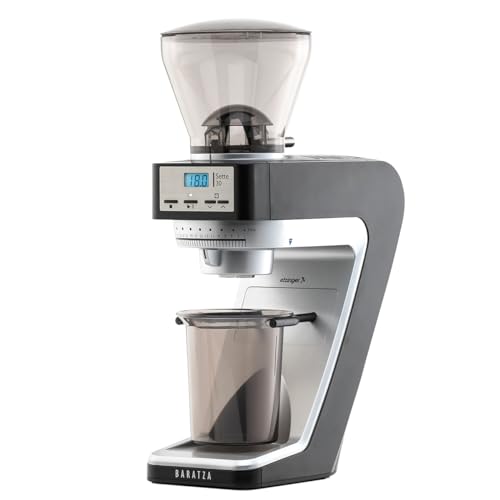
- Conical burr grinders like the OXO and Baratza Sette 270 deliver far more uniform grinds than any blade model, directly impacting cup quality and extraction.
- For espresso, look for at least 30 grind settings and stepless adjustment; pour-over and drip need 15+ settings for proper tuning.
- Retention under 2% is crucial for freshness—many 'zero retention' claims still leave up to 1.67% of grounds behind, requiring purging.
- DC motors, found in 2026 premium models, run quieter and more consistently than older AC or blade-driven designs, especially for daily use.
- Built-in scales (Breville Smart Grinder Pro) allow gram-accurate dosing, while timer-based and manual models trade precision for workflow simplicity.
- Noise levels vary: some conical burrs operate at 75dB or less, but flat burrs and cheaper electrics can be much louder, which matters in shared spaces.
2Build Quality and Durability
- Premium brands like Baratza and Breville use metal burrs and reinforced chassis, which last years longer than plastic-bodied budget grinders.
- Entry-level models under $70 often feature plastic gears and housing, which can wear out or crack within a year of daily use.
- Flat burr grinders are heavier and more robust but may require more maintenance and take up more counter space than conical equivalents.
- Look for models with easily replaceable burrs and accessible internals; Baratza grinders are renowned for user-serviceable parts and long-term support.
- Check for a minimum one-year warranty; premium models offer two years or more, reflecting greater confidence in durability and after-sales service.
- Avoid built-in grinder coffee makers if you want longevity—lab tests show frequent clogging and limited grind settings reduce lifespan and reliability.
3Value and Price Analysis
- The real sweet spot is $100–$200, where you get 15+ grind settings, low retention, and reliable consistency for most brew methods.
- Below $50, expect blade models or basic burrs like the Hamilton Beach—fine for casual drip, but lacking precision and uniformity for espresso.
- Spending $300+ mainly adds speed, programmability, and café-level espresso performance; most home users won’t need these features daily.
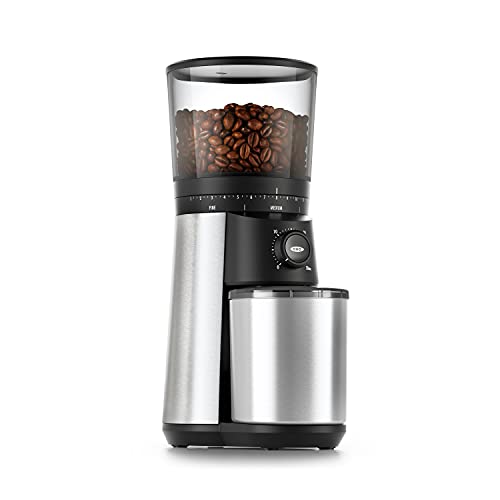
- OXO’s $100 conical burr grinder is repeatedly praised for hitting the best balance of price, performance, and ease of use in 2026 reviews.
- Krups Precision ($50) is a budget burr option, but sacrifices grind range and long-term durability compared to mid-tier models.
- Don’t pay extra for 'zero retention' unless you single-dose and value bean freshness; most home brewers won’t notice the small difference.
4Use-Case Fit and Workflow
- Espresso-focused users should prioritize grinders with 30+ micro-adjustments and low retention, like the Baratza Sette 270 or Breville Smart Grinder Pro.
- Pour-over and drip fans can use mid-tier conical burrs with at least 15 settings for consistent medium grinds and easy daily workflow.
- If you brew large batches, look for a hopper capacity of at least 0.75 lbs and a robust motor to handle repeated grinding.
- Single-dose grinders keep beans fresher and minimize waste, but may slow down workflow if you regularly brew for multiple people.
- Manual dosing is simplest but less precise; built-in scales or timers streamline workflow and improve repeatability, especially for espresso.
- Compact grinders are ideal for small kitchens or travel, but often sacrifice grind range and speed compared to full-size models.
5Common Mistakes and Pitfalls
- Many buyers focus on looks or brand hype and ignore grind consistency—sleek dupes like Geimori GU38 often fail on uniformity despite low noise.
- Choosing blade grinders to save money almost always results in uneven grinds and disappointing coffee, even for basic drip brewing.
- Ignoring grind retention leads to wasted beans and stale flavors; always check for real retention rates, not just 'zero retention' marketing claims.
- Using oily or dark roast beans in any grinder, especially built-in models, causes clogging and shortens lifespan—stick to medium or light roasts.
- Overpaying for features like touchscreen controls or excessive programmability rarely benefits home users who brew one or two cups daily.
- Neglecting noise levels can create frustration in shared spaces—some grinders exceed 80dB, which is disruptive for early mornings.
6Maintenance and Longevity
- Regular cleaning with a brush or cleaning tablets prevents oil buildup and maintains grind consistency over years of use.
- Models with easily removable burrs, like Baratza, simplify maintenance and extend the grinder’s lifespan by allowing for deep cleaning and part replacement.
- High retention grinders require more frequent cleaning to prevent stale grounds from contaminating fresh coffee and affecting flavor.
- Avoid grinding oily beans, which quickly gum up burrs and chutes—this is a leading cause of clogging and motor strain in 2026 lab tests.
- Check for readily available replacement parts; premium brands like Baratza and Breville offer long-term support, while budget models often do not.
- Store grinders in dry, cool areas to prevent corrosion and motor wear, especially for models with exposed metal components.
FAQ
Frequently asked questions
Is a conical burr grinder really worth the extra cost over a blade grinder?
Absolutely—conical burr grinders produce much more uniform particles, which leads to better extraction and flavor. Blade grinders, even popular models like Hamilton Beach, chop beans unevenly, resulting in bitter or sour coffee. For consistent results in espresso, pour-over, or French press, a conical burr grinder is a must. Expect to pay at least $50–$100 for a solid entry-level burr model, but the improvement in taste and repeatability is dramatic compared to any blade grinder.
How does the OXO Conical Burr compare to the Baratza Sette 270?
The OXO Conical Burr ($100) offers 15 settings and is praised for ease of use and reliability, making it ideal for most home brewers. The Baratza Sette 270 ($400) delivers 60 settings, faster grinding, and exceptional espresso performance, but costs four times as much and is overkill unless you need café-level precision. For daily drip or pour-over, OXO is the better value; for serious espresso, the Sette 270 is worth the investment.
What grind settings do I need for French press and cold brew?
For French press and cold brew, you need a grinder with reliable coarse settings and uniform particle size. Look for at least 12–15 grind adjustments, as found on the Krups Precision or OXO Conical Burr. Avoid grinders with fewer than 7 settings, as these often lack the range needed for consistent coarse grinds. Uniformity is key—non-uniform grinds lead to over-extraction and bitterness, so prioritize burr grinders over blades for these brew methods.
Is grind retention a big deal for home users?
Grind retention matters if you single-dose or want maximum freshness, as leftover grounds can go stale and affect flavor. Most 'zero retention' grinders still leave up to 1.67% of grounds behind, so always purge before brewing. For batch brewing or casual use, standard retention is less critical. If you’re chasing perfect espresso or switching beans often, low retention models are worth the premium; otherwise, focus on consistency and ease of cleaning.
Can I use oily or dark roast beans in any grinder?
It’s best to avoid oily or dark roast beans in any grinder, especially built-in models like those in Breville or Philips machines. Oily beans tend to clog burrs and chutes, leading to frequent maintenance and reduced lifespan. Stick to medium or light roasts for consistent performance and easier cleaning. If you must use dark roasts, clean your grinder regularly and avoid the finest settings, which are most prone to clogging.
Are built-in grinder coffee makers a good idea?
Built-in grinder coffee makers, such as those from Breville and Philips, offer convenience but come with major trade-offs. Lab tests show they often clog with oily beans, have limited grind settings (sometimes as few as 7), and are harder to clean. If you want flexibility, durability, and better coffee, a separate burr grinder is almost always the smarter long-term choice. Only consider built-ins if counter space is extremely limited and you brew basic drip.
What’s the best value for money in 2026: OXO, Breville, or Krups?
In 2026, the OXO Conical Burr ($100) stands out for overall value—uniform grinds, 15 settings, and reliable performance for most brew styles. Breville Smart Grinder Pro ($200) adds programmability and 60 settings, making it ideal for espresso enthusiasts. Krups Precision ($50) is the best budget burr, but sacrifices some grind range and durability. For most home users, OXO hits the sweet spot of price, features, and daily usability.
Best Coffee Grinders By Category
Related Guides
Air Fryers
Matched to your kitchen space, batch size, cooking style, and must-have features—get an air fryer that truly fits your needs.
Bar Tools
Skill level, tool type, finish, budget, and how you’ll use your bar tools—get matched to the right set for your home bar.
Beginner Espresso Machines
Skill level, hands-on control, milk frothing, and kitchen space—get matched to the perfect beginner espresso machine for your daily ritual.
Best Bread Machines for Home Bakers
Loaf size, bread style, add-ins, and control—get matched to the bread machine that fits your kitchen and baking goals.
Breakfast Cookware
Matches your breakfast routine, kitchen setup, budget, and health priorities to the perfect pan, griddle, or appliance.