Skip the research trap. Get your portable satellite communicators in 60 seconds.
We scored 250+ portable satellite communicators across 5 dimensions — answer 5 quick questions and we'll match you to YOUR best pick.

Powered by DecisionScore™
Each product is evaluated across 18 weighted criteria — covering performance, value, build quality, and real-world usability. Your quiz answers re-weight the criteria to match what matters most to you, so two people can get different #1 picks from the same data.
See the DecisionScore methodology →- Garmin GPSMAP 67i with 1-Year CPS Enhanced Protection
- Preloaded TopoActive maps and satellite imagery
- 165 hours in 10-minute tracking mode
Find your perfect portable satellite communicators
5 quick questions. No quiz-takes-10-minutes trap. A personalized match from 21 scored picks — with clear reasoning for every recommendation.
What type of messaging capability do you need?
Messaging capability is crucial for staying connected in remote areas. Some devices offer two-way messaging, allowing you to send and receive messages, while others may only offer one-way communication. Consider your needs for emergency situations and regular check-ins.
- Two-way messaging lets you receive replies and updates—crucial for emergencies or group trips.
- One-way devices are cheaper but can’t confirm message delivery or allow back-and-forth communication.
- Photo and voice messaging are only available on premium devices; most users only need text.
As an Amazon Associate and affiliate partner we earn from qualifying purchases. Links on this page may earn us a commission at no extra cost to you. Full disclosure
Not ready for the quiz? Here are our overall top picks
These are our top-rated picks overall. For a recommendation matched to YOUR specific needs,
Garmin GPSMAP 67i Rugged Hiking GPS Navigator Interactive SOS Bundle
Garmin GPSMAP 67i with 1-Year CPS Enhanced Protection
View Today's Price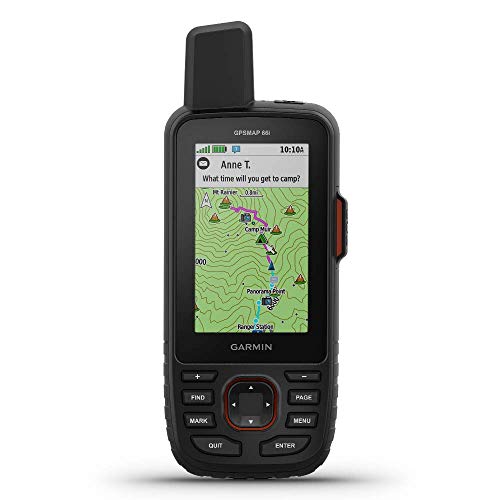
Garmin GPSMAP 66i, GPS Handheld and Satellite Communicator, Featuring TopoActive
GPS handheld with inReach satellite communication built in
View Today's Price
Garmin GPSMAP 67i Rugged GPS Handheld with inReach® Satellite Technology,
Renewed Amazon-certified Garmin GPSMAP 67i
View Today's PriceHow to Choose the Right Portable Satellite Communicators
Choosing the right portable satellite communicator depends on network coverage, messaging type, device form factor, and your trip’s demands—trade-offs that shift with your specific adventure style, budget, and risk tolerance. A feature that’s essential for a solo Arctic trek is overkill for a weekend hiker, and ongoing subscription costs can flip the value equation. Our recommendation engine weighs your unique needs across five dimensions and matches you to the right communicator in under 60 seconds.
About this guide
Portable Satellite Communicators
The Real Buying Challenge: Navigating Specs, Networks, and Price Tiers
Choosing portable satellite communicators in 2026 is trickier than it looks—there’s a real maze of specs, trade-offs, and hidden costs. Most buyers underestimate how much satellite network coverage matters: Iridium-based portable satellite communicators offer true global reach (including oceans and polar regions), while Globalstar-powered portable satellite communicators only cover most land masses. If you pick the wrong portable satellite communicator network, you could be stranded without coverage when it matters most. Price tiers for portable satellite communicators are stark: budget models like the ZOLEO and SPOT Gen4 start near $100–$150 but often require a paired smartphone and may only offer one-way messaging. Mid-range portable satellite communicators like the Garmin inReach Messenger ($300 range) deliver 28-day battery life and seamless switching between Wi-Fi, cellular, and satellite, but not all features are available unless you pay for a pricier subscription. Premium portable satellite communicators such as the Garmin inReach Messenger Plus or GPSMAP 67i ($400–$500) add rich messaging, voice, and full GPS navigation, but they’re heavier and bulkier. Most buyers get tripped up by ignoring subscription costs for portable satellite communicators, underestimating the importance of two-way messaging, or picking a portable satellite communicator that’s overkill for their actual use case.
What Separates the Options: Key Differentiators That Actually Matter
Not all portable satellite communicators are created equal, and the differences go far beyond price tags. The most critical differentiator among portable satellite communicators is messaging capability: skip one-way-only portable satellite communicators like the SPOT Gen4 unless you truly just need basic SOS and tracking—two-way messaging is a must for real emergencies and peace of mind. Iridium-based portable satellite communicators (like all Garmin inReach devices and ZOLEO) guarantee 100% global coverage, while Globalstar-based portable satellite communicators (SPOT X, Gen4) are fine for North America and Europe but risky for ocean crossings or remote expeditions. Battery life is another real separator for portable satellite communicators: the Garmin inReach Messenger’s 28-day battery trounces most competitors, but only if you use it in tracking mode—intensive messaging will drain it faster. Don’t overpay for portable satellite communicators with photo or voice messaging (like the inReach Messenger Plus) unless your trips demand richer communication. Form factor matters for portable satellite communicators: standalone devices with screens and keypads (Garmin GPSMAP 67i, SPOT X) are heavier but don’t rely on your phone, which is crucial if your phone battery dies. If you’re a hiker or backpacker, prioritize weight and battery over bells and whistles when choosing portable satellite communicators. For serious expeditions, only consider portable satellite communicators with interactive SOS routed to a 24/7 monitoring center.
Decision Factors and How to Choose the Right Device
Portable satellite communicator decisions hinge on how your needs, trip style, and budget interact. For example, if you’re planning multi-week expeditions, you’ll need Iridium coverage, a rugged standalone portable satellite communicator, and long battery life—expect to spend $400–$500. Day hikers or weekend campers can get by with a lighter, app-paired portable satellite communicator like the ZOLEO or Garmin inReach Messenger, but must accept the trade-off of relying on their phone. Subscription costs for portable satellite communicators are a recurring expense: basic plans start around $12/month but can climb to $50/month for unlimited messaging and tracking—factor this into your total cost. The quiz evaluates your messaging needs, coverage requirements, budget, device preference, and use case to pinpoint your best portable satellite communicator fit. Don’t assume pricier portable satellite communicators mean better—if you only need SOS and location sharing, a $150 SPOT Gen4 may be smarter than a $500 GPSMAP 67i. Conversely, if you’re crossing oceans or venturing into polar regions, only Iridium-backed two-way portable satellite communicators are truly reliable. Always match the portable satellite communicator’s form factor, battery, and coverage to your real-world adventures—not just the features that sound impressive on paper.
Buyer's guide
How to choose
1Core Performance Criteria
- Two-way messaging is essential for real emergencies—don’t settle for one-way models unless you only want basic SOS and outbound tracking.
- Iridium network devices like Garmin inReach and ZOLEO offer 100% global coverage, while Globalstar units such as SPOT X only cover most land masses.
- Battery life varies dramatically: the Garmin inReach Messenger can last up to 28 days in tracking mode, but heavy messaging drains power faster.
- Standalone devices with built-in screens and keypads are more reliable if your phone dies, but they add weight and bulk to your pack.
- SOS monitoring quality matters—Garmin inReach routes SOS to Garmin Response 24/7, while SPOT devices use GEOS; both offer interactive emergency response.
- Seamless switching between Wi-Fi, cellular, and satellite (as in the inReach Messenger) can save battery and reduce message costs when cell service is available.
2Build Quality and Durability
- Look for IPX7 or higher water resistance if you’ll be boating or hiking in wet conditions—Garmin and SPOT models generally meet this standard.
- Ruggedized casings and reinforced buttons are critical for expedition use; the Garmin GPSMAP 67i is built to survive real abuse in the field.
- Weight ranges from ultra-compact 3.5 oz (ZOLEO) to over 8 oz for full-featured GPS handhelds—lighter is better for backpackers but may sacrifice durability.
- Rubberized grips and covered ports help prevent dust and water ingress, extending device life in harsh environments.
- Test the device’s buttons and screen with gloves on if you’ll be in cold weather—some models are far easier to operate than others.
- Check for replaceable batteries or easy charging options; non-removable batteries can limit device lifespan if you’re using it for years.
3Value Analysis
- Device prices range from $100 (SPOT Gen4) to $500 (Garmin GPSMAP 67i); don’t pay for advanced navigation if you only need messaging.
- Subscription plans are a hidden cost—expect to pay $12–$50/month depending on your messaging volume and tracking frequency.
- ZOLEO and SPOT Gen4 offer excellent value for basic use, but lack advanced features like photo messaging or onboard navigation.
- Garmin inReach Messenger delivers the best battery life and flexibility for the price, especially if you use Wi-Fi or cellular when available.
- Premium models like the inReach Messenger Plus justify their cost only if you need photo, voice, or advanced navigation features.
- Weigh total cost of ownership: device plus two years of subscription can easily double your initial outlay, so plan accordingly.
4Use-Case Fit
- Hikers and backpackers should prioritize weight, battery life, and two-way messaging—ZOLEO and inReach Messenger are top picks for these needs.
- Sailors, boaters, and overlanders require Iridium-backed devices for true global coverage and high water resistance—avoid Globalstar models for ocean travel.
- Expedition travelers need standalone devices with long battery life and robust navigation—Garmin GPSMAP 67i is purpose-built for this scenario.
- Casual users or day hikers may be fine with a one-way SPOT Gen4, but lose out on message replies and interactive SOS.
- If your phone is always charged and accessible, a companion-app device saves weight and offers a better typing experience.
- For group trips or remote work, prioritize devices that support group messaging and location sharing, not just solo SOS.
5Common Mistakes to Avoid
- Don’t ignore subscription costs—many buyers focus on device price and are surprised by ongoing monthly fees.
- Avoid one-way-only devices if you want confirmation that help is on the way; two-way messaging is safer for serious trips.
- Don’t assume all devices work everywhere—Globalstar models have real coverage gaps outside major land masses.
- Overbuying is common: skip full GPS handhelds unless you truly need advanced navigation and mapping features.
- Relying solely on your phone can backfire; if your phone dies, app-only models become useless in an emergency.
- Failing to test device setup, registration, and SOS features before your trip is a recipe for frustration in the field.
6Maintenance and Longevity
- Charge your communicator fully before every trip and check for firmware updates—outdated software can cause glitches or SOS failures.
- Store devices in a cool, dry place; extreme heat or cold can degrade battery life over time.
- Inspect charging ports and seals regularly for dust, corrosion, or water damage, especially after wet or dusty trips.
- Replace batteries (if possible) every 2–3 years for maximum reliability; sealed-battery models may require professional service when capacity drops.
- Test SOS and messaging features at least once a year to ensure everything is registered and functioning with your subscription plan.
- Keep your subscription active or know the reactivation process—lapsed plans can leave you stranded without emergency coverage when you need it most.
FAQ
Frequently asked questions
Is it worth paying extra for two-way messaging on a satellite communicator?
Absolutely—two-way messaging is a significant upgrade for safety and peace of mind. With two-way models like the Garmin inReach Messenger or ZOLEO, you can receive replies, confirm SOS receipt, and communicate with rescuers or loved ones. One-way devices like the SPOT Gen4 only send outbound messages, leaving you in the dark about whether help is coming. For most backcountry or remote travel, the extra cost for two-way messaging is well worth it.
How does the Garmin inReach Messenger compare to the ZOLEO Satellite Communicator?
The Garmin inReach Messenger offers longer battery life (up to 28 days in tracking mode) and seamless switching between Wi-Fi, cellular, and satellite. ZOLEO is lighter (3.5 oz) and more affordable, but both use the Iridium network for global coverage and support two-way messaging. If you value battery life and flexibility, the inReach Messenger stands out. For budget-conscious users who want a compact device, ZOLEO is an excellent alternative.
What satellite network should I choose for international or ocean travel?
For international, polar, or ocean travel, always choose a device on the Iridium network. Iridium provides 100% global coverage, including open oceans and remote regions. Devices like the Garmin inReach series and ZOLEO use Iridium. Globalstar-based devices, such as the SPOT X or Gen4, are suitable for most land areas but have significant coverage gaps over oceans and at high latitudes.
Are premium models like the Garmin GPSMAP 67i worth the higher price?
Premium models like the Garmin GPSMAP 67i are only worth the investment if you need integrated GPS navigation, mapping, and robust expedition durability. At $400–$500, these units combine satellite messaging with advanced navigation tools and rugged build quality. For casual hikers or those mainly needing SOS and messaging, mid-range devices like the inReach Messenger offer better value and lighter weight.
What ongoing costs should I expect with a satellite communicator?
Beyond the device price ($100–$500), expect to pay a monthly subscription fee, typically ranging from $12 to $50 depending on your messaging and tracking needs. Some plans offer pay-as-you-go flexibility, while others require annual contracts. Be sure to factor in these recurring costs, as they can quickly add up over a year or two of use.
Can I use a smartphone-paired communicator for serious expeditions?
Smartphone-paired devices like ZOLEO and Garmin inReach Messenger are suitable for many trips, but they rely on your phone for full functionality. If your phone battery dies or malfunctions, you’ll lose the ability to compose detailed messages. For serious expeditions or remote travel, a standalone device with its own screen and keypad (like the Garmin GPSMAP 67i or SPOT X) is safer.
How does SPOT Gen4 compare to SPOT X for hiking and backpacking?
SPOT Gen4 is a lightweight, budget-friendly one-way communicator ideal for basic SOS and tracking. SPOT X, on the other hand, offers two-way messaging and a built-in keyboard, making it more versatile but heavier and pricier. For solo hikers wanting peace of mind, Gen4 is adequate, but for trips where message replies matter, SPOT X or a two-way Iridium device is the smarter pick.
Related reading
Best Portable Satellite Communicators By Category
Related Guides
Advanced Telescopes
Aperture, mount type, portability, and setup—matched to your observing goals and real-life constraints in seconds.
Avalanche Beacons & Transceivers
Skill level, rescue needs, budget, battery type, and Bluetooth—get matched to the safest avalanche beacon for your backcountry trips.
Backyard Playground Sets
Play features, yard size, age range, and installation—get matched to a backyard playground set that truly fits your family.
Backyard Trampolines
We match trampolines to your jumpers’ ages, bounce style, yard size, safety needs, and budget—no more guessing or risky shortcuts.
Bike Lights
Matched to your commute, riding environment, brightness needs, charging style, and budget—get the right bike light for your safety.