Skip the research trap. Get your smart cameras in 60 seconds.
We scored 400+ smart cameras across 5 dimensions — answer 5 quick questions and we'll match you to YOUR best pick.
Powered by DecisionScore™
Each product is evaluated across 18 weighted criteria — covering performance, value, build quality, and real-world usability. Your quiz answers re-weight the criteria to match what matters most to you, so two people can get different #1 picks from the same data.
See the DecisionScore methodology →- 2K HDR video with color night vision and spotlight
- Rechargeable removable battery for easy swaps
- AI-powered person, vehicle, package, and animal detection
Find your perfect smart cameras
5 quick questions. No quiz-takes-10-minutes trap. A personalized match from 38 scored picks — with clear reasoning for every recommendation.
What will you primarily use this camera for?
Your primary use case determines features like weatherproofing, portability, stabilization, and smart-home integration.
- Home security cams need strong AI and night vision; action cameras require 4K and stabilization; dash cams need GPS and loop recording.
- Baby and pet monitoring benefits from pan-tilt and two-way audio, while outdoor security demands weatherproofing and reliable motion alerts.
- Think about what you’ll actually use—don’t pay extra for features like 360-degree pan if you won’t need them.
As an Amazon Associate and affiliate partner we earn from qualifying purchases. Links on this page may earn us a commission at no extra cost to you. Full disclosure
Not ready for the quiz? Here are our overall top picks
These are our top-rated picks overall. For a recommendation matched to YOUR specific needs,
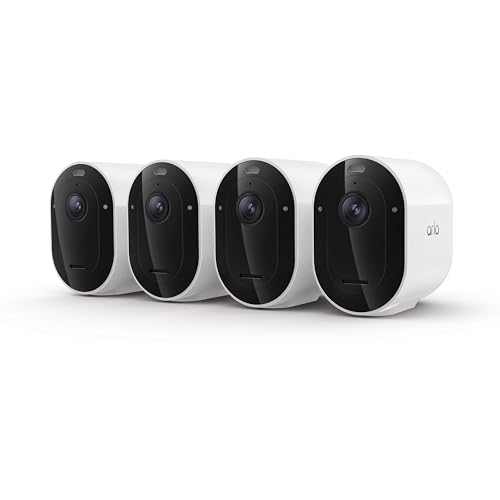
Arlo Pro Security Camera 2K HDR (6th Gen, 2025 Release) - Wireless Outdoor
2K HDR video with color night vision and spotlight
View Today's Price
Blink Outdoor 4 – Wireless smart security camera, two-year battery life, 1080p
Up to 2-year battery life on two AA lithium batteries
View Today's Price
eufy Security 3K Dual Camera, SoloCam S340, Solar Security Cameras Wireless
3K resolution with 8x digital zoom
View Today's PriceHow to Choose the Right Smart Cameras
Choosing the right smart camera depends on your use case, install location, budget, power source, and ecosystem—factors that interact in unexpected ways. A feature that’s perfect for outdoor security may be unnecessary (or even a hassle) for indoor baby monitoring. Our recommendation engine weighs your specific needs across five decision dimensions and delivers a personalized smart camera match in under 60 seconds.
About this guide
Smart Cameras
The Real Buying Challenge: Specs, Trade-Offs, and Price Tiers
Choosing smart cameras in 2026 is trickier than it looks. The market is packed with feature-rich smart cameras under $300, but the trade-offs are real: a $50 Wyze Cam delivers basic 1080p video and motion alerts, while a $180 Google Nest Cam Battery offers 2K video, AI-powered alerts, and six hours of free local storage—no subscription required. Most buyers fixate on resolution and price, but overlook ecosystem compatibility, battery life, and the true cost of cloud storage for smart cameras. For example, Arlo and Ring tempt with slick smart camera hardware, but lock key features like person detection and cloud video behind $5–$15/month subscriptions. Action smart cameras like GoPro and AKASO promise 4K and waterproofing, but differ wildly in stabilization and accessory support. Dash cams from Vantrue or Garmin add GPS and loop recording, but some smart cameras in this category lack easy app integration. The biggest mistake? Assuming “wireless” means maintenance-free—battery-powered smart cameras need recharging every 1–3 months, and cheap smart cameras often miss critical events or drown you in false alerts. The right choice balances your use case, budget, and the long-term costs most buyers ignore when shopping for smart cameras.
What Actually Sets Smart Cameras Apart: Real Differentiators
Forget spec-sheet overload—what separates smart cameras in 2026 are a handful of make-or-break features. AI-powered motion detection is the single biggest leap: Google Nest’s Gemini integration and Eufy’s on-device AI are simply more accurate than Wyze or Blink smart cameras, especially at filtering out wind or pets. Local storage is a must if you want reliability during outages and to avoid monthly fees—Nest and Eufy smart cameras excel here, while Ring and Arlo push you toward the cloud. Ecosystem matters: Google Nest smart cameras are seamless for Google Home and Apple users, while Eufy is best for HomeKit. Skip pan-tilt smart cameras unless you truly need 360-degree coverage; reviewers complain about Arlo’s finicky swivel mechanisms. For action smart cameras, prioritize true 4K (not interpolated), EIS stabilization, and waterproofing to at least 33ft—GoPro and DJI lead, AKASO offers value. Night vision range is overlooked but crucial: budget smart cameras often wash out beyond 15ft, while mid-tier models like Nest or Arlo reliably reach 20–30ft. Don’t chase the highest resolution if AI, storage, or integration are weak—those matter more than raw megapixels in smart cameras.
Decision Factors and How to Choose the Right Smart Camera
Your ideal smart camera depends on how your priorities interact—room size dictates field of view, outdoor use demands IP65+ weatherproofing, and your smart home ecosystem narrows brand choices among smart cameras. Budget is a hard constraint: under $80 gets you basic Wyze or Blink smart cameras with limited AI, while $100–$150 unlocks 2K video, better night vision, and local storage from Google Nest or Eufy smart cameras. Go higher for robust outdoor builds or action smart cameras with true 4K. Power source changes everything: battery-powered smart cameras are flexible but need recharging, solar extends life but adds cost, and wired smart cameras offer 24/7 reliability but require outlets. The quiz evaluates your use case, install location, budget, power needs, and ecosystem to pinpoint the best smart camera fit. Beyond that, weigh subscription costs, privacy (cloud vs local for smart cameras), and how much hassle you’ll tolerate for setup and maintenance. Don’t underestimate the frustration of a smart camera that misses key events or floods you with false alarms—accuracy and reliability trump headline specs every time for smart cameras.
Buyer's guide
How to choose
1Core Performance Criteria
- Prioritize AI-powered motion detection—Google Nest and Eufy outperform Wyze and Blink in filtering out pets, wind, and irrelevant movement.
- Look for 2K or 4K video resolution if you need to identify faces or license plates, especially for outdoor or dash cam use.
- Night vision range is critical; mid-tier models like Nest and Arlo reach 20–30 feet, while budget options may wash out past 15 feet.
- Two-way audio is essential for home security and baby monitoring, but not all budget models offer clear, lag-free communication.
- For action cameras, electronic image stabilization (EIS) and waterproofing to at least 33 feet are must-haves for smooth, reliable footage.
- Check for instant smartphone alerts with customizable sensitivity—false alarms are common on cheaper models lacking advanced AI filtering.
2Build Quality and Durability
- Outdoor cameras must have at least IP65 weatherproofing to survive rain, snow, and dust—Nest Battery and Arlo Essential meet this standard.
- Battery-powered models like Nest Battery and EufyCam 2C Pro use ruggedized housings, but expect 1–3 month battery life with frequent alerts.
- Action cameras from GoPro and DJI offer superior shock resistance and waterproofing compared to budget AKASO models, which may leak under pressure.
- Swivel and pan-tilt mechanisms on Arlo and TP-Link Tapo models are prone to wear and occasional jamming after extended outdoor use.
- Dash cams need secure windshield mounts and robust heat resistance; Vantrue and Garmin excel here, while cheaper models may overheat in summer.
- Indoor-only cameras can skip weatherproofing, but should still have solid plastic shells and reliable mounting hardware to avoid accidental drops.
3Value and Price Analysis
- The sweet spot for smart cameras is $100–$130, where you get 2K video, strong AI, and local storage without mandatory subscriptions.
- Budget models under $80 (Wyze, Blink) offer basic 1080p video and motion alerts, but often require paid cloud storage for full features.
- Premium options ($160–$300) like Nest Battery add weatherproofing, longer battery life, and better AI, but may be overkill for small apartments.
- Subscription fees on Arlo, Ring, and Blink can add $60–$180 per year—factor this into your total cost of ownership before buying.
- Eufy and Google Nest stand out by offering free local storage and basic AI features without requiring a monthly fee.
- Avoid chasing the cheapest price if it means sacrificing reliability, AI accuracy, or integration with your existing smart home ecosystem.
4Use-Case Fit and Ecosystem Compatibility
- Google Nest is the best pick for Google Home and Apple HomeKit users, offering seamless integration and reliable AI-driven alerts.
- EufyCam 2C Pro is ideal for privacy-focused buyers and Apple HomeKit setups, thanks to local storage and encrypted video streams.
- Action camera buyers should prioritize GoPro or DJI for accessory support and advanced stabilization, while AKASO is a budget-friendly alternative.
- Dash cam users need GPS tagging and loop recording—Vantrue and Garmin models are proven for evidence-grade reliability on the road.
- Outdoor installations require IP65+ weatherproofing and, ideally, solar or wired power for year-round reliability without frequent battery swaps.
- If you use Alexa, Google, or Apple HomeKit, double-check compatibility before buying—many budget brands skip full smart home integration.
5Common Mistakes and Pitfalls
- Don’t assume 'wireless' means maintenance-free—battery cams like Nest or Eufy need recharging every 1–3 months, especially with heavy motion activity.
- Many buyers overlook subscription costs for cloud storage and AI features, which can quickly exceed the camera’s purchase price after a year.
- Ignoring ecosystem compatibility leads to frustration—Nest for Google, Eufy for HomeKit, and Ring for Alexa are not always interchangeable.
- Cheap cameras often have poor AI, resulting in constant false alerts from shadows, wind, or passing cars, which quickly becomes annoying.
- Pan-tilt cameras sound appealing but often suffer from unreliable motors and app glitches, as seen with Arlo Essential Pan-Tilt models.
- Failing to check night vision range leaves you with unusable footage—budget cameras often can’t see clearly beyond 15 feet in darkness.
6Maintenance and Longevity
- Battery-powered cameras require regular recharging—expect every 1–3 months for Nest Battery or EufyCam, depending on alert frequency and climate.
- Wired models offer 24/7 uptime but need reliable power and may require professional installation if outlets aren’t nearby.
- Outdoor cams should be checked seasonally for water ingress, lens fogging, and mount integrity, especially after storms or extreme temperatures.
- Local storage models need periodic SD card swaps or formatting to avoid data corruption and ensure continuous recording.
- Firmware updates are crucial for security and AI improvements—Google Nest and Eufy push updates automatically, but budget brands may lag behind.
- Swivel and pan-tilt mechanisms on budget models can wear out quickly if used constantly—limit movement to extend lifespan.
FAQ
Frequently asked questions
Is AI-powered motion detection worth paying extra for in 2026?
Absolutely, AI-powered motion detection is a significant upgrade for reducing false alerts and catching real events. Google Nest and Eufy offer the most accurate AI in their price tiers, reliably filtering out pets, wind, and shadows. Cheaper models like Wyze or Blink often trigger on irrelevant movement, leading to notification fatigue. If you want a camera that only pings you for people, packages, or vehicles, paying extra for advanced AI is well worth it—especially for outdoor or high-traffic areas.
How does Google Nest compare to Eufy and Arlo for home security?
Google Nest leads in AI accuracy, ease of setup, and seamless Google Home integration. Eufy is best for Apple HomeKit users and privacy, thanks to local storage and encrypted video. Arlo’s pan-tilt models offer 360-degree coverage but can be finicky and often require a subscription for full features. All three brands deliver excellent 2K video and night vision, but Nest stands out for its free 6-hour onboard storage and reliable AI alerts without a required subscription.
What resolution and night vision range do I need for outdoor security?
For outdoor security, 2K resolution is the new standard in 2026, allowing you to identify faces and license plates clearly. Night vision should reach at least 20–30 feet for effective coverage—Nest Battery and Arlo Essential models excel here. Budget cameras often fall short, with washed-out footage beyond 15 feet. If your yard or driveway is large, prioritize models with extended night vision and a wide field of view for complete coverage.
Are subscription fees required for smart cameras from Ring, Arlo, or Blink?
Yes, Ring, Arlo, and Blink require subscriptions for full access to cloud storage, advanced AI features, and smart alerts. These fees typically range from $5 to $15 per month, adding up to $60–$180 per year. Some basic features work without a subscription, but you’ll lose person detection, event history, and sometimes even remote viewing. If you want to avoid ongoing costs, look for Google Nest or Eufy models with robust local storage and free basic AI.
Which smart cameras work best with Apple HomeKit?
EufyCam 2C Pro is the top pick for Apple HomeKit integration in 2026, offering local storage, encrypted video, and seamless Siri control. Google Nest supports HomeKit via third-party bridges but isn’t as smooth. Arlo Pro models also support HomeKit, but require a base station and may need a subscription for advanced features. Always check for 'Works with Apple HomeKit' certification to ensure full compatibility and end-to-end encryption.
How long do battery-powered smart cameras last between charges?
Battery life depends on usage and environment. Google Nest Battery and EufyCam 2C Pro typically last 1–3 months per charge with moderate motion activity. Heavy use—lots of alerts, cold weather, or high-resolution recording—can cut that to just a few weeks. Solar panels can extend battery life indefinitely, but add to the upfront cost. Always factor in the hassle of recharging when choosing a battery-powered model for busy or hard-to-reach locations.
Are budget smart cameras like Wyze reliable for home security?
Wyze offers excellent value for basic indoor monitoring, with 1080p video and real-time alerts for under $50. However, their AI is less accurate than Google Nest or Eufy, leading to more false positives. Night vision range is limited, and cloud storage often requires a subscription. For small apartments or secondary rooms, Wyze is a solid budget pick, but for critical outdoor or security use, invest in a mid-range model with better AI and night vision.
Best Smart Cameras By Category
Compare Smart Cameras
Related Guides
Automatic Pet Feeders
Matched to your pet’s food type, number of pets, feeding schedule, and the features you’ll actually use.
Upgrade Your Home Security with DIY Smart Products
We match you to the right cameras, locks, doorbells, and Wi-Fi—based on your home, tech comfort, budget, and security priorities.
Top Products to Make Your Home More Energy Efficient
Matches you to smart thermostats, ACs, and appliances based on your climate, home type, budget, and comfort with tech.
Home Security Cameras
Mounting, power, resolution, storage, and smart features—get a security camera matched to your home, habits, and privacy needs.
Home Weather Stations
Matched to your climate, installation site, data needs, and how serious you are about weather tracking.