Skip the research trap. Get your combination ovens in 60 seconds.
We scored 300+ combination ovens across 5 dimensions — answer 5 quick questions and we'll match you to YOUR best pick.

Powered by DecisionScore™
Each product is evaluated across 18 weighted criteria — covering performance, value, build quality, and real-world usability. Your quiz answers re-weight the criteria to match what matters most to you, so two people can get different #1 picks from the same data.
See the DecisionScore methodology →- Black stainless finish adds premium style to the multifunction oven
- 1.1 cu ft capacity and 1100 W microwave for efficient cooking
- Combines microwave, convection and air‑fry with 1800 W convection element
Find your perfect combination ovens
5 quick questions. No quiz-takes-10-minutes trap. A personalized match from 30 scored picks — with clear reasoning for every recommendation.
Where will you install your combination oven?
Countertop models sit on a counter. Built‑in units fit within cabinetry. Wall ovens combine a microwave and full oven in one vertical stack. Over‑the‑range models mount above your cooktop. Select based on your kitchen layout and renovation plans.
- Measure your available counter or cabinet space before choosing a model—some combos exceed 20 inches deep with trays or doors extended.
- Wall oven combos require professional installation and a dedicated electrical circuit, which can add to your total cost.
- Over-the-range models save counter space but may be harder to access for shorter users or those with mobility issues.
As an Amazon Associate and affiliate partner we earn from qualifying purchases. Links on this page may earn us a commission at no extra cost to you. Full disclosure
Not ready for the quiz? Here are our overall top picks
These are our top-rated picks overall. For a recommendation matched to YOUR specific needs,
Breville BMO870BSS Combi Wave 3-in-1, Brushed Stainless Steel
Black stainless finish adds premium style to the multifunction oven
View Today's Price
TOSHIBA Air Fryer Combo Microwave, 1.0 Cu.Ft, Black Stainless Steel
Combines multiple cooking modes including microwave and convection
View Today's Price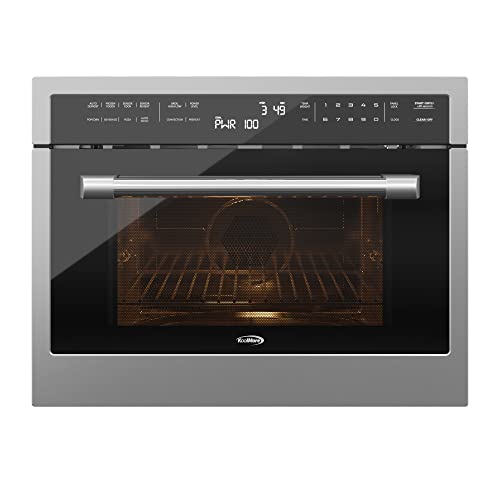
KoolMore 24 Inch Built-in Convection Oven and Microwave Combination with Broil,
Combines multiple cooking modes including microwave and convection
View Today's PriceHow to Choose the Right Combination Ovens
Choosing the right combination oven depends on installation type, cooking style, household size, and smart feature preferences—trade-offs that shift based on your kitchen layout and daily habits. A feature that’s perfect for a busy family could be overkill for a single cook or impossible to fit in a small apartment. Our recommendation engine evaluates your specific needs across five dimensions and matches you to the right combination oven in under 60 seconds.
About this guide
Combination Ovens
Why Picking the Right Combination Oven Is Tricky
Choosing compact combination ovens in 2026 is a balancing act that trips up even seasoned home cooks. Compact combination ovens cram microwave, convection, air fryer, and sometimes steam oven functions into one appliance, but the trade-offs are real. For example, a $150 Toshiba ML-EC42P(SS) covers the basics but skips advanced inverter tech, leading to hot spots and uneven reheating—an issue common in entry-level compact combination ovens. Move up to a $400 Panasonic HomeChef 4-in-1 and you get app-guided presets and inverter evenness, but you’ll need to deal with more accessories and a larger footprint—some compact combination ovens exceed 20 inches deep with racks extended. Many buyers focus on wattage or “air fry” labels, not realizing that true convection and broiler elements in compact combination ovens matter more for crisping than microwave-only air fry modes. Capacity is another common pitfall: a 0.9 cu ft compact combination oven is fine for singles, but families need 1.5 cu ft or more, and wall oven compact combination ovens can offer over 5 cu ft. Most people underestimate the impact of installation—countertop, built-in, or wall stack—and forget to check their kitchen’s electrical and venting requirements for compact combination ovens. The result? Regret and clutter. Our guide helps you avoid these traps when shopping for compact combination ovens.
What Actually Sets Combination Ovens Apart
Not all compact combination ovens are created equal, and the differences go far beyond the number of cooking modes listed on the box. Inverter technology, as found in Panasonic’s HomeChef compact combination ovens, is a significant upgrade for even heating and defrosting—skip non-inverter compact combination ovens unless you’re only reheating leftovers. Breville’s Joule Smart Oven Air Fryer Pro stands out among compact combination ovens for precise controls and multi-rack setups, making it a favorite for families who bake and roast. App integration is another real differentiator: models like Typhur Sync Oven and Panasonic HomeChef compact combination ovens let you scan barcodes and send cook instructions from your phone, but beware—app glitches can require manual overrides. Don’t be fooled by “air fry” labels on microwaves; only true convection or broiler hybrids in compact combination ovens deliver real crispness. Rack positions matter more than raw capacity—look for at least four rack levels in compact combination ovens if you cook multiple dishes. Accessories can be a blessing or a curse: more trays and baskets in compact combination ovens mean versatility, but also storage headaches. Skip premium probe features in compact combination ovens unless you’re a serious baker or roast enthusiast. Focus on inverter tech, convection power, and app reliability in compact combination ovens over flashy wattage numbers.
How to Choose: Decision Factors That Matter Most
Installation type, cooking style, household size, and desired smart features all interact to shape your ideal compact combination ovens. For example, a countertop model like the Panasonic HomeChef compact combination oven fits most kitchens but may overwhelm a small apartment, while a wall oven compact combination oven offers massive capacity but requires a major remodel and a dedicated circuit. If you mostly reheat or make popcorn, basic sensor compact combination ovens suffice, but baking or healthy air frying demands true convection and multiple rack positions in compact combination ovens. Budget is a hard constraint: $150–$250 nets you basic air fry/microwave compact combination ovens, $300–$400 adds inverter and app features, and $500+ gets you large, smart compact combination ovens like Typhur Sync or Breville. The quiz evaluates your installation needs, cooking habits, family size, smart tech preferences, and speed-versus-precision priorities in one go for compact combination ovens. Don’t ignore the realities of accessory storage, app compatibility, and actual counter depth—measure your space and check your Wi-Fi before buying compact combination ovens. Remember, the right compact combination ovens are the ones that fit your space, match your cooking ambitions, and won’t drive you crazy with clutter or glitches.
Buyer's guide
How to choose
1Core Performance Criteria
- Prioritize inverter technology for even heating and defrosting—Panasonic HomeChef models outperform non-inverter rivals in real-world tests and expert reviews.
- Look for true convection and broiler elements if you plan to bake, roast, or air fry regularly; microwave-only air fryers rarely deliver proper crisping.
- Check for at least four rack positions, which allow multi-item cooking and better airflow for consistent results, especially in Breville and Typhur models.
- Evaluate preheat times and temperature stability—premium models like Typhur Sync Oven preheat quickly and maintain even temps, crucial for baking.
- Don’t be swayed by high wattage alone; a 1000W inverter oven often outperforms a 1200W non-inverter in heating quality and energy efficiency.
- Smart features like app integration and sensor presets can streamline meal prep, but only if the app is reliable and updates are frequent.
2Build Quality and Durability
- Premium models from Breville and Panasonic use stainless steel interiors and robust hinges, which resist warping and last longer than plastic-heavy budget units.
- Door seals and latches are common failure points—test for a firm, even seal to avoid heat loss and microwave leakage over time.
- Mechanical dials may look retro, but digital controls offer more precise settings and are less prone to wear or drift in calibration.
- Accessory quality varies widely; thicker nonstick trays and racks from Breville or Typhur last longer and are easier to clean than thin generic inserts.
- Check warranty terms—most mid-range units offer only one year, but Breville and Panasonic sometimes provide two-year coverage on electronics and heating elements.
- Interior lighting and clear viewing windows are often overlooked but make a big difference in monitoring food without opening the door and losing heat.
3Value Analysis and Price Tiers
- The $250–$400 range is the current sweet spot, delivering inverter tech, app features, and quality accessories without the premium price tag of $500+ models.
- Budget combos like Toshiba ML-EC42P(SS) offer basic air fry and convection, but skip advanced features and may have uneven heating or limited app support.
- Spending $500–$700 gets you large, versatile ovens like Typhur Sync or Breville Joule, ideal for frequent bakers or large families needing extra capacity.
- Accessory bundles can inflate prices; only pay for extra trays or probes if you’ll use them regularly—otherwise, they become expensive clutter.
- Watch for seasonal discounts—combination ovens often drop 10–20% during spring and holiday sales, making mid-range models more accessible.
- Consider long-term energy savings: inverter and convection systems are more efficient, lowering utility bills compared to older, non-inverter microwave combos.
4Use-Case Fit and Cooking Styles
- If you mainly reheat, sensor-driven models with basic presets are sufficient—skip high-end convection unless you plan to bake or roast.
- Bakers and roast enthusiasts should seek models with convection, broiler, and multiple rack positions; Breville and Typhur excel here.
- Healthy cooks benefit from steam and air fry modes—Panasonic and Cuisinart offer steam options for low-oil meals and crisp veggies.
- Large families or entertainers need at least 1.5 cu ft capacity or a wall oven combo with over 5 cu ft for multi-dish meals.
- Small kitchens and apartments require compact countertop models—measure carefully, as many combos exceed 20 inches with doors or trays extended.
- App integration and remote control are most valuable for busy households juggling multiple dishes or needing meal reminders.
5Common Mistakes and Pitfalls
- Ignoring inverter technology leads to uneven heating and frustration—always check for this feature if you want reliable results.
- Overestimating capacity based on cubic feet alone—rack positions and usable space matter more for real-world cooking.
- Assuming all 'air fry' labels deliver crisp results; only true convection or broiler-equipped models match standalone air fryers.
- Forgetting to measure counter depth and clearance—many buyers regret oversized ovens that block cabinets or crowd prep space.
- Neglecting accessory storage needs; extra trays and baskets can quickly clutter small kitchens if not planned for.
- Relying solely on app presets without checking compatibility—some smart ovens lose functionality if the app is buggy or unsupported.
6Maintenance and Longevity
- Regularly clean crumb trays, air fry baskets, and convection fans to prevent grease buildup and maintain airflow for even cooking.
- Descale steam ovens every few months using a dedicated cleaning kit to avoid mineral buildup and preserve steam performance.
- Inspect door seals and hinges annually; worn seals can cause heat loss and reduce microwave efficiency over time.
- Use non-abrasive cleaners on stainless interiors to prevent scratching and maintain the reflective surface for even heating.
- Replace filters and check for firmware updates on smart ovens—outdated software can cause glitches or loss of remote functionality.
- Store accessories in a dedicated bin or drawer to avoid losing racks or damaging nonstick coatings during everyday use.
FAQ
Frequently asked questions
Is inverter technology worth paying extra for in a combination oven?
Absolutely—expert reviews consistently show that inverter technology, found in models like the Panasonic HomeChef 4-in-1, delivers far more even heating and defrosting than traditional microwaves. Non-inverter ovens can leave hot spots or partially frozen sections, especially with larger dishes. If you plan to cook or reheat full meals, not just snacks, the extra $100–$150 for inverter tech is well worth it for reliability and food quality.
How does the Breville Joule Smart Oven Air Fryer Pro compare to the Panasonic HomeChef 4-in-1?
The Breville Joule Smart Oven Air Fryer Pro offers more precise controls, multiple rack positions, and a larger interior, making it ideal for baking and family meals. The Panasonic HomeChef 4-in-1 excels at even microwave heating and app-guided presets, but is more compact. Choose Breville for advanced baking and roasting, or Panasonic for versatile daily use and reliable reheating.
What capacity do I need for a family of four?
For a family of four, look for at least 1.5 cubic feet of capacity in a countertop model, or consider a wall oven combo with over 5 cubic feet. This ensures enough space for casseroles, roasts, and multi-dish meals. Models like the Typhur Sync Oven and Breville Joule are well-suited for families, offering both size and multiple rack positions for simultaneous cooking.
Are smart ovens with Wi-Fi and app control reliable?
Smart ovens with Wi-Fi and app control, such as Panasonic HomeChef and Typhur Sync, offer great convenience for remote monitoring and barcode scanning. However, occasional app glitches or connectivity issues are still reported. Always check app compatibility with your device and look for models with regular firmware updates. Manual overrides are essential in case the app fails.
Do 'air fry' microwave combos really replace a standalone air fryer?
Most 'air fry' microwave combos do not fully match the crisping power of standalone air fryers. Only models with true convection or broiler elements, like the Breville Joule or Cuisinart Air Fryer Toaster Oven, deliver comparable results. If air frying is a top priority, skip basic microwave-only combos and choose a unit with convection and a dedicated air fry basket.
What’s the best value price range for combination ovens in 2026?
The $250–$400 range is the current sweet spot for combination ovens, offering inverter technology, reliable app features, and quality accessories. Budget models under $200 often lack even heating and advanced features, while premium models over $500 add capacity and probes that most households won’t use daily. Look for seasonal discounts to get mid-range models at even better value.
How does the Toshiba ML-EC42P(SS) compare to higher-end models?
The Toshiba ML-EC42P(SS) is a solid budget pick, offering basic air fry, convection, and steam sensor features for $150–$250. It’s great for reheating and simple meals, but lacks the inverter tech and app integration found in Panasonic or Breville models. Expect some uneven heating and fewer rack positions. It’s best for singles or small households prioritizing price over advanced performance.
Best Combination Ovens By Category
Compare Combination Ovens
Related Guides
Air Fryers
Matched to your kitchen space, batch size, cooking style, and must-have features—get an air fryer that truly fits your needs.
Bar Tools
Skill level, tool type, finish, budget, and how you’ll use your bar tools—get matched to the right set for your home bar.
Beginner Espresso Machines
Skill level, hands-on control, milk frothing, and kitchen space—get matched to the perfect beginner espresso machine for your daily ritual.
Best Bread Machines for Home Bakers
Loaf size, bread style, add-ins, and control—get matched to the bread machine that fits your kitchen and baking goals.
Breakfast Cookware
Matches your breakfast routine, kitchen setup, budget, and health priorities to the perfect pan, griddle, or appliance.