Skip the research trap. Get your blu-ray players in 60 seconds.
We scored 250+ blu-ray players across 5 dimensions — answer 5 quick questions and we'll match you to YOUR best pick.

Powered by DecisionScore™
Each product is evaluated across 18 weighted criteria — covering performance, value, build quality, and real-world usability. Your quiz answers re-weight the criteria to match what matters most to you, so two people can get different #1 picks from the same data.
See the DecisionScore methodology →- 4K UHD Blu-ray with HDR10 and Dolby Vision
- Dolby Atmos audio support
- 3D Blu-ray playback
Find your perfect blu-ray players
5 quick questions. No quiz-takes-10-minutes trap. A personalized match from 23 scored picks — with clear reasoning for every recommendation.
What is your preferred video resolution capability?
Video resolution is crucial for picture quality. Higher resolutions like 4K offer more detail and clarity, enhancing your viewing experience, especially on larger screens.
- 4K Ultra HD players are best for TVs with 4K resolution; 1080p is fine for older or secondary TVs.
- If you plan to upgrade your TV soon, consider future-proofing with a 4K player.
- Higher resolution players often include better upscaling for standard Blu-rays, improving picture quality even on 4K TVs.
As an Amazon Associate and affiliate partner we earn from qualifying purchases. Links on this page may earn us a commission at no extra cost to you. Full disclosure
Not ready for the quiz? Here are our overall top picks
These are our top-rated picks overall. For a recommendation matched to YOUR specific needs,
DpBlue 4K UHD Blu-ray Player for TV Projector Support Region A Blu Ray 3D 4K
4K UHD Blu-ray with HDR10 and Dolby Vision
View Today's Price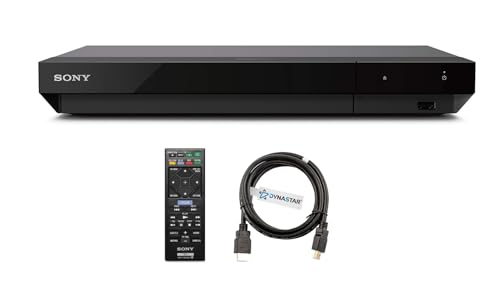
Region Free 4k UHD Blu-ray Player Compatible with Sony UBP-X700U | Multi-Region
4K UHD region-free playback (Zones A, B, C)
View Today's Price
Sony UBPX700U 4K UHD Blu-Ray Player with HDMI Cable
4K Ultra HD Blu-ray with Dolby Vision
View Today's PriceHow to Choose the Right Blu-ray Players
Choosing the right Blu-ray player depends on resolution needs, HDR format support, audio system compatibility, and your disc collection—trade-offs that shift based on your TV, budget, and streaming habits. A feature that’s essential for a 4K OLED setup may be wasted on a 1080p TV. Our recommendation engine evaluates your specific setup across five key dimensions and matches you to the right Blu-ray player in under 60 seconds.
About this guide
Blu-ray Players
Why Blu Ray Player Decisions Are Trickier Than They Look
Blu ray players in 2026 force you to make real trade-offs that most buyers overlook. For example, a Sony BDP-S1700 blu ray player delivers reliable 1080p playback for under $100, but you miss out on 4K, Dolby Vision, and advanced audio formats that higher-end blu ray players offer. Step up to a Panasonic DP-UB820 blu ray player at $500 and you unlock 4K resolution, HDR10+, Dolby Vision, and Panasonic’s HCX chroma processing—features that actually make a visible difference on premium TVs when using top-tier blu ray players. The middle ground, with blu ray players like the Sony UBP-X700 and Panasonic DP-UB420 (both under $300), offers 4K and Dolby Vision but not always every HDR format. Many shoppers get tripped up by assuming all 4K blu ray players support every HDR standard or that Wi-Fi is a luxury—when in reality, even $100 blu ray players often include it. Upscaling quality is another overlooked detail: a mediocre blu ray player will make standard Blu-rays look soft on a 4K TV. Price tiers ($100, $300, $500) for blu ray players aren’t just about features—they reflect real differences in picture processing, format support, and build quality among blu ray players.
What Separates the Best Blu Ray Players in 2026
The real differentiators in blu ray players today are resolution support, HDR compatibility, audio codec handling, and upscaling quality. Skip 4K blu ray players if your TV is only 1080p—those extra features are wasted and your money is better spent on a solid upscaler blu ray player. But if you own a 4K OLED or QLED, don’t settle for basic HDR10; look for blu ray players with Dolby Vision and HDR10+ support, as only higher-end blu ray players like the Panasonic DP-UB820 or Sony UBP-X700 cover both. Audio matters more than people think: DTS:X and Dolby Atmos are must-haves for immersive home theater, but not every blu ray player supports them natively. Built-in Wi-Fi is now standard in most blu ray players, not a premium—don’t pay extra for it. Multi-region playback is essential only if you buy discs from overseas; otherwise, stick to region-locked blu ray players for better value. Upscaling separates the good blu ray players from the great: Panasonic’s HCX processor is a noticeable step up for standard Blu-rays. In short, prioritize HDR and audio format support in blu ray players above flashy streaming apps or 3D playback unless you have a large 3D disc library.
How to Choose: Decision Factors and Interactions
Your TV’s resolution is the single biggest factor—don’t pay for 4K or Dolby Vision blu ray players if your display can’t show it. Budget sets hard limits: under $100 gets you basic 1080p blu ray players (Sony BDP-S1700), while $300–$500 opens up true 4K, HDR10+, and audiophile features in premium blu ray players. Disc collection matters: if you import movies, multi-region blu ray players are non-negotiable; otherwise, skip it for better price-to-performance. Audio setup is another layer—if you have a soundbar or AV receiver that supports Dolby Atmos or DTS:X, make sure your blu ray player does too. Upscaling quality only matters if you watch standard Blu-rays on a 4K TV with your blu ray players; otherwise, it’s a minor concern. Our quiz evaluates your TV, disc library, streaming habits, and audio needs to pinpoint the right blu ray player model. Think carefully about which blu ray player features you’ll actually use, as paying for advanced HDR or 3D playback is pointless if your setup can’t take advantage. The best value comes from matching your blu ray player’s capabilities to your actual home theater—not chasing specs you’ll never notice.
Buyer's guide
How to choose
1Core Performance Criteria
- Choose a player that matches your TV’s native resolution—4K UHD is wasted on a 1080p screen and vice versa.
- HDR support is crucial for modern 4K TVs; prioritize Dolby Vision and HDR10+ if your TV supports them for the best picture.
- Look for robust upscaling if you plan to watch standard Blu-rays on a 4K display; Panasonic’s HCX processor is a standout.
- Audio codecs like Dolby Atmos and DTS:X are essential for immersive sound with compatible home theater setups.
- Built-in Wi-Fi is now standard and a must-have for streaming apps—don’t consider models without it in 2026.
- Multi-region playback only matters if you regularly buy discs from overseas; most users can skip this feature for better value.
2Build Quality and Durability
- Premium models like Panasonic DP-UB820 use more robust chassis and quieter disc mechanisms, reducing vibration and playback noise.
- Entry-level players under $100 often have lighter plastic builds and less shielding, which can lead to more fan noise and heat.
- Sony and Panasonic have the best reputations for long-term reliability, with fewer reported failures compared to off-brand models.
- Disc tray mechanisms are a common failure point—look for smooth, quiet operation and avoid models with flimsy, rattling trays.
- Remote controls on budget players are often small and less responsive; mid-range and premium models offer better ergonomics.
- Warranty coverage varies: Panasonic and Sony typically offer one-year parts and labor, while lesser-known brands may be more limited.
3Value Analysis: What You Get at Each Price Point
- Under $100 buys solid 1080p playback (Sony BDP-S1700), but you sacrifice 4K, advanced HDR, and premium audio features.
- The $200–$300 range gets you real 4K support, Dolby Vision, and better upscaling—Sony UBP-X700 and Panasonic DP-UB420 are top picks.
- $500+ models like Panasonic DP-UB820 add HDR10+, HCX chroma processing, and superior build quality for true home theater enthusiasts.
- Streaming apps are included even on budget models, so don’t pay extra just for Netflix or YouTube support.
- Multi-region capability adds $30–$70 to the price—only pay for it if you need to play discs from other regions.
- Spending more rarely improves streaming performance; the real gains are in picture processing and audio support.
4Use-Case Fit: Matching Player to Your Setup
- A 4K OLED TV deserves a player with full HDR10+ and Dolby Vision support for the best possible image quality.
- If your disc library is mostly standard Blu-rays, prioritize upscaling and skip premium HDR features you won’t use.
- Home theater owners with Atmos or DTS:X soundbars should confirm their player passes these codecs via HDMI for immersive audio.
- Travelers or collectors of international discs need multi-region playback; most U.S. buyers can ignore this feature.
- 3D playback is only worth paying for if you own a 3D TV and a sizable 3D Blu-ray collection.
- Streaming fans should confirm app support, but remember: every major player now includes Wi-Fi and basic streaming services.
5Common Mistakes and Pitfalls
- Many buyers overpay for 4K features their TV can’t display—always match player resolution to your actual screen.
- Assuming all 4K players support every HDR format is a mistake; check for both Dolby Vision and HDR10+ if you care about HDR.
- Ignoring upscaling quality leads to disappointing results when watching standard Blu-rays on a 4K TV.
- Buying multi-region players when you only own U.S. discs wastes money and sometimes sacrifices warranty coverage.
- Overvaluing streaming app selection—your TV or streaming stick may already cover Netflix and YouTube better than most players.
- Neglecting audio codec support means missing out on Atmos or DTS:X if your sound system can handle them.
6Maintenance and Longevity
- Keep disc trays clean and dust-free to prevent jams and extend mechanism life, especially on budget models with less robust trays.
- Firmware updates are important for new disc compatibility—Sony and Panasonic regularly release updates for their players.
- Avoid stacking electronics on top of your player, as heat buildup shortens lifespan and can cause playback issues.
- Use high-quality HDMI cables to minimize handshake errors and ensure reliable HDR and audio pass-through.
- If you experience playback glitches, a factory reset or firmware update often resolves issues before seeking repairs.
- Store your player in a ventilated area—overheating is a leading cause of early failure in compact or poorly ventilated setups.
FAQ
Frequently asked questions
Is Dolby Vision support worth paying extra for in a Blu-ray player?
Dolby Vision support is absolutely worth it if your TV can display it—especially with 4K OLED or QLED screens. Players like the Panasonic DP-UB820 and Sony UBP-X700 offer Dolby Vision and HDR10+, delivering visibly better contrast and color than models limited to HDR10. However, if your TV only supports HDR10 or you’re using a 1080p set, paying extra for Dolby Vision won’t improve your experience. Always check your TV’s capabilities before prioritizing this feature.
How does the Sony UBP-X700 compare to the Panasonic DP-UB420 for 4K playback?
Both the Sony UBP-X700 and Panasonic DP-UB420 deliver excellent 4K playback with Dolby Vision support for under $300. The Panasonic DP-UB420 has a slight edge in upscaling quality, thanks to Panasonic’s HCX processor, which produces sharper images from standard Blu-rays. The Sony UBP-X700 is more widely available and offers a slightly simpler interface. If you value upscaling and HDR10+ support, lean toward the Panasonic; for ease of use and broad compatibility, the Sony is a strong choice.
Do I need a multi-region Blu-ray player for a U.S. disc collection?
If your entire disc collection is U.S. releases, a region-locked player will suffice and often costs less. Multi-region players are only necessary if you buy discs from Europe, Asia, or Australia, as those may not play on standard U.S. models. Multi-region capability adds $30–$70 to the price and sometimes voids the manufacturer warranty. For most U.S. buyers, sticking with a region-locked Sony or Panasonic player is the best value.
What video resolution do I need for a 4K TV?
For a 4K TV, always choose a Blu-ray player that supports 4K Ultra HD discs and outputs native 4K resolution. Models like the Panasonic DP-UB820 and Sony UBP-X700 provide true 4K playback, HDR support, and advanced upscaling. Avoid 1080p-only players, as they won’t deliver the sharpness or color depth your TV is capable of. If you want the best possible image, look for players with both Dolby Vision and HDR10+.
Are built-in streaming apps on Blu-ray players useful in 2026?
Streaming apps are included on nearly all Blu-ray players in 2026, but their usefulness depends on your setup. Most smart TVs and streaming sticks (like Roku or Fire TV) offer a better app experience than Blu-ray players. Use the player’s apps only if your TV lacks smart features or you want a single remote. Don’t pay extra for streaming capability—it’s now a standard feature even on budget models like the LG BP350.
Does 3D playback matter for most buyers?
3D playback is a niche feature in 2026, as most new TVs no longer support 3D. Only consider a 3D-capable Blu-ray player if you already own a 3D TV and have a sizable collection of 3D Blu-ray discs. Otherwise, skip this feature and focus on better HDR or audio support. Models with 3D playback often cost more, so only pay the premium if you’ll actually use it.
Which brand is more reliable: Sony or Panasonic?
Both Sony and Panasonic have excellent reputations for reliability and long-term support. Panasonic’s DP-UB820 and DP-UB420 are praised for build quality and regular firmware updates, while Sony’s UBP-X700 and BDP-S1700 are known for consistent performance and wide compatibility. Off-brand models may be cheaper but tend to have more issues with disc reading and shorter lifespans. For most buyers, either Sony or Panasonic is a safe, dependable choice.
Best Blu-ray Players By Category
Related Guides
AV Receivers
Room size, speaker setup, streaming features, and gaming needs—get matched to the right AV receiver for your home theater.
Home Theater Speaker Packages
Room size, audio priorities, and setup style—get matched to the right soundbar or speaker system for your home theater.
Budget Home Theater Systems
Room size, surround immersion, and setup style—get matched to the right budget home theater system for your space and habits.
Build the Ultimate Home Bar: Carts, Glassware, Tools & Storage
Entertaining style, storage needs, and drink preferences—get matched to the right bar cart, glassware, tools, and storage for your home.