Skip the research trap. Get your advanced telescopes in 60 seconds.
We scored 250+ advanced telescopes across 5 dimensions — answer 5 quick questions and we'll match you to YOUR best pick.
Powered by DecisionScore™
Each product is evaluated across 18 weighted criteria — covering performance, value, build quality, and real-world usability. Your quiz answers re-weight the criteria to match what matters most to you, so two people can get different #1 picks from the same data.
See the DecisionScore methodology →- 8-inch Dobsonian with StarSense Explorer smartphone docking for app‑guided pointing
- Manual push‑to base keeps costs down while the app shows you what’s in the sky
- Wide 1200mm focal length balances planetary and deep‑sky views
Find your perfect advanced telescopes
5 quick questions. No quiz-takes-10-minutes trap. A personalized match from 23 scored picks — with clear reasoning for every recommendation.
What will you use your telescope for most?
If you mostly enjoy planets and the moon, pick the planetary option. Deep‑sky viewing is best for galaxies and nebulae. Astrophotography means you want to take photos with a camera. All‑purpose covers a mix of visual observing and imaging.
- Deep-sky viewing benefits most from large aperture reflectors—think 8-inch or above for galaxies and nebulae.
- Planetary observers should consider long focal length or compound designs for high-contrast detail.
- Astrophotography requires tracking mounts or smart scopes—manual Dobsonians are less suited for imaging.
As an Amazon Associate and affiliate partner we earn from qualifying purchases. Links on this page may earn us a commission at no extra cost to you. Full disclosure
Not ready for the quiz? Here are our overall top picks
These are our top-rated picks overall. For a recommendation matched to YOUR specific needs,
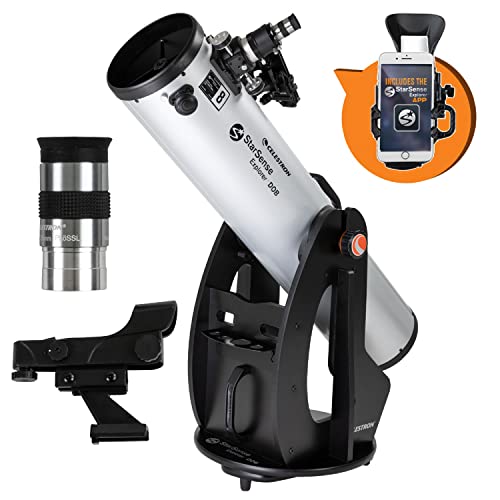
Celestron StarSense Explorer 8-inch App-Enabled Telescope – 203mm Dobsonian with
8-inch Dobsonian with StarSense Explorer smartphone docking for app‑guided pointing
View Today's Price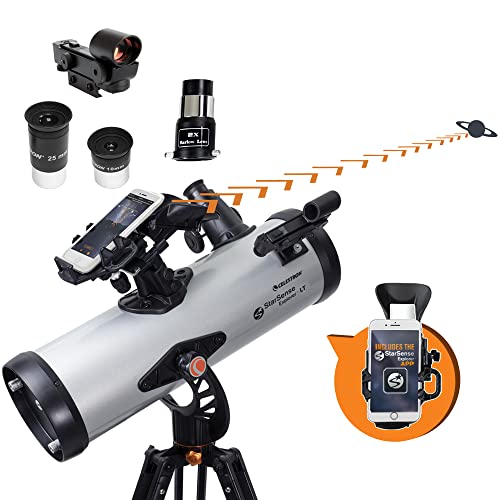
Celestron StarSense Explorer LT 114AZ App-Enabled Telescope – 114mm Newtonian
8-inch Dobsonian with classic design and smooth altitude bearings
View Today's Price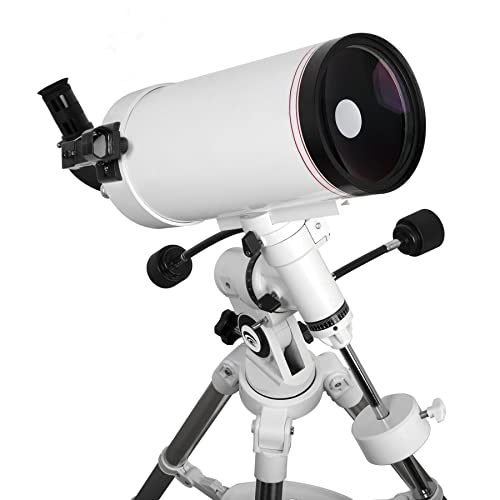
Explore Scientific FirstLight 127mm Maksutov–Cassegrain Telescope with EQ3 Mount
Check today’s price →8-inch f/5 Newtonian with sturdy Dobsonian base for budget observers
View Today's PriceHow to Choose the Right Advanced Telescopes
Choosing the right advanced telescope depends on how you’ll observe, your preferred mount style, portability needs, setup tolerance, and optical design—factors that shift with your ambitions and living space. A feature perfect for deep-sky imaging may be overkill for casual planetary viewing, and heavy scopes can become garage ornaments if portability is ignored. Our recommendation engine evaluates your specific needs across five dimensions and matches you to the ideal telescope in under 60 seconds.
About this guide
Advanced Telescopes
Why Advanced Telescope Choices Are Tricky in 2026
Selecting advanced telescopes in 2026 is a balancing act that trips up even experienced astronomers. Aperture is king—an 8-inch mirror like the Sky-Watcher Classic 8" Dobsonian ($550) reveals Saturn’s rings and faint nebulae, but a 10-inch model such as the Apertura AD10 ($850) gathers 2.5x more light for only a modest price jump. Yet, those extra inches mean a 40–60 lb tube that’s a pain to haul solo, which is a common trade-off with advanced telescopes. Mount type is another minefield: manual Dobsonians deliver simplicity and value, GoTo mounts automate finding objects, and smart advanced telescopes like the Seestar S30 Pro promise app-driven imaging but cap out at 160mm aperture—limiting for serious deep-sky work. Most buyers underestimate the importance of a stable mount in advanced telescopes and overvalue magnification claims, leading to disappointment. Accessories matter, too: a 2" focuser unlocks wide-field views, while a poor finder scope or cheap eyepieces can ruin the experience with even the best advanced telescopes. Price tiers are real—a $200 starter is a toy, $700–$1,000 is the sweet spot for 10" Dobsonian advanced telescopes, and above $1,500 brings diminishing returns unless you need pro-level tracking. Many overlook collimation and cool-down time in advanced telescopes, which can make or break a session.
What Actually Sets Advanced Telescopes Apart
The real differentiators in advanced telescopes are aperture, mount stability, and optical design—not flashy features or app integrations. Dobsonian reflectors from brands like Sky-Watcher, Celestron, and Apertura dominate the advanced telescopes market for visual astronomy because they offer the most light per dollar and a rock-solid base. Skip smart advanced telescopes like the Seestar S30 Pro unless portability and instant imaging are your top priorities; their 160mm max aperture simply can’t compete with a 10" Dobsonian for deep-sky detail. Compound designs (SCTs, Maksutovs) in advanced telescopes pack more focal length into shorter tubes but cost more and still can’t match the raw light-gathering of a big Newtonian. Collapsible truss-tube advanced telescopes like the Sky-Watcher Flextube 10" Dobsonian ($950) make storage easier without sacrificing aperture, but add setup steps. If you want to image, ZWO’s smart hybrid advanced telescopes are tempting, but manual Dobs still win for pure visual punch. Don’t get distracted by bundled accessories—most stock finders and eyepieces in advanced telescopes are mediocre. Instead, prioritize a dual-speed Crayford focuser and a 2" visual back in your advanced telescopes. Strehl ratio above 0.9 signals high mirror quality in advanced telescopes; skip brands that don’t disclose this. Focus on what you’ll actually use: aperture and mount first, features second, when choosing advanced telescopes.
How to Weigh Your Needs and Make the Right Choice
Your observing goals, storage space, and willingness to tinker all interact to determine the best advanced telescopes for you. Want to chase faint galaxies? Prioritize aperture—10" or even 12" advanced telescopes if you can handle the weight and have garage space. Need portability for dark-sky trips? A collapsible Dobsonian or a 6" refractor from the advanced telescopes category may be smarter, even if you sacrifice some light grasp. If setup complexity worries you, avoid truss-tube or equatorial mounts and stick to classic Dobsonian advanced telescopes. Budget is a real constraint: $700–$1,000 gets you a serious 10" Dobsonian from the advanced telescopes lineup, but astrophotography rigs or premium truss-tube advanced telescopes quickly double that. Don’t forget recurring costs for eyepieces, filters, and collimation tools for your advanced telescopes. Our quiz weighs your visual vs. imaging needs, preferred operation style, portability, setup tolerance, and optical design to help you select the right advanced telescopes. The biggest mistake is buying more advanced telescopes than you’ll actually use—an unwieldy 12" Dob gathering dust in the garage is less valuable than a well-used 8" advanced telescope you can carry outside yourself. Think about your local sky conditions, storage, and how much effort you’ll put into setup and maintenance of your advanced telescopes. The right advanced telescope is the one that fits your life, not just your wish list.
Buyer's guide
How to choose
1Core Performance Criteria
- Aperture size is the most important factor—an 8-inch mirror reveals more galaxies than a 6-inch, but a 10-inch like the Apertura AD10 is a true deep-sky leap.
- Focal ratio affects brightness and field of view; f/4.8–f/5 is ideal for both planetary and nebula viewing, as seen in the Sky-Watcher Classic 8" Dobsonian.
- Stable, smooth mounts are critical—Dobsonian bases from Sky-Watcher and Apertura outperform wobbly tripods, especially for high-magnification work.
- Dual-speed Crayford focusers allow precise adjustments, especially with heavy eyepieces; avoid basic rack-and-pinion units on budget models.
- A 2-inch visual back enables wide-field views of objects like Andromeda; 1.25-inch only setups limit your deep-sky experience.
- Look for Strehl ratios above 0.9 for mirror quality—brands like Celestron and Explore Scientific disclose this, while cheaper brands often don’t.
2Build Quality and Durability
- Thick-walled optical tubes resist flexure and hold collimation better—Sky-Watcher’s Classic and Flextube lines are standouts for stability.
- Truss-tube Dobsonians like the Explore Scientific 12" offer easier transport but require careful assembly to avoid misalignment.
- Quality bearings and tension controls on Dobsonian mounts ensure smooth tracking; cheap models often develop stiction or wobble after a season.
- Metal focusers and solid altitude bearings last longer than plastic parts, which are common on sub-$500 scopes and prone to cracking.
- Mirror coatings should be enhanced aluminum with protective overcoats for maximum reflectivity and scratch resistance—check manufacturer specs before buying.
- Check for robust collimation screws and mirror cells; poor hardware leads to frustrating adjustments and degraded image quality over time.
3Value Analysis and Pricing
- The $700–$1,000 range is the value sweet spot for 10-inch Dobsonians like the Apertura AD10, offering 2.5x the light of an 8-inch for modest extra cost.
- Avoid telescopes under $500—most are too small (under 6-inch aperture) or use low-quality optics that limit long-term enjoyment.
- Above $1,500, returns diminish unless you need premium features like GoTo tracking or a 12-inch truss-tube for marathon sessions.
- Brands like Sky-Watcher and Celestron deliver consistent value and warranty support, while off-brand kits often cut corners on optics and mounts.
- Factor in the cost of essential accessories—upgrading your finder scope, eyepieces, and filters can easily add $200–$400 to your setup.
- Inflation has been modest in 2026, so price jumps are rare; prioritize optical quality and mount stability over bundled extras.
4Use-Case Fit and Customization
- Visual observers should favor Dobsonians for the best light grasp and simplicity—manual operation is less limiting than many expect.
- Astrophotographers need tracking mounts or smart telescopes like ZWO hybrids, but be wary of small apertures in app-driven models.
- If portability matters, consider collapsible or truss-tube Dobsonians such as the Sky-Watcher Flextube 10"—they fit in most cars yet deliver big performance.
- Urban users benefit from UHC or OIII filters to cut light pollution, while rural observers can maximize aperture for faint galaxies.
- Those with limited storage space should avoid 12-inch solid-tube models, which can be over 5 feet long and 60 lbs.
- Upgrade paths matter: scopes with 2-inch focusers and modular mounts support future accessory investments better than locked-down entry-level kits.
5Common Mistakes and Pitfalls
- Overestimating the importance of magnification—aperture and optical quality matter far more for sharp, detailed views.
- Ignoring mount stability; even the best optics are useless if your telescope wobbles or drifts during use.
- Neglecting cool-down time—large mirrors need 45–60 minutes to reach thermal equilibrium, or images will be blurry.
- Assuming bundled accessories are sufficient; most stock eyepieces and finders are basic and quickly outgrown.
- Skipping collimation tools for Newtonians—mirror alignment drifts after transport, so a Cheshire or laser tool is essential.
- Buying a scope that’s too heavy or complex to use regularly—unused telescopes gather dust regardless of their specs.
6Maintenance and Longevity
- Reflector mirrors need periodic collimation—expect to tweak alignment monthly if you transport your scope, especially Apertura and Sky-Watcher models.
- Clean optics only when necessary; dust rarely affects views, but improper cleaning can scratch coatings and degrade performance.
- Store your telescope in a dry, temperature-stable area to prevent mold and mirror corrosion—garages are fine if humidity is controlled.
- Replace finder scope batteries and check for dew buildup after each session, especially if observing in humid climates.
- Lubricate mount bearings annually to maintain smooth tracking; Dobsonian bases with Teflon pads last longer than felt or plastic.
- Check mirror coatings every few years—recoating is rarely needed within the first decade if you avoid frequent cleaning and handle with care.
FAQ
Frequently asked questions
Is a 10-inch Dobsonian worth the extra cost over an 8-inch?
A 10-inch Dobsonian like the Apertura AD10 offers 2.5 times the light-gathering power of an 8-inch model, making faint galaxies and nebulae much more visible. While it costs about $200–$300 more and is heavier (40–60 lbs), most reviewers find the performance leap substantial for deep-sky viewing. If you can handle the extra weight and have space to store it, the 10-inch is the clear sweet spot for advanced visual astronomy in 2026.
How does the Sky-Watcher Flextube compare to the Explore Scientific truss-tube Dobsonians?
The Sky-Watcher Flextube 10" Dobsonian offers a collapsible design that makes it easier to transport and store than standard solid-tube models. Explore Scientific’s 12" truss-tube Dobsonian goes further with ultra-stable construction and larger aperture, but it’s heavier and more expensive ($1,600+). Both minimize flexure and maintain collimation well, but the Flextube is more accessible for most buyers, while the Explore Scientific is best for those prioritizing maximum aperture and stability for marathon observing sessions.
What telescope design is best for planetary viewing?
For crisp planetary detail, refractors and compound designs (like Schmidt-Cassegrains) excel due to their long focal lengths and minimal optical aberrations. However, an 8-inch or 10-inch Dobsonian reflector with a quality mirror and high Strehl ratio can also deliver stunning views of Saturn, Jupiter, and the Moon. Just ensure your scope is well-collimated and has cooled down fully before observing planets at high magnification.
Are smart telescopes like the Seestar S30 Pro good for advanced astronomers?
Smart telescopes such as the Seestar S30 Pro are excellent for beginners and casual imaging, offering app-driven alignment and live-stacking. However, their 160mm maximum aperture limits deep-sky performance compared to traditional 8-inch or 10-inch Dobsonians. Advanced astronomers seeking faint galaxies or serious astrophotography will find manual or GoTo reflectors from Sky-Watcher or Apertura far superior in both light-gathering and upgrade potential.
How important is collimation, and how often will I need to do it?
Collimation is crucial for Newtonian reflectors and Dobsonians, as misaligned mirrors degrade sharpness and contrast. Expect to check and tweak collimation every few sessions, especially after transporting your scope. Tools like a Cheshire eyepiece or laser collimator make the process straightforward. Brands like Sky-Watcher and Apertura hold collimation well, but truss-tube designs require more frequent adjustments due to their modular construction.
What accessories should I budget for with a new advanced telescope?
Plan to upgrade your finder scope (consider a Telrad or red dot), add a quality 2-inch wide-field eyepiece, and invest in a basic UHC filter for nebulae. Collimation tools are essential for reflectors. If you’re interested in lunar or planetary work, a 2x Barlow lens and a neutral density moon filter are worthwhile. Expect to spend an additional $200–$400 on these upgrades for a truly satisfying experience.
How does Celestron compare to Sky-Watcher and Apertura for Dobsonians?
Celestron Dobsonians, like the StarSense Explorer DX 8", offer app-based alignment and solid optics but tend to cost slightly more than comparable Sky-Watcher and Apertura models. Sky-Watcher is praised for build quality and smooth bearings, while Apertura’s AD10 is a value leader for aperture per dollar. All three brands deliver reliable performance, but Sky-Watcher and Apertura are favored by reviewers for their focusers and upgrade potential in 2026.
Best Advanced Telescopes By Category
Related Guides
Avalanche Beacons & Transceivers
Skill level, rescue needs, budget, battery type, and Bluetooth—get matched to the safest avalanche beacon for your backcountry trips.
Backyard Playground Sets
Play features, yard size, age range, and installation—get matched to a backyard playground set that truly fits your family.
Backyard Trampolines
We match trampolines to your jumpers’ ages, bounce style, yard size, safety needs, and budget—no more guessing or risky shortcuts.
Bike Lights
Matched to your commute, riding environment, brightness needs, charging style, and budget—get the right bike light for your safety.