Skip the research trap. Get your radar detectors in 60 seconds.
We scored 200+ radar detectors across 5 dimensions — answer 5 quick questions and we'll match you to YOUR best pick.

Powered by DecisionScore™
Each product is evaluated across 18 weighted criteria — covering performance, value, build quality, and real-world usability. Your quiz answers re-weight the criteria to match what matters most to you, so two people can get different #1 picks from the same data.
See the DecisionScore methodology →- Combines radar detector and 1440p dashcam
- 360° arrows with long range and good filtering
- Wi-Fi and Bluetooth for cloud updates and video storage
Find your perfect radar detectors
5 quick questions. No quiz-takes-10-minutes trap. A personalized match from 19 scored picks — with clear reasoning for every recommendation.
Which detector type best matches your preferred setup?
Portable models mount on your windshield; some offer directional arrows for 360° awareness. Custom-installed systems hide the hardware and offer stealth but require professional installation. Choose what fits your vehicle and comfort level.
- Portable models are easy to move between vehicles and typically cost less than custom-installed units.
- Directional arrows help you know if a threat is ahead or behind, improving situational awareness.
- Custom-installed detectors are nearly invisible but require professional installation and a higher upfront investment.
As an Amazon Associate and affiliate partner we earn from qualifying purchases. Links on this page may earn us a commission at no extra cost to you. Full disclosure
Not ready for the quiz? Here are our overall top picks
These are our top-rated picks overall. For a recommendation matched to YOUR specific needs,
Escort MAXcam 360c Laser Radar Detector and Dash Camera, Great Range
Combines radar detector and 1440p dashcam
View Today's Price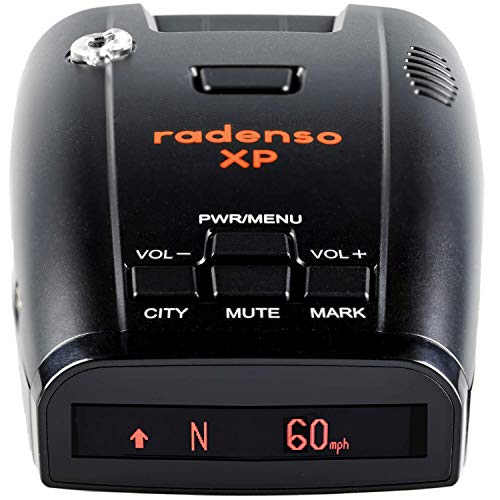
Radenso XP Radar & Laser Detector with GPS Lockouts
Value-oriented detector with GPS
View Today's Price
Uniden DFR7 Super Long Range Wide Band Laser/Radar Detector, Built-in GPS w/Mute
GPS-enabled entry-level detector
View Today's PriceHow to Choose the Right Radar Detectors
Choosing the right radar detector depends on your driving environment, legal restrictions, feature priorities, and tolerance for false alerts—trade-offs that shift based on your specific situation. A feature that’s essential for highway travel may be a nuisance in city traffic, and stealth is critical only in banned states. Generic top-10 lists miss these nuanced interactions. Our recommendation engine evaluates your setup across five dimensions and matches you to the right radar detector in under 60 seconds.
About this guide
Radar Detectors
Why Radar Detector Shopping Is Tricky in 2026
Choosing radar detectors in 2026 is more complex than most buyers realize. The trade-offs are real: a high-end Uniden R8w radar detector offers unmatched long-range detection and rapid responsiveness, but it sits at the $700–$800 mark—double the price of a Uniden R7 radar detector, which still delivers nearly top-tier performance and directional arrows. Budget radar detectors like the Cobra RAD 700i tempt with prices under $250, but you sacrifice 20–30% of detection range and advanced false alert filtering. Many buyers focus on features like extreme X-band sensitivity, yet 95% of police radar in the U.S. uses Ka-band—making Ka sensitivity and real-world range far more important than headline specs on radar detectors. Legal restrictions trip up even seasoned buyers: states like Virginia and Illinois outright ban radar detectors, so stealth models like the Escort Redline 360c radar detector become essential but add $100–$200 to your spend. Most people underestimate the frustration of constant false alerts from blind spot monitors and automatic doors, which can make a cheap radar detector nearly unusable on highways. The real challenge is balancing range, filtering, stealth, and price in radar detectors—while avoiding features you’ll never use.
What Actually Sets Radar Detectors Apart
The real differentiators among radar detectors aren’t always obvious from the box. Dual-antenna radar detectors like the Uniden R8w and Valentine One Gen 2 deliver true 360° detection and directional arrows—critical for knowing if a threat is ahead or behind. GPS lockouts, as seen in the Escort Redline 360c and Uniden R7 radar detectors, automatically mute repeated false alerts from known sources, saving your sanity in urban areas. Stealth capability, such as Spectre undetectability, is a must in states with radar detector bans, making the Escort Redline 360c and select Stinger radar detectors worth the premium. Skip basic radar detectors without GPS or arrows unless you only drive rural routes with little interference. App connectivity (Bluetooth or Wi-Fi) is more than a gimmick: it enables live updates, crowd-sourced alerts, and easier firmware updates—Uniden and Escort both lead here, but expect to pay $50–$100 more for these features on radar detectors. Don’t be lured by laser detection claims; even the best radar detectors offer only a split-second warning against laser guns—serious protection requires legal laser jammers. Bottom line: prioritize Ka-band sensitivity, GPS lockouts, and arrows on radar detectors over flashy extras or outdated X-band specs.
Decision Factors: How to Choose the Right Detector
Your driving environment, budget, and appetite for alerts all interact to determine which radar detectors will actually work for you. For highway warriors, long-range sensitivity and Ka-band performance are non-negotiable in radar detectors; city drivers need aggressive false alert filtering and GPS lockouts. If you split time between both, balanced radar detectors like the Uniden R7 hit the sweet spot around $500. Custom-installed radar detectors like the Escort iX Ci offer stealth and seamless integration but require professional installation and a $1,000+ investment. The quiz matches you to radar detectors by evaluating your setup, driving patterns, feature priorities, and update preferences. Don’t overlook installation type—portable radar detectors are easy to swap between cars, while custom installs hide everything but cost more. Value peaks in the $400–$600 range for radar detectors, where you get 90% of flagship performance without overpaying for marginal gains. Always check legal status in your state before buying radar detectors; stealth features are a must in banned areas. Finally, remember that features like arrows and GPS lockouts are worth the premium on radar detectors—saving you from daily frustration and making your investment actually useful.
Buyer's guide
How to choose
1Core Performance Criteria
- Prioritize Ka-band sensitivity over X-band, since 95% of police radar uses Ka—look for at least 30+ mile Ka detection range.
- Long-range models like Uniden R8w and Escort Redline 360c outperform budget detectors by 20–30% in real-world highway tests.
- Directional arrows, found on dual-antenna units like Uniden R7 and Valentine One Gen 2, provide critical situational awareness.
- GPS lockouts automatically mute repeated false alerts, dramatically improving usability in dense urban environments.
- False alert filtering varies: premium models use AutoLearn or AI filtering, while entry-level units may overwhelm you with noise.
- Laser detection is weak across all brands—don’t rely on any detector alone for laser protection; consider legal jammers if needed.
2Build Quality and Durability
- Premium detectors above $500, such as Escort and Uniden, feature robust housings and reliable buttons that withstand daily use.
- Budget models under $250 often use lighter plastics and less secure mounts, leading to vibration and premature wear.
- Custom-installed units like Escort iX Ci offer seamless integration but require professional installation for long-term reliability.
- Look for replaceable suction cups or visor mounts to ensure your detector stays secure, especially in extreme temperatures.
- Firmware update ports and protected buttons extend lifespan by allowing ongoing improvements and minimizing accidental damage.
- Check for weather resistance if you frequently move the unit between vehicles or leave it exposed in hot or humid climates.
3Value Analysis and Pricing Trends
- The $400–$600 price range delivers 90% of flagship performance, making models like Uniden R7 the best value for most drivers.
- Premium features like Wi-Fi updates and stealth add $100–$200, but only pay for these if you truly need them in your area.
- Budget units under $200–$300, like Cobra RAD 700i, cut detection range by 20–30% and often lack GPS or advanced filtering.
- Custom installs like Escort iX Ci exceed $1,000—overkill unless you demand stealth and seamless integration.
- Annual sales events (e.g., Prime Day) can drop prices by 20–25% on Uniden and Escort, so time your purchase for extra savings.
- Avoid paying extra for extreme X-band sensitivity or laser detection—these specs rarely translate to real-world value.
4Use-Case Fit and Real-World Scenarios
- Highway drivers should prioritize maximum range and Ka sensitivity, as instant-on radar is most common on open roads.
- Urban commuters need top-tier false alert filtering and GPS lockouts to avoid constant beeping from automatic doors and sensors.
- Mixed-route drivers benefit from balanced models like Uniden R7, which offer both range and solid filtering at a mid-tier price.
- Stealth models like Escort Redline 360c are essential in states with radar detector bans—don’t risk fines with visible units.
- Integrated dashcam models, such as Escort MAXcam 360c, add video evidence but increase size and price—choose only if you want both.
- Portable detectors are best for drivers with multiple vehicles, while custom installs suit those wanting a clean, hidden setup.
5Common Mistakes and Pitfalls
- Many buyers ignore state laws and end up with unusable detectors—always check legality before purchasing.
- Skipping GPS lockouts leads to frustration from repeated false alerts, especially in cities with lots of automatic doors.
- Focusing on X-band specs is a waste—police rarely use X-band, so prioritize Ka and K performance instead.
- Assuming all detectors are equally stealthy is risky; only certain models like Escort Redline 360c are truly undetectable.
- Overpaying for laser detection is pointless—no detector can reliably protect against laser guns without a separate jammer.
- Neglecting installation type can lead to regret; portable units are flexible, but custom installs offer stealth and less clutter.
6Maintenance and Longevity
- Regularly update firmware via Wi-Fi, Bluetooth, or USB to maintain detection accuracy and block new false alert sources.
- Replace suction cups and mounts every 12–18 months to prevent detector falls and maintain optimal positioning.
- Clean lenses and sensors gently to ensure maximum sensitivity, especially if you drive dusty or humid routes.
- Store portable detectors in protective cases when not in use to avoid scratches and extend lifespan.
- Monitor power cords for fraying or loose connections—replacing them early prevents sudden failures on the road.
- Check for manufacturer support and warranty coverage, as premium brands like Escort and Uniden offer better long-term service.
FAQ
Frequently asked questions
Is GPS lockout worth paying extra for in a radar detector?
Absolutely—GPS lockouts are a significant upgrade for city and suburban drivers. They automatically mute repeated false alerts from known sources like grocery store doors and speed signs. Models such as the Uniden R7 and Escort Redline 360c offer this feature, saving you from constant beeping and making daily use far less annoying. Expect to pay about $100 more for GPS-enabled units, but the reduction in false alerts is well worth the investment for most users.
How does the Uniden R7 compare to the Escort Redline 360c?
The Uniden R7 delivers near-flagship performance with long-range detection and directional arrows for around $500, making it a top value pick. The Escort Redline 360c adds true stealth (Spectre undetectability) and superior app integration, but costs $700–$800. If you need undetectability for banned states or want seamless smartphone updates, the Escort is worth the premium. For most drivers, the R7’s performance and price make it the smarter choice.
What radar detector features matter most for highway driving?
For highway driving, prioritize long-range Ka-band sensitivity, directional arrows for situational awareness, and reliable false alert filtering. Models like the Uniden R8w and Escort Redline 360c excel here, offering detection ranges exceeding 30 miles in optimal conditions. Skip budget units under $300, as they often miss instant-on threats and lack advanced filtering. GPS lockouts are less critical on highways, but still helpful for muting known speed signs.
Are integrated dashcam radar detectors worth it?
Integrated dashcam models like the Escort MAXcam 360c combine radar detection with video recording, providing both ticket protection and incident evidence. They’re ideal for drivers who want all-in-one devices and are willing to pay $800 or more. However, these units are bulkier and pricier than standalone detectors. Unless you specifically want dashcam footage, a dedicated radar detector plus a separate dashcam often offers better value and flexibility.
How often should I update my radar detector’s firmware?
Update your radar detector’s firmware at least every 3–6 months to ensure you have the latest false alert filtering and camera database information. Models with Wi-Fi or Bluetooth, like the Escort Redline 360c, make this process easy—updates can be done automatically or via a smartphone app. Manual USB updates are fine but require more effort. Regular updates keep your detector effective against new radar guns and false alert sources.
Is it legal to use radar detectors everywhere in the US?
No, radar detector legality varies by state. Virginia and Washington D.C. ban all radar detectors, while Illinois prohibits them in commercial vehicles and on certain highways. Stealth models like the Escort Redline 360c are essential if you must drive in these areas. Always check your local laws before purchase—using a detector where banned can lead to fines or confiscation. In most other states, detectors are legal for private vehicles.
Do budget radar detectors like the Cobra RAD 700i offer enough protection?
Budget models such as the Cobra RAD 700i provide basic radar and laser alerts at a fraction of the price—typically under $250. They’re suitable for occasional drivers or those on a tight budget, but you’ll sacrifice 20–30% of detection range and advanced filtering. Expect more false alerts and fewer features like GPS lockouts. For regular highway or city use, mid-range models deliver better protection and usability.
Related reading
Best Radar Detectors By Category
Related Guides
Car Audio Systems for Every Ride
Matched to your dash size, smartphone habits, audio needs, and must-have features—get the right car audio upgrade, not just any stereo.
Best Dash Cams for Every Driver
Camera angles, video clarity, stealth, parking mode, and smart features—all matched to your driving and parking habits.
Home EV Charging Stations
Connector type, charging speed, installation, smart features, and budget—get matched to the right home EV charger for your needs.