Skip the research trap. Get your electric lawn mowers in 60 seconds.
We scored 300+ electric lawn mowers across 5 dimensions — answer 5 quick questions and we'll match you to YOUR best pick.

Powered by DecisionScore™
Each product is evaluated across 18 weighted criteria — covering performance, value, build quality, and real-world usability. Your quiz answers re-weight the criteria to match what matters most to you, so two people can get different #1 picks from the same data.
See the DecisionScore methodology →- 20‑inch steel deck with mulching, bagging and discharge
- Comes with two 40‑V batteries for uninterrupted mowing
- Six cutting height positions and easy lever adjustment
Find your perfect electric lawn mowers
5 quick questions. No quiz-takes-10-minutes trap. A personalized match from 29 scored picks — with clear reasoning for every recommendation.
How would you like the mower to move?
Push mowers rely entirely on your effort and are best for smaller or flat yards. Assisted mowers include self‑propelled and riding models that use a drive motor or vehicle to move, making them easier on slopes or large properties. If you’re unsure, either option keeps your choices open.
- Self-propelled mowers move themselves—perfect for hilly or large lawns, but they’re heavier and pricier than push models.
- Push mowers are lighter and cheaper, ideal for small, flat yards where maneuverability matters more than power.
- If you’re unsure, select 'either' to keep your options open and see both push and self-propelled recommendations.
As an Amazon Associate and affiliate partner we earn from qualifying purchases. Links on this page may earn us a commission at no extra cost to you. Full disclosure
Not ready for the quiz? Here are our overall top picks
These are our top-rated picks overall. For a recommendation matched to YOUR specific needs,
BLACK+DECKER POWERSERIES Extreme MAX Cordless Stick Vacuum, Home and Pet Hair
20‑inch steel deck with mulching, bagging and discharge
View Today's Price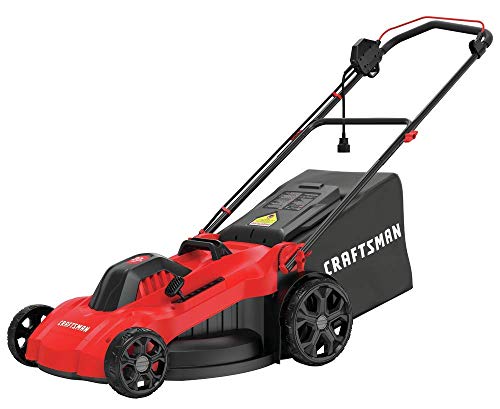
CRAFTSMAN Electric Push Lawn Mower, 20-Inch Deck, Corded, Powerful 13-AMP Motor,
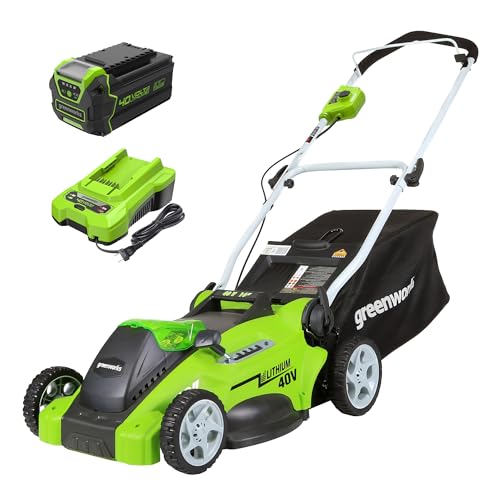
Greenworks 40V 16in Push Lawn Mower, 4.0 Ah Battery and Charger
How to Choose the Right Electric Lawn Mowers
Choosing the right electric lawn mower depends on how you want to mow, your yard size, runtime needs, storage constraints, and battery platform loyalty—trade-offs that shift based on your lawn’s size, terrain, and tool ecosystem. Generic top-10 lists fail here because a feature like self-propulsion or dual-battery runtime is essential for some but overkill for others. Our recommendation engine evaluates your specific needs across five dimensions and matches you to the right mower in under 60 seconds.
About this guide
Electric Lawn Mowers
Electric Lawn Mowers: Smarter, Cleaner Mowing in 2026
Electric lawn mowers have rapidly become the go-to choice for homeowners seeking quieter operation, cleaner air, and less maintenance compared to gas-powered machines. In 2026, the market offers everything from ultra-lightweight corded models under $200 for small city lawns to robust, self-propelled 60V cordless mowers like the Toro and Ego lines, which can handle quarter-acre lots with ease. Battery-powered mowers now rival gas models in cutting power, with multi-blade systems and steel decks delivering a professional finish. If you want a mower that starts instantly, requires no oil or gas, and folds up to fit in a crowded garage, electric is the way to go. Choosing the right model depends on your yard size, terrain, and how you want to handle clippings—mulching, bagging, or side-discharge. Price ranges vary significantly: budget push mowers under $300 suit small, flat lawns, while high-end self-propelled models with dual batteries and advanced mulching systems run $700–$1,000. The right choice saves you time, hassle, and money over years of mowing.
2026 Market Trends: What’s Changed and What Buyers Miss
The electric mower landscape in 2026 is defined by major leaps in battery tech, cut quality, and user-focused features. Brands like Ego and Toro now offer dual-battery systems that deliver over an hour of real-world runtime—far exceeding the 30–40 minutes typical just a few years ago. Mulching performance has become a true differentiator: Ego’s multi-blade Select Cut and Toro’s Atomic blade systems outclass most standard single-blade designs, producing finer clippings and healthier lawns. Yet, many buyers still get tripped up by inflated runtime claims—actual mowing time is often 15–30% less than what’s printed on the box, according to independent tests. There’s also a misconception that all battery mowers mulch equally well; in reality, blade design and motor torque matter more than voltage alone. Value is shifting: $400–$700 now gets you a solid self-propelled 40V–60V mower with proven reliability, while sub-$300 push models often disappoint on cut quality and handling. Storage features like true vertical folding and cross-brand battery compatibility are now must-haves, but many shoppers overlook them.
How Our Decision Tool Finds Your Perfect Mower
Our interactive guide doesn’t just spit out a generic top-10 list or push the latest sponsored picks. Instead, our quiz evaluates your lawn size, preferred mowing style (push or self-propelled), runtime needs, clipping disposal preferences, storage constraints, and even your loyalty to a battery platform like Ego, Ryobi, or Greenworks. We distill real-world expert reviews, hands-on test data, and up-to-date specs from leading brands to match you with the right mower for your specific situation. Unlike most buying guides, we factor in nuanced trade-offs—like how a mower’s mulching performance or folding mechanism might matter more for your yard than raw voltage or price. By the end, you’ll know exactly which features are worth paying for, which brands deliver real value at your price point, and what to skip. Our goal: help you buy once, buy right, and actually enjoy mowing in 2026.
Buyer's guide
How to choose
1Core Performance Criteria
- Look for a self-propelled drive if your yard is over 5,000 sq ft or has slopes—Ego and Toro models excel in this area with smooth, adjustable pacing.
- Battery runtime claims are often exaggerated; expect 45–60 minutes of actual mowing from top dual-battery systems, and only 25–35 minutes from budget single-battery push models.
- Mulching quality varies dramatically—Toro’s Atomic blade and Ego’s Select Cut systems deliver finer clippings and fewer clumps than standard single-blade designs.
- A steel deck (found on premium models above $600) resists impacts and lasts longer than plastic, but adds weight; plastic decks are lighter for maneuvering in tight spaces.
- Deck width matters: 20–21 inch decks cut faster but may struggle in tight corners, while 16–18 inch decks are easier to handle for small or complex lawns.
- Push-button start is now standard across most brands, but check for variable speed controls and ergonomic handles if you plan on mowing for more than 30 minutes at a time.
2Build Quality and Durability
- Premium mowers like Ego and Toro use reinforced steel decks and robust wheel assemblies, lasting several seasons of weekly use with minimal wear.
- Plastic decks, common on Greenworks and Sun Joe under $300, are lightweight but can crack if you hit rocks or roots—best for flat, debris-free lawns.
- Look for IPX4 or higher water resistance ratings if you plan to hose off clippings; most high-end models now tolerate wet grass and light rain.
- Check for metal height adjustment levers and solid axle construction—plastic levers on budget models are common failure points after a season or two.
- Battery compartment seals and latches should feel sturdy; loose-fitting covers can allow moisture in, shortening battery life and voiding warranties.
- Warranty length is a good durability proxy: Ego and Toro offer 5-year warranties on mowers and 3 years on batteries, while cheaper brands may only cover 2 years.
3Value Analysis: What You Really Get for Your Money
- The $400–$700 range is the sweet spot for self-propelled 40V–60V models with genuine dual-battery systems and reliable cut quality.
- Ryobi’s 40V line delivers exceptional value with smooth operation, decent runtime, and minimal compromises, making it a top pick for budget-conscious buyers.
- Ego and Toro command $700–$1,000, but justify the premium with superior efficiency, build, and consistently better mulching and bagging performance.
- Push mowers under $300, like Sun Joe and Greenworks, are tempting for small yards but often underperform in cut quality and require more passes.
- Premium 60V models from Toro and Ego show the best efficiency metrics—cutting more area per battery amp-hour than similarly sized competitors.
- Factor in the cost of extra batteries and chargers; staying within a battery platform like Ego or Ryobi can save $150–$250 if you already own compatible tools.
4Use-Case Fit: Matching Mower to Your Lawn and Lifestyle
- Choose self-propelled if you have slopes, thick grass, or a yard over 1/8 acre—pushing a heavy mower gets old fast, especially in summer heat.
- Corded models offer unlimited runtime but are best for small, unobstructed lawns under 3,000 sq ft due to cord management hassles.
- If you want to mulch and bag, prioritize models with advanced blade systems—Ego Select Cut and Toro Atomic both switch easily between modes.
- Compact storage is crucial in tight garages; look for true vertical folding (Ego, Greenworks) or at least a handle that collapses flat.
- Battery platform loyalty pays off—if you already own Ryobi or Greenworks tools, matching your mower lets you swap batteries and chargers seamlessly.
- For seniors or anyone with grip issues, lightweight push models under 40 lbs and large, easy-roll wheels make mowing less physically demanding.
5Common Mistakes and Buyer Pitfalls
- Trusting manufacturer runtime claims directly—real-world tests show actual mowing time is 15–30% less, especially in thick or damp grass.
- Assuming all electric mowers mulch equally—blade design and motor torque matter far more than voltage or price tag.
- Ignoring deck width and storage needs—oversized mowers are a headache in small yards or cluttered sheds.
- Buying on price alone—sub-$300 models often disappoint with uneven cuts and cheap plastic parts that fail after a season.
- Overlooking battery platform compatibility—mixing brands means extra chargers and batteries, driving up long-term costs.
- Skipping warranty details—short warranties often signal lower build quality and poor manufacturer support if things go wrong.
6Maintenance and Longevity
- Sharpen blades every 20–25 hours of mowing for optimal cut quality; dull blades strain the motor and reduce battery life.
- Clean the underside of the deck after each use to prevent grass buildup, which can rust steel decks and clog mulching systems.
- Store batteries indoors during winter—extreme cold or heat dramatically shortens lithium-ion lifespan and voids most warranties.
- Check and tighten handle bolts and wheel axles each season; loose parts are the top cause of rattling and premature wear.
- Replace worn blades with OEM parts for best performance—aftermarket blades may not fit properly or match mulching quality.
- Use a mower cover or store indoors to protect from rain and UV, especially if your model has a plastic deck or exposed controls.
FAQ
Frequently asked questions
Is self-propulsion worth paying extra for in an electric mower?
Absolutely, if your yard is over 1/8 acre, has slopes, or you dislike pushing heavy equipment. Self-propelled models like the Ego 56V and Toro 60V make mowing much less tiring and deliver a consistent pace, especially in thick grass. The added cost—usually $100–$300 over push models—pays off in comfort and efficiency, particularly for larger or more challenging lawns. For small, flat yards, a push mower can suffice, but most users find self-propelled worth the premium.
How does Ego compare to Toro for battery-powered mowers in 2026?
Ego and Toro dominate the high-end market, but they have distinct strengths. Ego’s Select Cut system offers the best mulching and bagging performance, while Toro’s 60V mowers excel in efficiency and overall build quality. Both brands deliver over 60 minutes of real-world runtime with dual batteries, but Ego’s batteries are often compatible across more tools. Toro’s Atomic blade produces finer mulch, but Ego’s deck is easier to clean and fold. Either brand is a top-tier choice, but your battery ecosystem and preferred features may tip the scales.
What runtime should I expect for a typical cordless mower on a single charge?
Expect 45–60 minutes of actual mowing from top-tier dual-battery models like Ego or Toro, but only 25–35 minutes from most budget single-battery push mowers. Manufacturer claims are usually optimistic—real-world mowing, especially on thick or damp grass, drains batteries faster than lab tests. For lawns over 5,000 sq ft, look for models that support battery swaps or come with two batteries. Corded mowers, by contrast, offer unlimited runtime but require constant cord management.
Are budget electric mowers under $300 a good choice for small yards?
Budget models like Sun Joe and Greenworks push mowers under $300 can work well for small, flat lawns under 3,000 sq ft. They’re lightweight, easy to maneuver, and require minimal maintenance. However, you’ll sacrifice cut quality, mulching performance, and build durability compared to mid-range or premium models. Expect shorter runtimes and more passes to achieve a clean cut. If your lawn is complex or you want a mower that lasts several seasons, it’s worth stretching your budget to $400–$600.
Do I need to stick with the same battery platform for all my yard tools?
Sticking to a single battery platform, such as Ego, Ryobi, or Greenworks, makes life easier and saves money on spare batteries and chargers. Batteries are often the most expensive part of cordless tools, so sharing them across your mower, trimmer, and blower can save $150–$250 over time. If you already own compatible tools, choosing a mower from the same brand is smart. If not, you have more flexibility to prioritize features and price.
How important is deck width when choosing an electric mower?
Deck width directly impacts mowing speed and maneuverability. Wider decks (20–21 inches, common on Ego and Toro) let you finish large lawns faster, but they’re harder to steer around garden beds or tight corners. Narrower decks (16–18 inches, seen on Greenworks and Sun Joe) suit small or complex lawns but require more passes on open spaces. Consider your yard’s layout and storage space before choosing—a wider deck isn’t always better.
What maintenance does an electric mower require compared to a gas mower?
Electric mowers are dramatically easier to maintain than gas models. There’s no oil to change, no spark plugs, and no fuel to store. Key tasks include sharpening the blade every 20–25 hours, cleaning the deck after each use, and storing batteries indoors during winter. Most issues stem from neglecting these basics. Battery replacement is the biggest long-term cost—expect to replace lithium-ion packs every 3–5 years, depending on use and storage habits.
Related reading
Best Electric Lawn Mowers By Category
Related Guides
Best Chainsaws for Every Task
Matched to your cutting tasks, power preference, handling comfort, and budget—find the right chainsaw for your yard, firewood, or storm cleanup.
Compost Tumblers
Chamber type, capacity, materials, and budget—matched to your composting style, space, and sustainability priorities.
Pressure Washers
Cleaning job type, power source, portability, and session length—get matched to the pressure washer that actually fits your needs.
Rainwater Harvesting Systems
Capacity, installation style, aesthetics, and budget—matched to your actual roof, garden, and overflow needs.