Skip the research trap. Get your backyard trampolines in 60 seconds.
We scored 1150+ backyard trampolines across 5 dimensions — answer 5 quick questions and we'll match you to YOUR best pick.

Powered by DecisionScore™
Each product is evaluated across 18 weighted criteria — covering performance, value, build quality, and real-world usability. Your quiz answers re-weight the criteria to match what matters most to you, so two people can get different #1 picks from the same data.
See the DecisionScore methodology →- 12‑foot round trampoline ideal for smaller yards or younger jumpers
- 56 rust‑resistant springs provide a gentle yet responsive bounce
- Enclosure system features padded poles and a dual zipper and latch entry
Find your perfect backyard trampolines
5 quick questions. No quiz-takes-10-minutes trap. A personalized match from 111 scored picks — with clear reasoning for every recommendation.
What shape of trampoline do you prefer?
Trampoline shape affects the bounce dynamics and space utilization. Round trampolines are common for recreational use, while rectangular ones are preferred for gymnastics due to their even bounce distribution.
- Kids’ trampolines focus on safety, gentle bounce, and lower heights to prevent injuries during play.
- Teens and adults need higher weight limits and firmer bounce for tricks or group use.
- Gymnastics-grade trampolines provide the most even, powerful bounce but require more space and supervision.
As an Amazon Associate and affiliate partner we earn from qualifying purchases. Links on this page may earn us a commission at no extra cost to you. Full disclosure
Not ready for the quiz? Here are our overall top picks
These are our top-rated picks overall. For a recommendation matched to YOUR specific needs,
123JUMP 12FT Outdoor Trampoline with Safety Enclosure Net and Ladder, Round
12‑foot round trampoline ideal for smaller yards or younger jumpers
View Today's Price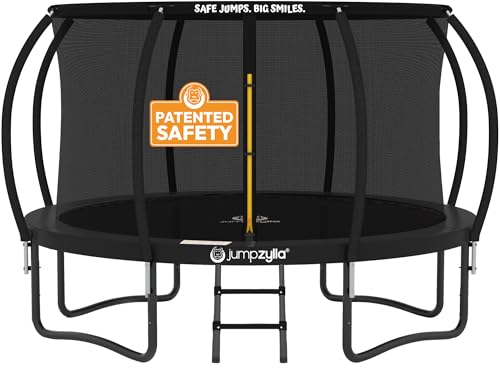
JUMPZYLLA Trampoline Outdoor 8FT 10FT 12FT 14FT 15FT 16FT with Enclosure and
Unique curved safety poles keep net away from jumpers and add style
View Today's Price
ORCC Trampoline Pad, 10ft 12ft 14ft 15ft 16ft Trampoline
12‑foot version uses the same heavy‑duty galvanized frame and no‑gap design
View Today's PriceHow to Choose the Right Backyard Trampolines
Choosing the right backyard trampoline depends on who will be jumping, your yard size, safety priorities, and budget—all factors that interact in complex ways. A trampoline perfect for gymnasts is often wrong for toddlers, and a model built for small yards may lack the bounce or weight capacity for family use. Generic top-10 lists miss these nuances, leading to costly mistakes. Our recommendation engine evaluates your specific needs across 17 dimensions and matches you to the right trampoline in under 60 seconds.
About this guide
Backyard Trampolines
Why Trampoline Shopping Is Trickier Than It Looks
Choosing backyard trampolines in 2026 is a balancing act between safety, bounce quality, and long-term durability—much harder than it first appears. Many buyers fixate on size or price, but overlook crucial trade-offs like spring count, frame material, and enclosure design when evaluating backyard trampolines. For example, a $550 Bounce Pro 15ft backyard trampoline may look tempting, but its 108 springs and powder-coated frame can’t match the even bounce or rust resistance of a $1,200 Acon Air 14ft backyard trampoline with 120 springs and full galvanization. Springless backyard trampolines like Springfree (starting at $2,800) eliminate pinch points but cost 3-4x more than classic round backyard trampolines. Most families underestimate the need for ASTM-certified enclosures and thick spring pads on backyard trampolines—features that reduce injury risk by 68% but are missing on many budget backyard trampolines. Weight limits also matter: some backyard trampolines support just 200 lbs, while others handle 600+, changing who can safely jump. Accessories like basketball hoops or shade covers are fun, but don’t fix poor build quality on backyard trampolines. The biggest mistake? Ignoring yard clearance: you need at least 24ft of open space, not just the backyard trampoline’s diameter, to avoid fence or wall injuries.
What Actually Sets Backyard Trampolines Apart
The real differences between backyard trampolines come down to frame engineering, bounce performance, and safety tech—not flashy extras. Galvanized steel frames, like those on Acon and Springfree backyard trampolines, outlast powder-coated models by years, especially in humid climates where rust can destroy welds in under two seasons. Spring count is not marketing fluff: 108+ springs (or equivalent flexible rods on springless backyard trampolines) deliver a consistent, joint-friendly bounce and prevent dead spots, which plague cheaper backyard trampolines after a few months. Skip springless backyard trampolines unless you have young kids or want zero pinch risk—otherwise, classic springs give better lift for teens and adults. Enclosure design is make-or-break: look for ASTM F381/F382 certification, high nets, and thick pole padding on backyard trampolines. Don’t get distracted by included ladders or hoops if the core build of backyard trampolines is weak. Rectangular backyard trampolines like the Zupreem Z16 ($1,500) are best for gymnasts and teens doing tricks, while round backyard trampolines keep kids centered and are safer for casual play. UV-resistant mats and full-coverage spring pads are non-negotiable for backyard trampoline longevity. In short: prioritize frame quality and bounce on backyard trampolines, not just size or flashy add-ons.
How to Decide: Matching Specs, Safety, and Budget
Your ideal backyard trampoline depends on who’s jumping, how much space you have, and what you’re willing to spend—these factors interact in surprising ways. A rectangular 16ft backyard trampoline like the Zupreem Z16 is perfect for teens or gymnasts, but overkill (and less safe) for small kids or tight yards. If you want adults to join, check the weight capacity—many budget backyard trampolines max out at 200-275 lbs, while premium backyard trampolines support 400+ lbs. The quiz evaluates your primary users, bounce preference, design style, safety priorities, and desired extras to narrow the field of backyard trampolines. Remember, a $600-900 mid-range round backyard trampoline (e.g., Upper Bounce 15ft) can last 5+ years if it has a galvanized frame and 100+ springs, while $400-500 budget backyard trampolines often sag or rust within two seasons. Prioritize safety certifications and enclosure quality on backyard trampolines if kids will use them unsupervised. For windy areas, invest in a robust anchor kit—many backyard trampolines flip in 40+ mph gusts if not properly secured. Finally, measure your yard: you need at least 24ft of clear space, not just the backyard trampoline’s footprint, to avoid dangerous impacts. Don’t let extras distract you from these backyard trampoline fundamentals.
Buyer's guide
How to choose
1Core Performance Criteria
- Choose trampolines with at least 108 springs or equivalent rods for a consistent, joint-friendly bounce that won’t develop dead spots after a season.
- Look for weight limits of 300 pounds or more if adults or multiple kids will use the trampoline, as many budget models cap out at 200-275 pounds.
- Rectangular trampolines like the Zupreem Z16 offer firmer, more predictable bounce for flips and routines, while round models keep jumpers centered for safety.
- UV-resistant mats are essential for longevity—expect at least five years of outdoor use from premium brands like Acon or Springfree.
- Check for ASTM F381/F382 enclosure certification, which reduces ER visits by 68% and is often missing from sub-$600 trampolines.
- Springless designs, such as Springfree, remove pinch points entirely but cost significantly more and are best for families prioritizing maximum safety.
2Build Quality and Durability
- Insist on full-frame galvanization, not just powder coating, to prevent rust—Acon and Springfree excel here, lasting over seven years even in humid climates.
- Thick spring pads and padded poles are must-haves to prevent injuries and extend the life of your trampoline, especially for younger jumpers.
- Budget trampolines under $500 often suffer from weak welds and sagging nets, leading to a 40% failure rate within the first year.
- UV-resistant enclosure nets prevent sagging and gaps, which are a leading cause of falls and account for 40% of reported injuries.
- Premium models like Springfree hide the frame beneath the jumping mat, eliminating frame contact and extending both safety and product lifespan.
- Look for frame warranties of at least five years—Acon offers a 10-year warranty, reflecting real confidence in long-term durability.
3Value Analysis and Price Tiers
- Entry-level 12-14ft rounds start at $400-600 but typically fail after one or two seasons due to poor materials and weak frames.
- The value sweet spot is $800-1,400 for 15ft trampolines with full galvanization and over 100 springs, averaging $150-250 per year of use.
- Premium springless models like Springfree cost over $2,000 but justify the price for families prioritizing zero-injury records and 10+ year longevity.
- Mid-range options such as Upper Bounce 15ft deliver 3-5 year lifespans and robust safety features without the premium price tag.
- Don’t be swayed by included accessories in budget models—focus on core build quality, as extras rarely offset early failure or safety risks.
- Prices dipped 10% in 2026 due to steel surpluses, making now a good time to invest in higher-quality, longer-lasting trampolines.
4Use-Case Fit and Sizing
- Families with young kids should prioritize round trampolines with forgiving bounce and robust enclosures to keep jumpers safely centered.
- Teens and gymnasts benefit from rectangular trampolines like the Zupreem Z16, which offer firmer lift and a larger surface for routines.
- Measure your yard carefully—allow at least 24ft of clear space, not just the trampoline’s diameter, to prevent fence or wall collisions.
- If adults will join, verify weight limits of 330 pounds or more, as many models are not rated for multiple or heavier jumpers.
- Springless or leaf-spring designs are best suited for families with toddlers or those prioritizing injury prevention over acrobatic performance.
- Compact models exist for small yards but often sacrifice bounce quality and may not accommodate older kids or group play.
5Common Mistakes and Pitfalls
- Many buyers underestimate the importance of full-frame galvanization, leading to frame rust and structural failure within two years.
- Skipping ASTM enclosure certification is risky—60% of budget shoppers ignore it, despite its proven impact on reducing injuries.
- Buying based on trampoline diameter alone is a mistake; always check the required yard clearance to avoid dangerous impacts.
- Assuming all trampolines are suitable for adults can be costly—always verify the stated weight capacity before purchase.
- Ignoring spring count leads to uneven bounce and premature mat wear; count springs in the specs, not just marketing claims.
- Relying on anchor kits included with budget models can be dangerous, as many fail in winds over 40 mph and don’t secure the frame properly.
6Maintenance and Longevity
- UV-resistant mats and nets are essential for five-plus years of use; replace them at the first sign of fraying or sagging.
- Inspect frame welds annually, especially in humid climates, as rust can compromise safety even on galvanized models after several seasons.
- Tighten springs and check enclosure attachments every few months to prevent gaps that can cause falls or mat tears.
- Weather covers and shade tops help extend the lifespan of both mat and springs by protecting against rain and UV damage.
- Premium brands like Acon and Springfree offer replacement parts and long warranties, making repairs easier and more affordable over time.
- Professional installation is recommended for large trampolines, as improper assembly is a leading cause of anchor failure and frame misalignment.
FAQ
Frequently asked questions
Is a springless trampoline like Springfree worth the premium price?
Springfree trampolines cost over $2,000 in 2026, but their unique flexible rod design eliminates pinch points and frame contact, dramatically reducing injury risk. Consumer Reports gives Springfree the highest safety score (95/100), and their frames survive 20,000 jumps without fatigue. If you have toddlers or want maximum peace of mind, the investment is justified, especially for families prioritizing safety above all else. However, for older kids or teens who want firmer bounce for tricks, classic spring models may offer better performance at a lower price.
How does the Acon Air 14ft compare to the Bounce Pro 15ft for family use?
The Acon Air 14ft Round 4.3, priced around $1,200, features 120 springs, a 330-pound weight limit, and a 10-year frame warranty, delivering a superior bounce and longevity. Bounce Pro 15ft, at $550, offers 108 springs and a 275-pound limit but is more prone to net sagging and frame rust after one or two seasons. For families planning years of use and adult participation, Acon is the clear winner for durability and safety, while Bounce Pro is best for short-term, budget-conscious buyers.
What size trampoline is best for a small backyard?
For small yards, look for compact 10-12ft round trampolines, but remember you need at least 24ft of clear space to safely accommodate the unit and prevent fence or wall collisions. Compact models sacrifice some bounce quality and weight capacity, often maxing out at 200-220 pounds. If you want a trampoline that older kids or adults can use, consider a 12ft round with a robust enclosure and galvanized frame, but be realistic about group play limitations in tight spaces.
Do I really need ASTM F381/F382 enclosure certification?
Yes, ASTM F381/F382 certification is critical for safety. Certified enclosures have been shown to reduce trampoline-related ER visits by 68%, according to expert reviewers. Many budget trampolines skip this certification, leaving jumpers at higher risk for falls and injuries. Always check the product specs or ask the manufacturer directly—this is not a feature to compromise on, especially if children will use the trampoline unsupervised.
How much should I budget for a durable, safe trampoline?
Plan to spend $800-1,400 for a 15ft round trampoline with full galvanization, 100+ springs, and a quality enclosure. These models, like the Upper Bounce 15ft or Acon Air 14ft, typically last 5-7 years with proper maintenance. Budget models under $600 often fail in one or two seasons, while premium springless options exceed $2,000 but offer unmatched safety and longevity. Investing in the $800-1,400 range gives the best balance of cost per year and real-world durability.
Are rectangular trampolines better than round for gymnasts or teens?
Rectangular trampolines, such as the Zupreem Z16, provide a firmer, more predictable bounce and a larger, even surface—ideal for flips, routines, and acrobatics. RTINGS rates these models 9.5/10 for bounce consistency. However, they require more yard space and can be less forgiving for small children. Round trampolines are better for casual play and keeping kids centered, but if performance is your priority for older jumpers, rectangle is the way to go.
What maintenance is required to keep my trampoline safe and lasting?
Inspect your trampoline every few months for loose springs, fraying mats, and sagging nets. UV-resistant mats and nets should last five years, but replace them at the first sign of wear. Tighten frame bolts and check anchor kits, especially after storms. Use a weather cover to protect from rain and sun, and consider professional installation for large models to avoid anchor or alignment issues. Premium brands offer replacement parts, making long-term care easier.
Related reading
Best Backyard Trampolines By Category
Related Guides
Advanced Telescopes
Aperture, mount type, portability, and setup—matched to your observing goals and real-life constraints in seconds.
Avalanche Beacons & Transceivers
Skill level, rescue needs, budget, battery type, and Bluetooth—get matched to the safest avalanche beacon for your backcountry trips.
Backyard Playground Sets
Play features, yard size, age range, and installation—get matched to a backyard playground set that truly fits your family.
Bike Lights
Matched to your commute, riding environment, brightness needs, charging style, and budget—get the right bike light for your safety.