Skip the research trap. Get your subwoofers in 60 seconds.
We scored 350+ subwoofers across 5 dimensions — answer 5 quick questions and we'll match you to YOUR best pick.

Powered by DecisionScore™
Each product is evaluated across 18 weighted criteria — covering performance, value, build quality, and real-world usability. Your quiz answers re-weight the criteria to match what matters most to you, so two people can get different #1 picks from the same data.
See the DecisionScore methodology →- 12" woofer with 200W Class-D amplifier
- Deep bass for home theater and music
- RCA and LFE inputs
Find your perfect subwoofers
5 quick questions. No quiz-takes-10-minutes trap. A personalized match from 31 scored picks — with clear reasoning for every recommendation.
What is the subwoofer's driver size?
The driver size of a subwoofer affects the depth and power of the bass it can produce. Larger drivers typically offer deeper bass and are suitable for larger rooms, while smaller drivers are more compact and fit better in smaller spaces.
- Home theater demands deep, powerful bass—look for 12-inch drivers and at least 200W RMS power.
- Music listening benefits from sealed subs for tighter, more accurate bass response.
- Gaming subs should balance output and speed—10-inch drivers often work best for immersive effects.
As an Amazon Associate and affiliate partner we earn from qualifying purchases. Links on this page may earn us a commission at no extra cost to you. Full disclosure
Not ready for the quiz? Here are our overall top picks
These are our top-rated picks overall. For a recommendation matched to YOUR specific needs,
Dayton Audio Classic CS1200 – 12" 200W Powered Subwoofer with Class-D Amplifier,
12" woofer with 200W Class-D amplifier
View Today's Price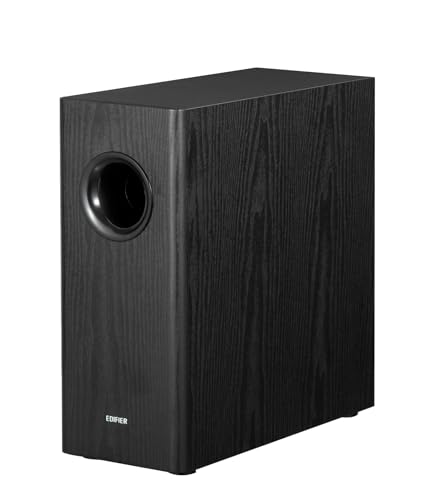
Edifier T5s Powered Subwoofer, 70W RMS, 8" Woofer, 35Hz Deep Bass, Black
8" long-throw woofer
View Today's Price
Polk Audio Signature Elite ES10 Powered Subwoofer, Stunning Black
10" long-throw woofer with Power Port
View Today's PriceHow to Choose the Right Subwoofers
Choosing the right subwoofer depends on your room size, listening habits, driver preference, connectivity needs, and budget—factors that interact in complex ways. A subwoofer that’s perfect for a large home theater can overwhelm a bedroom, while a music-optimized model might disappoint in movie nights. Generic top-10 lists miss these crucial trade-offs. Our recommendation engine analyzes your specific requirements across five dimensions and matches you to the right subwoofer in under 60 seconds.
About this guide
Subwoofers
Why Subwoofer Shopping Is Trickier Than It Looks
Picking the right subwoofers in 2026 is a balancing act most buyers underestimate. The first trap: overemphasizing wattage or driver size without matching subwoofers to your room or use. An 8-inch subwoofer like the Yamaha NS-SW050 is perfect for apartments, but will sound thin in a large home theater. Conversely, a 12-inch subwoofer such as the Klipsch R-120SW can overwhelm small spaces and your neighbors. Price tiers matter more than ever—$100 gets you solid basic subwoofers from Dayton Audio or Rockville, but you’ll miss out on the deep, room-filling extension and app-based controls found in $250–$500 subwoofers from SVS or Audioengine. Many buyers fixate on max power or frequency numbers, yet ignore the actual low-frequency extension (≤25 Hz is a must for true home theater impact) and input flexibility that quality subwoofers provide. The most common mistake? Buying subwoofers that are either too large or too underpowered for your room, or choosing a ported subwoofer box when you actually want the tight, musical bass of a sealed subwoofer design. Every spec and dollar counts, and the wrong subwoofers can leave you with boomy, muddy bass or a system that never quite delivers the wow factor you expected.
What Actually Sets Subwoofers Apart in 2026
Not all subwoofers are created equal, even if the specs look similar on paper. The real differentiators for subwoofers this year are amplifier technology (Class-D amps dominate for efficiency and low heat), DSP room correction (a significant upgrade for taming boomy rooms), and cabinet design. Sealed subwoofers—like the SVS SB-1000 Pro—excel at fast, accurate bass for music, while ported subwoofers, such as the BIC America F12, are built for maximum output and cinematic rumble. Skip wireless connectivity unless you truly need a cable-free setup; wired subwoofers still offer lower latency and broader compatibility. Brands like Klipsch and Polk deliver proven reliability and punchy subwoofer performance at mid-tier prices, but if you want the deepest, most controlled bass, SVS and Audioengine subwoofers consistently outperform in the $300–$500 range. Don’t get distracted by peak wattage numbers—focus on RMS power (100–500W is the real-world range for subwoofers) and frequency response down to at least 25 Hz for home theater. If you’re music-focused, a sealed 10-inch or even 8-inch subwoofer with a quality amp will sound tighter and more natural than a boomy 12-inch ported subwoofer. Prioritize input flexibility (LFE/RCA for AV receivers, speaker-level for stereo) and skip “feature bloat” like LED lighting or unnecessary EQ presets on subwoofers.
How to Choose: Decision Factors That Matter Most
Room size, listening habits, and budget all interact in ways that make subwoofers selection highly personal. A large, open-plan living room demands a 12-inch subwoofer driver and at least 200W RMS, while a bedroom or small car thrives with a compact 8-inch subwoofer model. Your primary use—movies, music, or gaming—should dictate whether you seek deep extension (≤25 Hz for movies) or fast transient response (sealed subwoofers for music). Budget sets hard limits: under $180, you’ll find strong subwoofers from Dayton and Yamaha, but stepping up to $250–$500 unlocks advanced DSP, better cabinets, and wireless subwoofers from SVS, Audioengine, and Fluance. Our quiz weighs your use case, room size, preferred subwoofer driver, connectivity, and budget to match you with the right subwoofers. Don’t underestimate the importance of matching your subwoofer’s input options to your gear—LFE for AV receivers, speaker-level for stereo amps. If you’re on the fence between driver sizes, remember: a well-placed, high-quality 10-inch subwoofer can outperform a poorly matched 12-inch subwoofer in most real rooms. Think about placement flexibility, too—some subwoofers are far easier to tuck away or tune for your space. The smartest buyers look beyond headline specs and consider how all these subwoofers factors work together for their setup.
Buyer's guide
How to choose
1Core Performance Criteria
- Aim for a frequency response that extends to 25 Hz or lower if you want real home theater impact, especially for blockbuster movies.
- RMS power between 100 and 500 watts is the realistic range for this price tier—ignore inflated peak power numbers on spec sheets.
- A 10-inch driver is the sweet spot for versatility, balancing deep bass with tight response for both music and movies.
- Sealed cabinets deliver faster, more accurate bass for music, while ported designs maximize output and low-frequency extension for cinematic effects.
- DSP room correction—found in premium models like SVS SB-1000 Pro—can dramatically improve bass clarity in challenging rooms.
- Input flexibility is crucial: LFE/RCA for AV receivers, speaker-level for stereo systems, and wireless only if you truly need cable-free placement.
2Build Quality and Durability
- Look for MDF or HDF cabinet construction, which resists vibration and lasts longer than thin particleboard used in cheaper subwoofers.
- Reputable brands like Klipsch, Polk, and SVS offer better long-term reliability and warranty support compared to lesser-known budget brands.
- Heavy-duty drivers with rubber surrounds last longer and resist distortion at high volumes, especially in larger 12-inch models.
- Quality binding posts or RCA jacks ensure reliable connections—avoid models with flimsy spring clips or cheap plastic terminals.
- Well-designed ported enclosures should feature flared ports to minimize chuffing and airflow noise during loud passages.
- Check for internal bracing and proper damping material inside the cabinet, which reduces unwanted resonance and cabinet buzz over time.
3Value Analysis and Price Tiers
- Budget models ($100–$179) from Dayton Audio or Yamaha deliver solid performance for small rooms but lack deep extension and advanced controls.
- The $250–$500 range unlocks SVS, Audioengine, and Fluance subs with better output, deeper bass, and features like smartphone app control.
- Don’t pay extra for wireless unless placement flexibility is a real need—wired models almost always offer better value and lower latency.
- Entry-level brands like Rockville and Bestisan are tempting for tight budgets but may compromise on build quality and long-term reliability.
- Premium features like DSP room correction and app-based tuning are worth the investment if you want the best sound in a tricky room.
- Watch for seasonal deals from major brands—Klipsch and Polk often discount their mid-tier models, making them strong value picks.
4Use-Case Fit and Application
- Home theater setups benefit from 12-inch ported subs with 200W+ RMS, delivering the deep, tactile bass needed for action movies.
- Music-focused listeners should consider sealed 8- or 10-inch models for tighter, more accurate bass that won’t overpower vocals or instruments.
- For gaming, a balanced 10-inch sub with fast response and moderate extension enhances immersion without muddying sound effects.
- Car audio requires compact, rugged enclosures—look for dual voice coils and high power handling in models like MTX Terminator.
- Small rooms or apartments are best served by compact subs with adjustable crossover and phase controls to avoid overwhelming the space.
- If you have an AV receiver, prioritize LFE input compatibility; stereo systems may need speaker-level inputs or external adapters.
5Common Mistakes and Pitfalls
- Buying a subwoofer that’s too powerful for your room often leads to boomy, uncontrolled bass and neighbor complaints.
- Ignoring input compatibility—some budget subs lack LFE or speaker-level options, limiting integration with your existing system.
- Focusing on peak wattage instead of RMS power leads to unrealistic expectations about real-world performance and headroom.
- Choosing a ported sub for music-only setups can result in less precise, overly resonant bass that muddies your favorite tracks.
- Overlooking cabinet size—large 12-inch subs can be difficult to place discreetly in smaller spaces or apartments.
- Neglecting room acoustics and placement, which can make even the best subwoofer sound disappointing if not positioned and tuned correctly.
6Maintenance and Longevity
- Keep subwoofer drivers and ports dust-free; accumulated debris can cause rattling and reduce performance over time.
- Avoid placing subs directly against walls or corners, which can trap heat and stress internal components, shortening lifespan.
- Check and tighten connections periodically—loose RCA or speaker wires are a common source of hum and intermittent dropouts.
- Use surge protectors to guard against power spikes, especially for models with digital amplifiers and DSP electronics.
- Monitor for signs of driver fatigue or foam surround deterioration, particularly in budget models after several years of heavy use.
- Store manuals and warranty info—brands like SVS and Polk offer multi-year coverage, but claims require proof of purchase and serial numbers.
FAQ
Frequently asked questions
Is wireless connectivity in subwoofers worth paying extra for?
Wireless subwoofers like the Audioengine S8 Wireless or Sony SA-SW3 are convenient for eliminating cable runs and tricky placement, but they often introduce a small amount of latency and can be prone to interference in crowded Wi-Fi environments. Unless you have a specific need for cable-free setup—such as mounting the sub far from your receiver or hiding it across the room—wired models typically deliver better performance, reliability, and value for the money. For most home theaters, stick with wired unless wireless solves a real installation problem.
How does Klipsch compare to Polk for powered subwoofers?
Klipsch subs like the R-120SW are known for their punchy, dynamic sound and robust build quality, making them favorites for home theater enthusiasts who crave impactful bass. Polk models such as the PSW10 offer excellent value and a more balanced, musical presentation, ideal for mixed music and movie use. Klipsch tends to deliver more output and deeper extension in the same price tier, while Polk is often the safer bet for smaller rooms or buyers who want a less aggressive sonic signature. Both brands are reliable, but Klipsch edges out Polk for sheer cinematic impact.
What driver size is best for a small apartment or bedroom?
For small rooms under 150 square feet, an 8-inch or compact 10-inch subwoofer is usually ideal. Models like the Yamaha NS-SW050 or Audioengine S8 provide enough bass extension for immersive listening without overwhelming the space or causing complaints from neighbors. Larger 12-inch subs can be overkill in tight spaces, often resulting in boomy or muddy bass. Prioritize adjustable crossover and phase controls so you can fine-tune the sub’s integration with your main speakers and room acoustics.
Do I need a sealed or ported subwoofer for music?
Music lovers almost always prefer sealed subwoofers because they deliver faster, tighter, and more accurate bass. Sealed designs like the SVS SB-1000 Pro or Audioengine S8 minimize overhang and resonance, making them perfect for acoustic, jazz, or rock. Ported subs are better for maximum output and deep extension, which is great for movies but can sound loose or boomy with music. If you want your bass lines to sound clean and controlled, a sealed enclosure is the way to go.
How much amplifier power do I really need for home theater?
For most home theater rooms, an RMS power rating of at least 200 watts is recommended for impactful, distortion-free bass. Larger rooms or open-concept spaces may benefit from 300–500W RMS, as found in models like the BIC America F12 or Klipsch R-120SW. Don’t be fooled by peak power numbers—RMS is what matters for sustained output. If your room is small or you listen at moderate volumes, a 100–150W sub like the Polk PSW10 is usually sufficient.
Is DSP room correction really necessary?
DSP room correction, available in premium subwoofers like the SVS SB-1000 Pro, can dramatically improve bass clarity by compensating for room acoustics and placement issues. It’s especially valuable in rooms with odd shapes, lots of hard surfaces, or challenging placement options. While not essential for every setup, DSP can make a good subwoofer sound great and help avoid boomy or uneven bass. If your budget allows and your room is less than ideal, DSP is absolutely worth considering.
Which subwoofers offer the best value under $200?
Under $200, standout models include the Dayton Audio SUB-1200, Polk PSW10, and Yamaha NS-SW050. These subwoofers deliver reliable performance, solid build quality, and enough bass for small to medium rooms. While they won’t match the deep extension or advanced features of $300+ models, they’re excellent choices for budget-conscious buyers who want a real upgrade from built-in TV or soundbar bass. Expect basic controls and fewer input options, but strong value for the price.
Related reading
Best Subwoofers By Category
Related Guides
Advanced Portable Field Recorders
Matched to your workflow, input needs, portability, and feature priorities—get a recorder that fits your real-world recording style.
Bookshelf Speakers
Room size, amp setup, sound signature, and features—get bookshelf speakers tailored to your space and listening style.
Digital Audio Mixers
Channel count, recording style, control preferences, and experience—get matched to the perfect digital mixer for your workflow.
Gaming Headsets
Matched to your device, sound style, connection, mic needs, and must-have extras—get a headset that actually fits your gaming life.
Noise Cancelling Headphones
We match you to headphones based on comfort, ANC strength, battery life, sound profile, and your real-world listening needs.